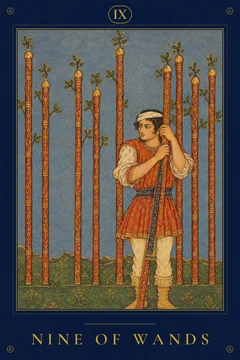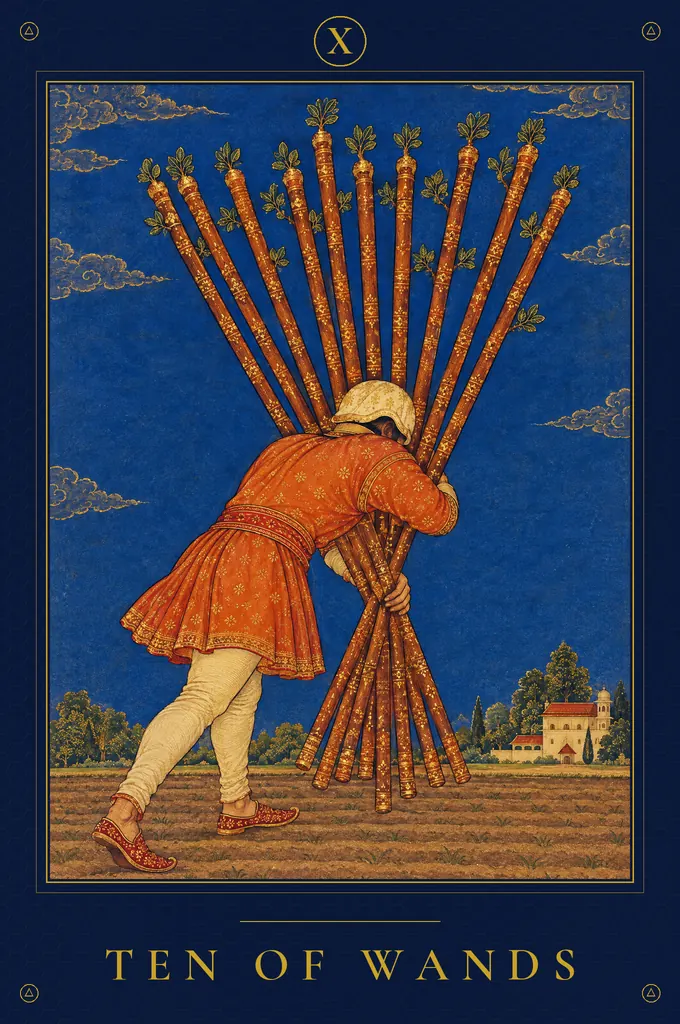
पीछे और बगल से दिखता एक पुरुष, उसकी पीठ मुड़ी हुई और उसका सिर दंडों के बीच नीचे धँसा, इतना कि केवल श्वेत पगड़ी दिखती है। उसका पूरा शरीर चलने की दिशा में आगे झुका है।
A man seen from behind and to the side, his back curved and his head pushed down among the staves so that only the white turban shows. His whole body leans forward into the walk.
आराम की सीमा से आगे उठाया गया दायित्व। वेट उस पुरुष का वर्णन करते हैं जो अपने उठाए दंडों से दबा है। वह अब भी खड़ा है और चल रहा है, फिर भी अपने ही भार के पार नहीं देख सकता।
Responsibility carried past the point of comfort. Waite describes a man oppressed by the staves he carries. He is still upright and still walking, yet he can no longer see over his own load.
न आँखें, न भाव। भार ने उसकी पहचान सोख ली है: वह केवल ढोने वाला बन गया है। पाठक इसका उपयोग प्रश्नकर्ता से यह पूछने में करते हैं कि भार के बिना वे कौन हैं।
No eyes, no expression. The burden has absorbed his identity: he has become the one who carries. Readers use this to ask the querent who they are without the load.
पिक्टोरियल की, 1910, चित्र का विवरण। छिपे चेहरे में खोई पहचान देखना शिक्षकों की एक युक्ति है।
Pictorial Key, 1910, description of the plate. Reading the hidden face as lost identity is a teachers' device.
सीधा आने पर प्रयास का सम्मान कीजिए और पुष्टि कीजिए कि अंत निकट है। उलटा आने पर यह मुद्रा अब निभ नहीं सकती। प्रश्नकर्ता से कहिए कि सिर उठाएँ, गंतव्य देखें, और तय करें कि क्या मार्ग के किनारे छोड़ा जा सकता है।
Honour the effort and confirm the end is near. Reversed, the posture is no longer sustainable; ask the querent to lift their head, look at the destination, and decide what can be left at the roadside.