The journal
Long guides to reading the cards well, in plain language.
How to read tarot cards: a complete beginner's guide
A first tarot reading from deck to conclusion: the structure of the 78 cards, how to ask a useful question, and the symbol-first method. Includes a worked three-card reading and the mistakes beginners make most often.
Tarot card meanings: all 78 cards, and how to learn them
A complete map of the 78 tarot cards: every Major Arcana meaning, the four suits and their elements, the numbers from Ace to Ten and the court cards. With a practical method for learning the meanings without memorising lists.
Yes or no tarot: how it works, and when to ask something else
How a one-card yes or no tarot reading works, which cards lean yes, no or wait, and what a reversal changes. With honest guidance on accuracy, how to phrase the question, and when a fuller spread is the better tool.
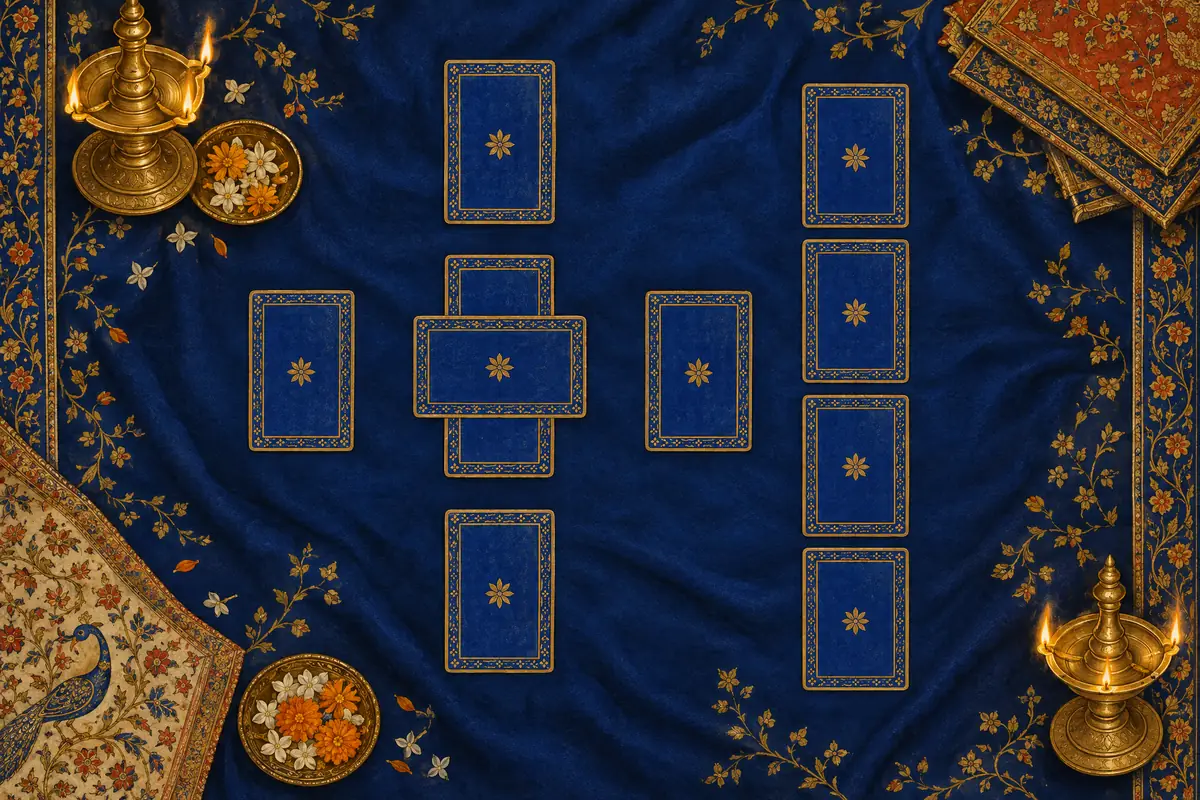
The Celtic Cross tarot spread explained, position by position
The Celtic Cross is the most widely taught ten-card spread in the tarot. This guide explains each position, how Waite's numbering differs, and how to read the cards in pairs so that ten cards give one answer.
Reversed tarot cards: what they mean and how to read them
A reversed card keeps its meaning; what changes is how that meaning moves. This guide explains the main schools of reversal, how the hardest cards read reversed, whether to use reversals at all, and a three-step method for any upside-down card.
Tarot and astrology: Jyotish parallels, differences and how to use both
The astrology inside the tarot is Western and tropical, from the Golden Dawn; Jyotish is sidereal and reads a birth chart. This guide gives the interpretive parallels worth knowing, states the differences plainly, and shows when a question belongs to a Jyotishi.