Yes or no tarot: how it works, and when to ask something else
How a one-card yes or no tarot reading works, which cards lean yes, no or wait, and what a reversal changes. With honest guidance on accuracy, how to phrase the question, and when a fuller spread is the better tool.
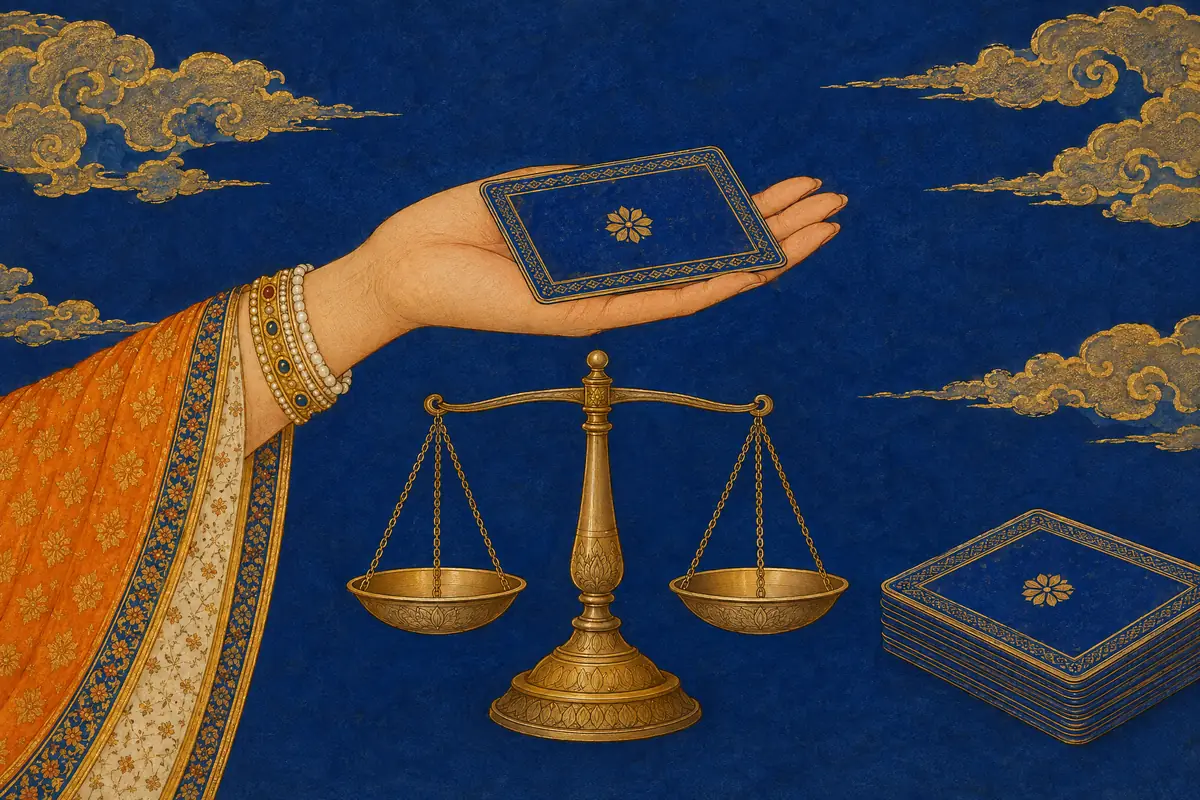
हाँ या ना टैरो में एक बंद प्रश्न के लिए एक कार्ड निकाला जाता है, और उत्तर कार्ड के स्वभाव और उसकी दिशा से पढ़ा जाता है। सफलता और आशा के कार्ड हाँ की ओर झुकते हैं, हानि, विलंब या संघर्ष के कार्ड ना की ओर, और अनेक कार्ड शर्त के साथ उत्तर देते हैं। उलटा कार्ड हाँ को ना में नहीं बदलता; वह प्रायः हाँ से पहले एक कदम माँगता है। यह पद्धति अपने ही निकट भविष्य के छोटे निर्णयों के लिए सबसे उपयोगी है, दूसरों के मन या जटिल विषयों के लिए नहीं। स्वास्थ्य, कानून और धन के प्रश्नों में पहले विशेषज्ञ से परामर्श लीजिए, फिर कार्डों से आत्म-चिंतन कीजिए।
Yes or no tarot draws a single card for a closed question and reads the answer from the card's nature and its orientation. Bright, forward-moving cards lean yes. Cards of loss, delay or conflict lean no. Many cards answer with a condition, a yes that depends on a step you take. It works best for small, near-term decisions that are yours to make.
That last point decides whether a yes or no reading helps you or misleads you. This guide explains how the answer is read, which cards lean which way, what a reversal changes, how accurate the method can be, and when a different spread will serve you better.
How a yes no tarot reading works
On TarotPandit the yes or no reading uses one card in one position: the answer and its reason. The card gives a direction, and its meaning tells you why.
- Frame a closed question about something within your control and within the next few weeks.
- Shuffle while holding the question in mind, then draw one card.
- Read the answer from the card. Each card page on TarotPandit lists its yes or no answer, upright and reversed.
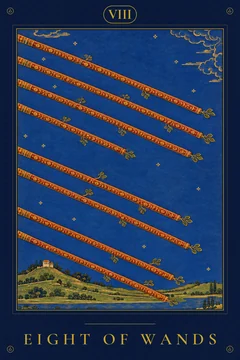
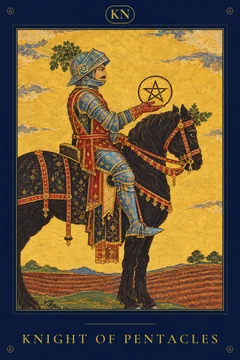
- Read the reason. The card's meaning explains the answer. A yes from the Eight of Wands means yes and soon, because the card is about matters already in motion. A yes from the Knight of Pentacles means yes, slowly, because that knight never hurries.
- Take the step. If the answer carries a condition, the condition is the advice.
The reason is the useful part. A bare yes tells you little. A yes that says "through steady work" tells you how to get there.
Which cards lean yes, which lean no, and which say "it depends"
Every card in the deck has a considered answer, drawn from its meaning in Waite's book and the 1909 image. They fall into four broad groups.
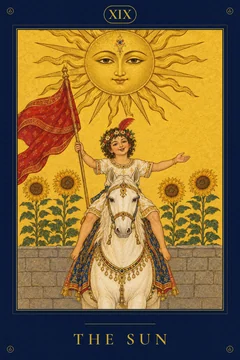
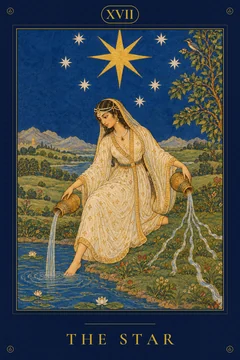
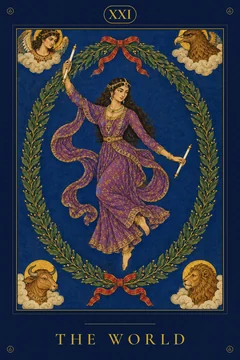
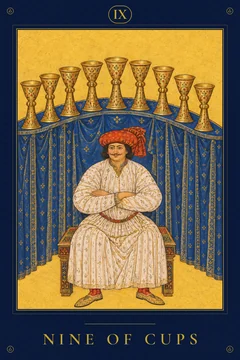
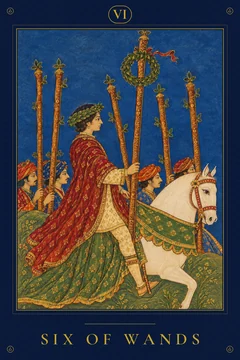
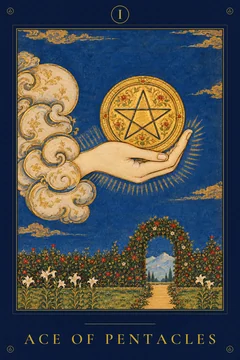
Clear yes. Cards of success, hope and completion. The Sun, The Star, The World, the Nine of Cups, the Six of Wands and the Ace of Pentacles all answer yes when upright.
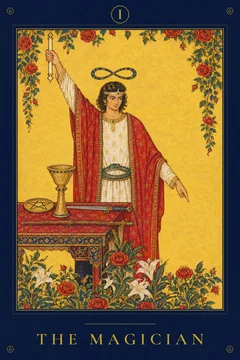
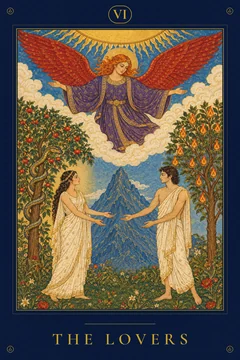
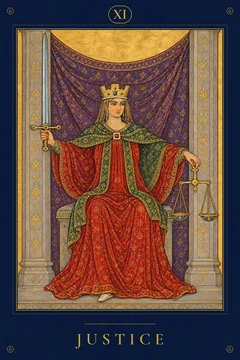
Yes, on a condition. These cards say yes and name the price. The Magician says yes, if you act. The Lovers say yes, if you choose it. Justice says yes, if your side of the account is fair. Treat the condition as the real answer: the yes is available once you meet it.
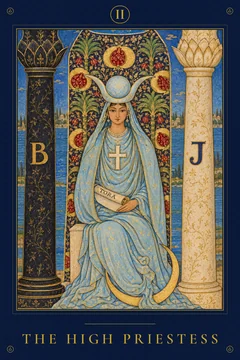
Not yet, or wait. Some cards ask for patience before any answer. The High Priestess says wait and watch. The Hanged Man says wait, and notice what the wait shows you. The Seven of Pentacles says the harvest is still growing. The Moon says maybe, until the light is clearer.
No, as things stand. Cards of disruption, loss or a fight not worth winning. The Tower says no, not as the situation stands. The Five of Swords says the win would cost more than it gives. The Five of Cups says no, not as hoped. Even here the answer is specific. The Tower's no is about the present structure, and once that structure falls a different question can be asked.
The arcana of the card adds weight. A Major Arcana answer describes a larger turn in your life, and the yes or no it gives is about a chapter, not an afternoon. A Minor Arcana answer describes a matter of days and weeks, and its condition is usually something you can meet this week. A no from a Minor card is often a no to the timing or the method, and the same question asked after a change may receive a different card.
Reversed cards in a yes or no reading
A reversed card does not flip a yes into a no. TarotPandit reads every reversal as energy turned inward, delayed or in excess, never as a closed door. In a yes or no reading, a reversal usually asks for one step before the yes.
The Fool upright says yes. Reversed, it says not yet: take the first step first. The Sun reversed is still yes, in a smaller or slower measure. Some reversals soften a no: The Devil upright says no while the chain holds, and reversed it turns toward yes as you loosen the hold. For more on this method, read our guide to reversed tarot cards.
How to phrase the question
Avoid questions about another person's choices, such as "Will she call me?" Ask instead, "Is it wise for me to reach out to her this week?" The second question is yours to act on, and the answer tells you something you can use.
Avoid questions with no time frame, such as "Will I ever own a house?" Ask instead, "Is this the right month to start saving for a deposit?" A near-term question gets a usable answer; a lifetime question gets a card you cannot test.
Avoid double questions, such as "Should I take the job or stay where I am?" That is two questions. Ask about one option at a time, or use the decision spread, which is built for comparing paths.
Is yes or no tarot accurate?
No study has measured the accuracy of tarot, and TarotPandit will not claim one exists. What we can say honestly is how to make a yes or no reading useful.
A yes or no card is a mirror held up to a decision. It shows the quality of the situation and the attitude that will serve you. Its value depends on three things you control.
- The question. A clear, near-term question about your own action gives an answer you can test against what happens.
- One draw. Redrawing until you get the answer you wanted turns the reading into a search for permission. Accept the first card, and if it raises a further question, ask that question separately.
- Honest reading. Read the condition as well as the direction. Many readers remember the yes and forget the "if you act" that came with it.
For health, legal and money matters, a yes or no card can direct attention, such as a nudge to rest or to read the terms again. It never replaces a doctor, a lawyer or a qualified financial adviser, and it is never a reason to make an investment. See the professional first, then use the cards to reflect on how you are meeting the situation.
When to ask something else
A yes or no reading is the wrong tool when the question has many moving parts. Use a fuller spread instead.
- For a choice between two or more paths, use the decision spread.
- For how a situation developed and where it is heading, use past, present and future.
- For a relationship, use the love reading, which looks at both sides.
- For work and direction, use the career reading.
- For a complex matter you want to see whole, use the Celtic Cross.
A good sign that you need a fuller spread: you have drawn a yes or no card, and your next thought is "but why?" or "but what about...". Follow that thought with an open question.
Two worked examples
The question: "Should I accept the invitation to teach a weekend workshop next month?"
The card: the Two of Pentacles, upright. A young man dances on one foot, keeping two pentacles in motion in a looped ribbon while ships ride high waves behind him. Its answer is maybe: yes, if you can keep both in balance.
The reading: the workshop is possible, and the card's concern is the load around it. The step is to look at the rest of the month and decide what can be moved before saying yes. If the calendar has room, accept. If accepting would mean dropping a commitment you have already made, the card's condition is not met, and the honest answer is not this month.
A second example, with a reversal. The question: "Is this a good week to ask my manager for a review of my role?"
The card: the Ace of Swords, reversed. Upright, this card is a clear thought that cuts through confusion, and its answer is yes. Reversed, the same clarity is turned inward and not yet expressed, and its answer is not yet: clarify the question first.
The reading: the request itself is reasonable, and the card says the case is not yet sharp. Write down what you are asking for and why, in a few plain sentences, before you book the meeting. The reversal is a delay with a task attached, and the task is within reach this week.
हिंदी में
टैरो कार्ड हां या ना का पाठ एक कार्ड से किया जाता है। प्रश्न ऐसा हो जिसका उत्तर हाँ या ना में दिया जा सके, जो आपके अपने निर्णय से जुड़ा हो और निकट समय का हो। सूर्य और तारा जैसे कार्ड हाँ की ओर झुकते हैं, मीनार वर्तमान स्थिति में ना कहता है, और जादूगर जैसे कार्ड शर्त के साथ हाँ देते हैं: हाँ, यदि आप कर्म करें। उलटा कार्ड बंद द्वार नहीं है; वह हाँ से पहले एक कदम माँगता है। एक ही प्रश्न पर बार-बार कार्ड न निकालिए, पहले कार्ड को स्वीकार कीजिए और उसकी शर्त को ही परामर्श मानिए।
Next steps
Draw a card now with the yes or no reading, with your question written down first. When the question needs more room, try the decision spread. The Intermediate course has a full lesson on giving yes, no and timing answers honestly, and the free Foundation course teaches the craft of the question. New to the cards? Start with how to read tarot cards, then explore tarot card meanings.
Questions
How does a yes or no tarot reading work?
You ask a closed question, shuffle, and draw one card. The card's meaning and orientation give the answer: cards of success and hope lean yes, cards of loss or conflict lean no, and many cards give a yes with a condition. The card's meaning also explains the reason for the answer.
Is yes or no tarot accurate?
No study has measured tarot's accuracy, and TarotPandit makes no such claim. A yes or no reading is most useful when the question is clear, near-term and about your own action, when you accept the first draw, and when you read the card's condition as well as its direction.
What does a reversed card mean in a yes or no reading?
A reversal does not turn a yes into a no. TarotPandit reads it as energy turned inward or delayed, so it usually means not yet, or yes after one step. The Fool reversed, for example, says not yet: take the first step first.
Which tarot cards mean yes?
The clearest yes cards include The Sun, The Star, The World, the Nine of Cups, the Six of Wands and the Ace of Pentacles. Others, such as The Magician and The Lovers, say yes on a condition: if you act, or if you choose it.
Can I ask the same yes or no question again?
It is better not to. Redrawing on the same question until you like the answer turns the reading into a search for permission. Accept the first card, and if it raises a new question, ask that new question separately or use a fuller spread.