Tarot card meanings: all 78 cards, and how to learn them
A complete map of the 78 tarot cards: every Major Arcana meaning, the four suits and their elements, the numbers from Ace to Ten and the court cards. With a practical method for learning the meanings without memorising lists.
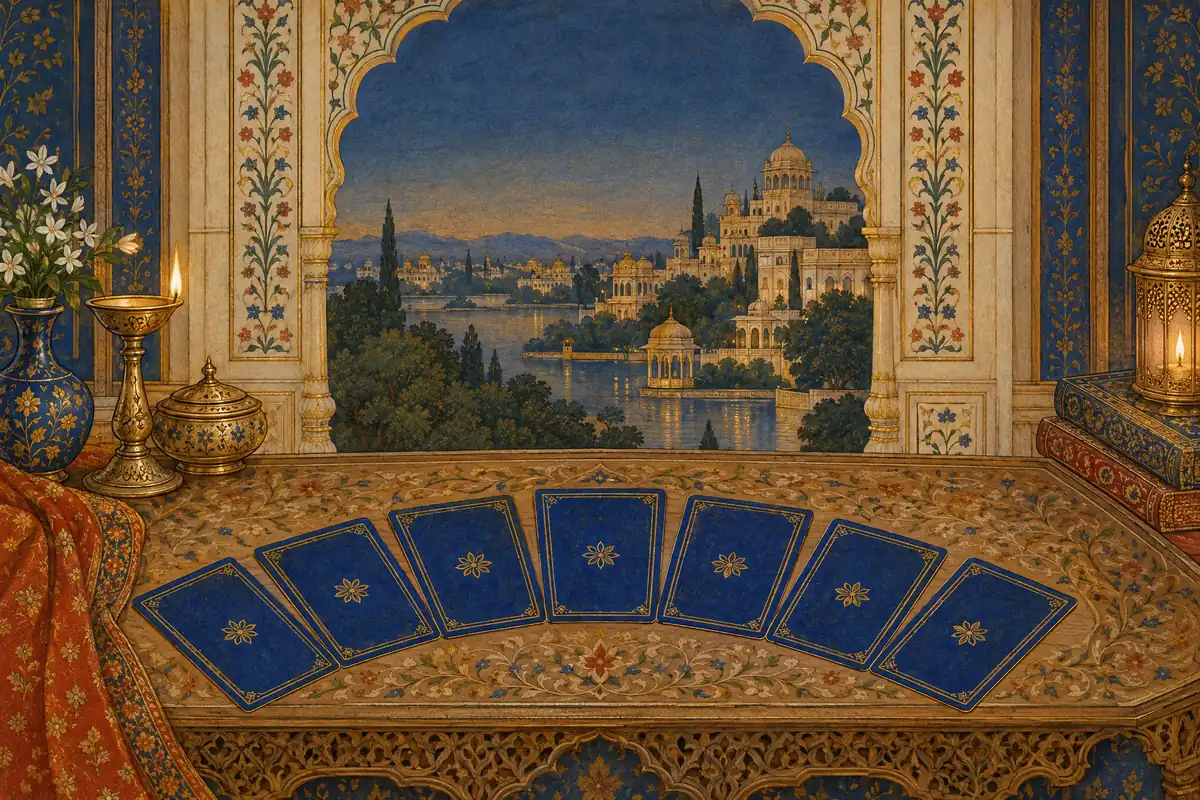
टैरो कार्डों का अर्थ तीन स्रोतों से आता है: कार्ड का चित्र, डेक की संरचना में उसका स्थान, और विन्यास में वह स्थान जहाँ वह गिरता है। 78 कार्डों में 22 मेजर आर्काना जीवन के बड़े अध्याय बताते हैं, जबकि 56 माइनर आर्काना चार सूटों में दैनिक जीवन की घटनाएँ बताते हैं। दंड अग्नि हैं, प्याले जल, तलवारें वायु और मुद्राएँ पृथ्वी; इक्के से दस तक की संख्याएँ हर सूट में एक ही क्रम में चलती हैं। दरबारी कार्डों में प्यादा विद्यार्थी है, घुड़सवार कर्म, रानी आंतरिक दक्षता और राजा बाहरी अधिकार। अर्थ रटने के बजाय हर कार्ड को उसके चित्र और अपने जिए हुए दिन से जोड़िए।
Tarot card meanings come from three places: the picture on the card, the card's place in the structure of the deck, and the position where it falls in a spread. The 78 cards divide into 22 Major Arcana, which describe the large chapters of a life, and 56 Minor Arcana in four suits, which describe the events of ordinary days. Learn that structure and each individual meaning becomes far easier to hold.
This guide gives you the whole map: every Major Arcana card with its core meaning, the four suits and their elements, the numbers from Ace to Ten, and the court cards. Each card name links to its full page, where the 1909 plate drawn by Pamela Colman Smith is read symbol by symbol, upright and reversed, for love, career, money and health.
Tarot cards list: how the 78 are organised
- 22 Major Arcana, numbered 0 to 21.
- 40 numbered Minor Arcana cards, Ace to Ten in each of four suits.
- 16 court cards, a Page, Knight, Queen and King in each suit.
The cards first appear in fifteenth-century northern Italy, where they were called trionfi and used to play a card game. The hand-painted Visconti-Sforza cards are the best-known survivors. Divinatory meanings came later. Antoine Court de Gébelin's Le Monde primitif (1781) began the occult reading of the trumps, and the Hermetic Order of the Golden Dawn, founded in 1888, attached an element, a planet or sign and a Hebrew letter to each card. The meanings on TarotPandit draw on that system, on A. E. Waite's The Pictorial Key to the Tarot (1910), and on the Smith-Waite deck itself.
Major arcana meanings
The Major Arcana trace a journey from the Fool's first step to the completion of the World. When several of them appear in one reading, the matter is a chapter of life and deserves to be treated as one. You can browse them together on the Major Arcana page.
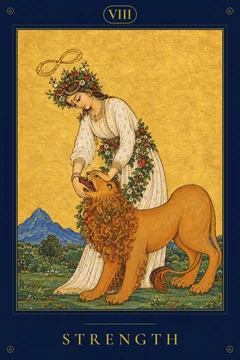
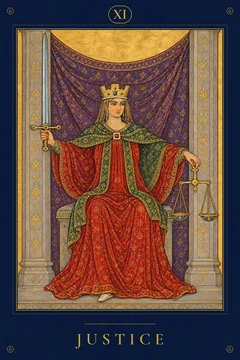
A note on numbering. In older decks Justice is VIII and Strength is XI. Waite swapped them, so that in the 1909 deck Strength is VIII and Justice is XI. TarotPandit follows Waite's order; other decks you meet may not.
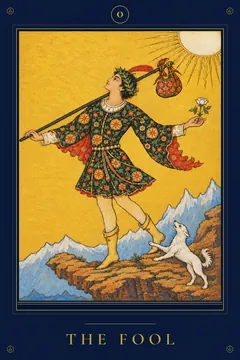
- The Fool, 0: a beginning taken in good faith, with the whole journey still ahead.
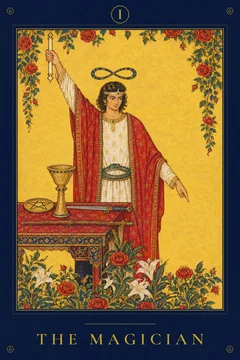
- The Magician, I: will and skill; every tool on the table, and the decision to use them.
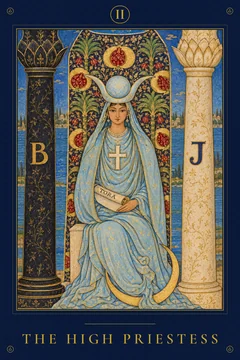
- The High Priestess, II: intuition and hidden knowledge; what is learned through silence and patience.
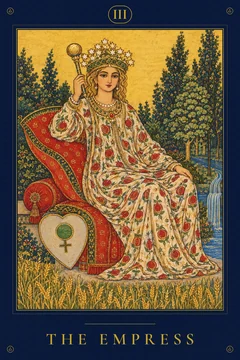
- The Empress, III: abundance and nurture; growth that comes through care.
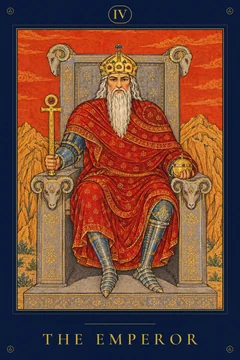
- The Emperor, IV: authority and structure; the order that protects.
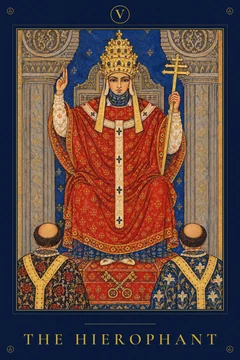
- The Hierophant, V: tradition and teaching; learning through an established path or institution.
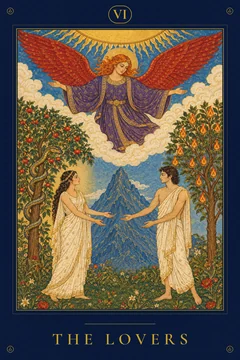
- The Lovers, VI: union and choice; a bond or decision that asks for your whole agreement.
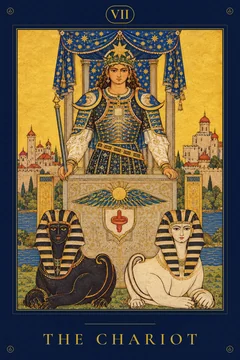
- The Chariot, VII: willpower and direction; victory won by holding opposing forces to one course.
- Strength, VIII: courage and patience; power that works through gentleness.
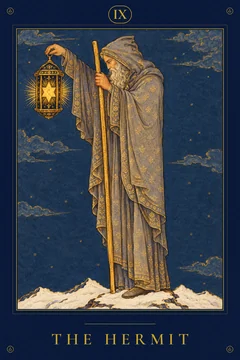
- The Hermit, IX: solitude and inner guidance; the lamp carried alone up the mountain.
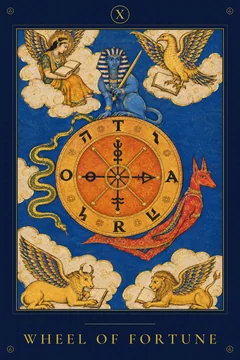
- Wheel of Fortune, X: a turning point; the cycle that moves whether or not you push it.
- Justice, XI: fairness and accountability; the account settled honestly.
- The Hanged Man, XII: surrender and suspension; a pause that gives a new point of view.
- Death, XIII: transformation; an ending that clears the ground. It describes the close of a chapter or a form of life, and TarotPandit never reads it as a prediction of physical death.
- Temperance, XIV: balance and moderation; the right mixture, found with patience.
- The Devil, XV: attachment; a chain held in place by consent, looser than it looks.
- The Tower, XVI: sudden truth; the fall of what was never sound, and the freedom that follows.
- The Star, XVII: hope and healing; renewal after difficulty.
- The Moon, XVIII: uncertainty and intuition; the path walked by reflected light.
- The Sun, XIX: joy, success and clarity; life in full daylight.
- Judgement, XX: awakening and a calling; the summons to rise and answer.
- The World, XXI: completion and wholeness; a cycle finished well.
Minor arcana meanings: four suits, four elements
The Minor Arcana describe the matters of daily life, and they are the cards you can most directly act on. Each suit carries one element, and the element tells you what kind of experience the card is about.
Wands: Fire. Will, energy, enterprise and ambition. Wands answer questions about starting, building, competing and leading. The Ace of Wands is the first spark of a venture; the Ten of Wands is the same fire carried as a burden for too long.
Cups: Water. Feeling, love, friendship and imagination. Cups describe the heart and its relationships. The Ace of Cups is a heart opened; the Ten of Cups is happiness shared at home.
Swords: Air. Thought, speech, truth and conflict. The suit holds some of the most difficult images in the deck, and they describe the mind at work: worry, argument and decision. The Nine of Swords shows sleepless worry, and its counsel is to test the fear against the facts in daylight. The Ace of Swords is the clear thought that cuts through.
Pentacles: Earth. Money, the body, work and home. The Eight of Pentacles is patient craftsmanship; the Ten of Pentacles is what a family builds and passes on. Pentacles direct attention to resources and suggest small, practical actions. They are never investment advice.
The numbers: Ace to Ten as one sequence
TarotPandit teaches the numbered cards as a single sequence that runs through every suit. Once you know what a number does, you can combine it with the suit's element and read a card you have never studied.
- Ace: the seed. A pure gift of the element, offered and not yet used.
- Two: a pair to balance or a choice to make, as in the pledge of the Two of Cups or the suspended decision of the Two of Swords.
- Three: first growth. The seed shows results, as in the skilled work of the Three of Pentacles.
- Four: stability, which can harden into standstill, as in the holding on of the Four of Pentacles.
- Five: disturbance. Every Five carries loss, conflict or strain, from the rivalry of the Five of Wands to the grief of the Five of Cups.
- Six: recovery and exchange after the trouble of the Five, as in the fair giving of the Six of Pentacles.
- Seven: a test. Assessment, strategy or a position to defend, as in the Seven of Wands.
- Eight: movement and effort, or the feeling of restriction, as in the speed of the Eight of Wands and the self-imposed limits of the Eight of Swords.
- Nine: the element at its most intense, close to completion, as in the wish granted of the Nine of Cups.
- Ten: the full measure, which can be fulfilment or a weight too heavy to carry.
Put suit and number together and the meaning almost reads itself. A Five of Cups is disturbance in the realm of feeling: loss and grief. A Three of Wands is first growth in the realm of enterprise: a venture under way.
The court cards: people, roles and approaches
Each suit has four court cards, and each rank describes a stage of maturity.
- Page: the student and the messenger. Curiosity, news, a first attempt.
- Knight: action and pursuit. The rank that moves, sometimes too fast.
- Queen: inward mastery. The element understood and held from within.
- King: outward authority. The element directed and governed in the world.
In this library each rank also carries an element: King is Fire, Queen is Water, Knight is Air and Page is Earth. Other systems assign them differently. The rank's element combines with the suit's, so the Queen of Cups is Water of Water, compassion at its deepest, and the King of Pentacles is Fire of Earth, prosperity actively governed.
A court card can describe a person in the querent's life, the querent, or a way of meeting the situation. Ask which of the three fits the question before deciding.
Upright and reversed meanings
Every card page on TarotPandit gives an upright and a reversed reading. A reversal is never a closed door and is rarely a simple opposite. It is the card's energy turned inward, delayed or in excess. The Empress reversed describes care that has gone to others and left the self untended, and its counsel is to tend your own field first. Our article on reversed tarot cards explains how to read them consistently.
How to learn tarot card meanings
Avoid memorising lists of keywords in isolation. A keyword without a picture fades in days. Tie each meaning to an image and to a day you lived instead.
- Begin with the picture. Describe what is happening in the scene before you read anything about it.
- Learn the structure before the details. Suit, number and rank will give you a working meaning for most of the 56 Minor Arcana.
- Meet one card a day. Draw a card each morning with the daily reading, read its page, and notice in the evening where it showed up.
- Study cards in pairs. Each card page lists combinations. The Fool with the Magician reads differently from the Fool with the Tower.
- Keep a journal. Write the card, your first impression and what happened. Patterns appear within a month.
Every card page is also available in Hindi, for readers who learn best in that language: for example मूर्ख, तारा and प्यालों का इक्का.
Next steps
Put the meanings to work with a past, present and future reading, then use the Celtic Cross when you are ready for ten positions. The free Foundation course teaches the suits, the elements and the symbol-first method, and the Intermediate course goes deeper into numbers, court cards and the Golden Dawn attributions. If you are just beginning, read how to read tarot cards first.
Questions
How many tarot cards are there and what are they?
A standard tarot deck has 78 cards: 22 Major Arcana numbered 0 to 21, and 56 Minor Arcana in four suits of Wands, Cups, Swords and Pentacles. Each suit has ten numbered cards, Ace to Ten, and four court cards: Page, Knight, Queen and King.
What is the difference between the Major and Minor Arcana?
The Major Arcana describe the large chapters and lessons of a life, such as beginnings, endings and awakenings. The Minor Arcana describe daily events and choices in four areas of experience. A reading with many Major Arcana points to a significant chapter; a reading of mostly Minor Arcana concerns matters you can change this week.
What is the fastest way to learn tarot card meanings?
Learn the structure first: the element of each suit, the meaning of each number from Ace to Ten, and the four court ranks. That gives you a working meaning for most Minor Arcana cards. Then meet one card a day through practice and keep a journal of what you notice.
Does the Death card mean someone will die?
No. Death describes transformation: the end of a chapter, a habit or a form of life that clears the ground for what comes next. TarotPandit never reads it as a prediction of physical death.
Why are Strength and Justice numbered differently in some decks?
In older decks Justice is VIII and Strength is XI. A. E. Waite swapped them for the 1909 deck, making Strength VIII and Justice XI. TarotPandit follows Waite's order.