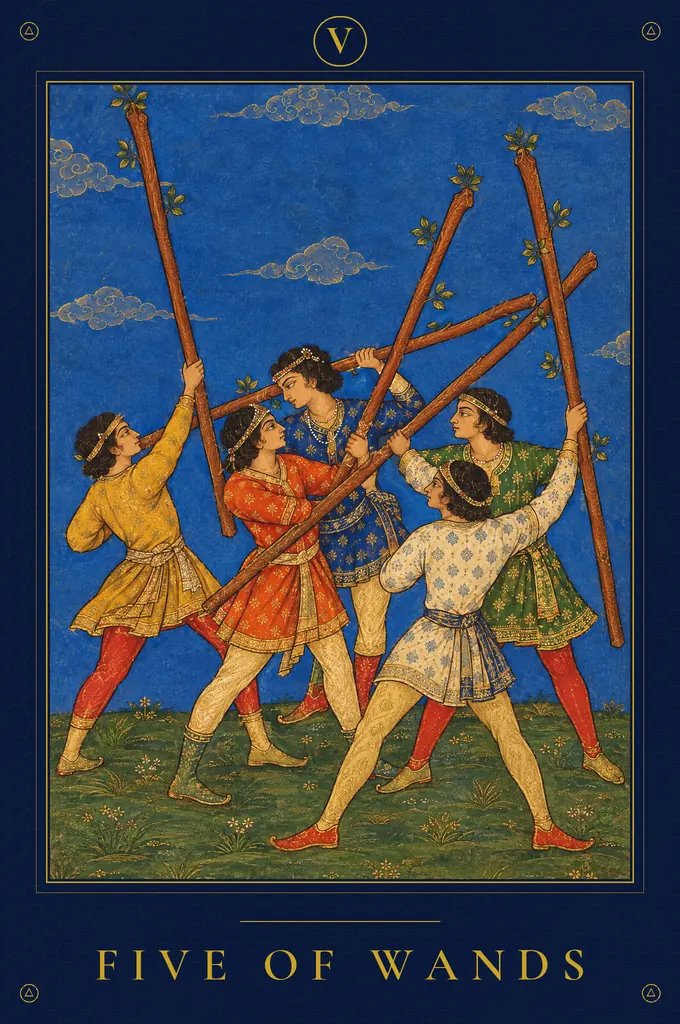
Five young men crowd the centre of the card, arms raised, bodies twisting in different directions. One stands at the back in the middle, two at the left, one at the right and one in the foreground with his back half turned to us.
पाँच युवक कार्ड के मध्य में भीड़ किए हैं, भुजाएँ उठी हुई, शरीर अलग-अलग दिशाओं में मुड़े हुए। एक पीछे बीच में खड़ा है, दो बाईं ओर, एक दाहिनी ओर, और एक अग्रभूमि में, हमारी ओर आधी पीठ किए।
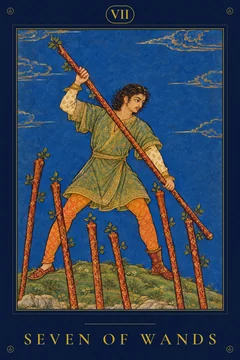
Many wills in one space. Waite describes youths brandishing staves as if in sport or strife and calls it mimic warfare. They are equals and rivals at once: classmates, colleagues, siblings, competitors in the same market.
एक ही स्थान में अनेक इच्छाएँ। वेट युवकों को दंड घुमाते बताते हैं, मानो खेल में या कलह में, और इसे नकली युद्ध कहते हैं। वे एक साथ बराबर भी हैं और प्रतिद्वंद्वी भी: सहपाठी, सहकर्मी, भाई-बहन, एक ही बाज़ार के प्रतिस्पर्धी।
Look at the faces. They are intent, and none of them is angry. No staff is landing on anyone. Read the whole card from that detail: a contest or a loud argument, with no harm meant.
चेहरे देखिए। वे एकाग्र हैं, और उनमें कोई क्रोध नहीं। किसी पर कोई दंड पड़ नहीं रहा। पूरे कार्ड को इसी बारीकी से पढ़िए: एक प्रतियोगिता या ऊँची आवाज़ में बहस, जिसमें किसी को हानि पहुँचाने का इरादा नहीं।
Pictorial Key, 1910 (a posse of youths, who are brandishing staves, as if in sport or strife; mimic warfare). Golden Dawn: Saturn in Leo, Lord of Strife.
पिक्टोरियल की, 1910 (युवकों का एक दल जो दंड घुमा रहा है, मानो खेल में या कलह में, नकली युद्ध)। गोल्डन डॉन: सिंह में शनि, कलह का स्वामी।
Ask the querent who their four rivals are and what the contest is really about. Reversed, the contest has turned bitter or been avoided; name the real disagreement in one sentence.
प्रश्नकर्ता से पूछिए कि उनके चार प्रतिद्वंद्वी कौन हैं और प्रतियोगिता वास्तव में किस बात की है। उलटा आने पर प्रतियोगिता कड़वी हो गई है या टाली गई है। सच्चे मतभेद को एक वाक्य में कहिए।