TarotPanditby Pandit Rahul Kaushl
Major Arcana · XI
Cards › Major Arcana › Justice

Justice न्याय

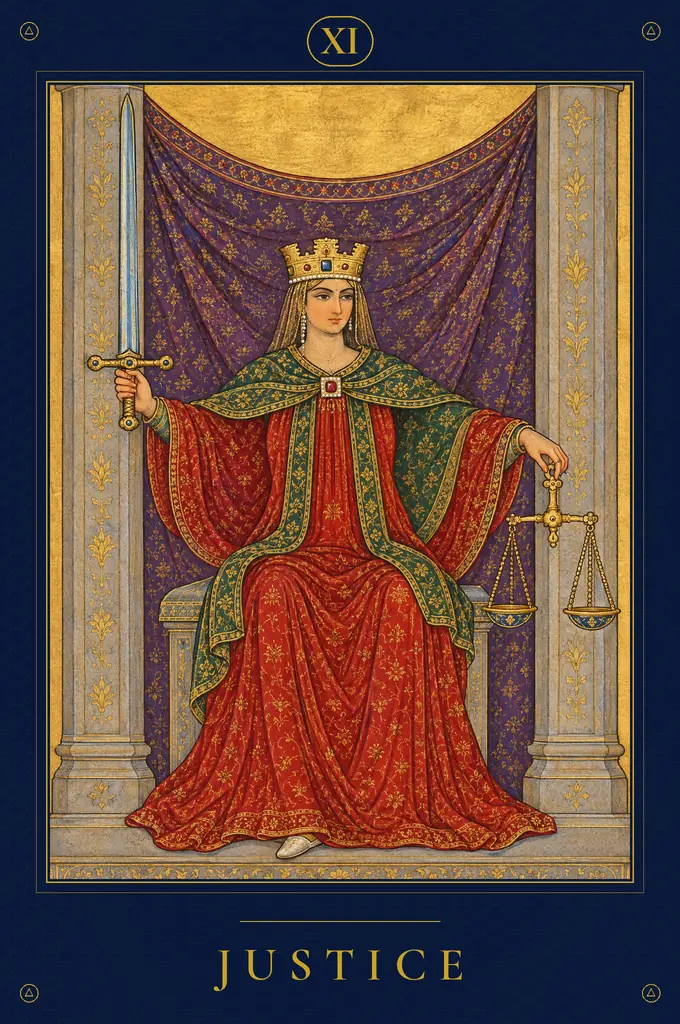
Justice tarot card meaning: a decision made by weighing, and a result that answers what was actually done. Card XI of the Major Arcana shows a crowned woman on a stone throne between two grey pillars, a sword held straight up in her right hand, a pair of scales in her left and a purple veil behind her. Upright it is fairness, truth and accountability; reversed it is the same scales tilted by bias, or a verdict put off.

न्याय (Justice) टैरो कार्ड का अर्थ है तौलकर लिया गया निर्णय, और ऐसा परिणाम जो वास्तव में किए गए कर्म का उत्तर देता है। मेजर आर्काना का ग्यारहवाँ कार्ड दो धूसर स्तंभों के बीच पाषाण-सिंहासन पर बैठी एक मुकुटधारी स्त्री को दिखाता है, दाहिने हाथ में सीधी उठी तलवार, बाएँ हाथ में तराज़ू और पीछे बैंगनी पर्दा। सीधा आने पर यह निष्पक्षता, सत्य और उत्तरदायित्व है। उलटा आने पर वही तराज़ू पक्षपात से झुक जाता है, या निर्णय टल जाता है।

Numeral XIElement AirAstrology Libra (Golden Dawn attribution)Hebrew letter LamedYes or no Yes, if your side of the account is fair
Justice, TarotPandit deck
1 of 8 · Justice herself

Tap a number on the card, or open a lesson. The TarotPandit deck keeps the 1909 composition exactly, redrawn as an Indian miniature.

The card, element by element
What it isयह क्या है

A woman seated squarely on a stone throne, facing the viewer, a gold crown on her head, long hair falling to the shoulders, her gaze level and turned very slightly toward the sword. She does not lean; the whole figure is upright and still.

पाषाण-सिंहासन पर सीधी बैठी एक स्त्री, दर्शक की ओर मुख, सिर पर स्वर्ण मुकुट, कंधों तक गिरते लंबे केश, दृष्टि सम और तलवार की ओर हल्की-सी मुड़ी हुई। पूरी आकृति सीधी और स्थिर है, कहीं कोई झुकाव नहीं।

What it denotesयह क्या दर्शाता है

The principle that deals to each according to their works. Waite writes that the card carries above all its obvious meanings, and he separates this moral justice, which answers deeds, from the spiritual justice of election, which belongs to a mysterious order of Providence. The card is about the first: what you did, weighed.

वह सिद्धांत जो प्रत्येक को उसके कर्मों के अनुसार देता है। वेट लिखते हैं कि यह कार्ड सबसे पहले अपने स्पष्ट अर्थ धारण करता है, और वे इस नैतिक न्याय को, जो कर्मों का उत्तर देता है, उस आध्यात्मिक चयन-न्याय से अलग करते हैं जो विधाता की रहस्यमय व्यवस्था का अंग है। यह कार्ड पहले वाले के विषय में है: आपने जो किया, वह तौला हुआ।

The numberसंख्या

Waite exchanged Justice and Strength, so Justice is XI here where older decks had VIII. He says his reasons satisfy him and that the change carries nothing that will signify to the reader. The Golden Dawn order, Leo before Libra, is the explanation later commentators offer.

वेट ने न्याय और शक्ति की अदल-बदल की, इसलिए यहाँ न्याय ग्यारहवाँ है जहाँ पुराने डेक में वह आठवाँ था। वे कहते हैं कि उनके कारण उन्हें संतुष्ट करते हैं और इस परिवर्तन में पाठक के लिए कुछ विशेष नहीं। गोल्डन डॉन का क्रम, तुला से पहले सिंह, वह व्याख्या है जो बाद के टीकाकार देते हैं।

Sourceस्रोत

A. E. Waite, The Pictorial Key to the Tarot, 1910. Golden Dawn: Justice attributed to Lamed and Libra.

ए. ई. वेट, द पिक्टोरियल की टु द टैरो, 1910। गोल्डन डॉन: न्याय को लामेद अक्षर और तुला राशि से जोड़ा गया।

Reading tipपाठ-संकेत

Upright: a decision will be made fairly, and your part in it will be seen. Reversed: a decision made by preference, or not made at all. Either way, ask the querent what they would say if the whole record were read aloud.

सीधा: निर्णय निष्पक्ष होगा, और उसमें आपका भाग देखा जाएगा। उलटा: पसंद से लिया गया निर्णय, या लिया ही नहीं गया। दोनों स्थितियों में प्रश्नकर्ता से पूछिए कि यदि पूरा अभिलेख ऊँचे स्वर में पढ़ा जाए तो वे क्या कहेंगे।
न्याय किए गए कर्म का उत्तर देता है, मनोभाव का उसमें कोई भाग नहीं। वह सीधी बैठी है क्योंकि झुका हुआ शरीर तराज़ू को समतल नहीं रख सकता।
What it isयह क्या है

A long double-edged sword held point upward in her right hand, the blade pale steel, the cross-guard and pommel gold with a blue stone. The arm is bent at the elbow so that the blade rises straight past her shoulder to the top of the painting.

दाहिने हाथ में नोक ऊपर किए थामी हुई एक लंबी दुधारी तलवार, फलक पीला इस्पात, मूठ और उसका सिरा स्वर्णिम, नीले रत्न सहित। भुजा कोहनी से मुड़ी है, ताकि फलक कंधे के पास से सीधा चित्र के शीर्ष तक उठे।

What it denotesयह क्या दर्शाता है

Decision and its consequence. The sword of the suit of Air is thought and speech; held upright it is thought that has reached a verdict and is willing to say so. The arm is bent and relaxed, with no blow in it. A sword at rest, point up, is the sign of a decision that can be examined from every side before it is used.

निर्णय और उसका परिणाम। वायु-रंग की तलवार विचार और वाणी है। सीधी थामी हुई वह ऐसा विचार है जो निष्कर्ष पर पहुँच चुका है और उसे कहने को तैयार है। बाँह मुड़ी और शिथिल है, उसमें कोई प्रहार नहीं। विश्राम में खड़ी, नोक ऊपर किए तलवार उस निर्णय का चिह्न है जिसे प्रयोग से पहले हर ओर से परखा जा सकता है।

The two edgesदो धार

Two edges, because every judgement cuts both ways: the one judged and the one who judges are bound by the same measure. The hand that holds this sword has agreed to be weighed by it.

दो धारें, क्योंकि हर निर्णय दोनों ओर काटता है: जिसका न्याय होता है और जो न्याय करता है, दोनों एक ही माप से बँधे हैं। जो हाथ इस तलवार को थामे है, उसने इसी से तौले जाने की सहमति दी है।

The colourरंग

Pale steel against the purple veil. Grey-white in Smith's scheme is the colour of the unformed and the wise: a blade that has not been coloured by anyone's preference.

बैंगनी पर्दे पर पीला इस्पात। स्मिथ की रंग-योजना में धूसर-श्वेत अव्यक्त और विवेक का रंग है: ऐसा फलक जिस पर किसी की पसंद का रंग नहीं चढ़ा।

Sourceस्रोत

Pictorial Key, 1910, description of the plate; the sword reading follows the Golden Dawn attribution of Swords to Air.

पिक्टोरियल की, 1910, कार्ड का विवरण। तलवार का अर्थ गोल्डन डॉन द्वारा तलवारों को वायु से जोड़ने पर आधारित है।

Reading tipपाठ-संकेत

When Justice falls in a position about communication, the sword is the message: say the true thing plainly and once. Reversed, the sword has become a way to wound; set it point up again and let it decide.

जब न्याय संवाद से जुड़े स्थान पर आए, तो तलवार ही संदेश है: सच्ची बात स्पष्ट कहिए और एक बार कहिए। उलटा होने पर तलवार घाव देने का साधन बन गई है। उसे फिर से नोक ऊपर करके रखिए और निर्णय करने दीजिए।

तलवार सीधी खड़ी है और विश्राम में है। निर्णय हो चुका है, पर उसे प्रयोग से पहले हर ओर से देखा जा सकता है।
What it isयह क्या है

A gold balance with two round pans on fine chains, hanging from her left hand by its ring. The pans hang level with each other; nothing sits in either.

महीन ज़ंजीरों पर दो गोल पलड़ों वाला स्वर्णिम तराज़ू, उसके बाएँ हाथ से अपने कड़े के सहारे लटका हुआ। दोनों पलड़े एक-दूसरे के समतल हैं और दोनों खाली हैं।

What it denotesयह क्या दर्शाता है

Weighing before cutting. The scales are empty because the querent brings what goes into them. Waite's divinatory meanings for the card are equity, rightness, probity and the triumph of the deserving side in law; the scales are how the deserving side is found.

काटने से पहले तौलना। तराज़ू खाली है क्योंकि उसमें जो रखा जाएगा वह प्रश्नकर्ता लाता है। इस कार्ड के लिए वेट के भविष्यसूचक अर्थ हैं समता, औचित्य, सत्यनिष्ठा और विधि में योग्य पक्ष की विजय, और तराज़ू ही वह विधि है जिससे योग्य पक्ष पहचाना जाता है।

The left handबायाँ हाथ

The receptive hand holds the balance and the active hand holds the sword: first receive the evidence, then act. A judge who reverses the order has the sword in the wrong hand.

ग्रहणशील हाथ तराज़ू थामे है और सक्रिय हाथ तलवार: पहले साक्ष्य ग्रहण कीजिए, फिर कर्म। जो न्यायाधीश यह क्रम उलट देता है, उसकी तलवार गलत हाथ में है।

Sourceस्रोत

Pictorial Key, 1910 (divinatory meanings: equity, rightness, probity, executive).

पिक्टोरियल की, 1910 (भविष्यसूचक अर्थ: समता, औचित्य, सत्यनिष्ठा, कार्यपालन)।

Reading tipपाठ-संकेत

Ask the querent to name what sits in each pan. If one pan is empty in the telling, the reading is about what they have left out, and the reversal is that omission.

प्रश्नकर्ता से कहिए कि बताएँ हर पलड़े में क्या रखा है। यदि बताने में एक पलड़ा खाली रह जाए, तो पाठ उसी के विषय में है जो उन्होंने छोड़ दिया, और उलटा कार्ड वही चूक है।

तराज़ू खाली है क्योंकि जो तौला जाएगा वह प्रश्नकर्ता लाता है। पहले ग्रहण करने वाला हाथ तौलता है, फिर कर्म करने वाला हाथ काटता है।
What it isयह क्या है

A gold crown with pointed battlements, set with a square blue stone at the front flanked by red stones, worn over a pale veil that falls behind the hair.

नुकीले कंगूरों वाला स्वर्ण मुकुट, सामने चौकोर नीला रत्न जिसके दोनों ओर लाल रत्न, एक हल्के रंग के आवरण पर पहना हुआ जो केशों के पीछे गिरता है।

What it denotesयह क्या दर्शाता है

Authority that comes from clarity. The crown sits on the head, the seat of judgement, and its stones are arranged in a balanced row: nothing on it is off centre. Many teachers read the square stone as the mind made square, that is, made fair; Waite himself says nothing about the stone.

वह अधिकार जो स्पष्टता से आता है। मुकुट सिर पर है, जो निर्णय का आसन है, और उसके रत्न एक संतुलित पंक्ति में हैं: उस पर कुछ भी केंद्र से हटा हुआ नहीं। कई शिक्षक चौकोर रत्न को चौकोर किया हुआ मन मानते हैं, अर्थात न्यायसंगत बनाया हुआ मन। वेट स्वयं इस रत्न पर कुछ नहीं कहते।

The colourरंग

Gold is the metal of the sun and of the sovereign. Here it says the decision carries weight because it is made in daylight, where anyone can see it.

स्वर्ण सूर्य और शासक की धातु है। यहाँ वह कहता है कि निर्णय में भार इसलिए है क्योंकि वह दिन के प्रकाश में लिया गया है, जहाँ उसे कोई भी देख सकता है।

Sourceस्रोत

Pictorial Key, 1910, description of the plate. The square-stone reading belongs to later teachers.

पिक्टोरियल की, 1910, कार्ड का विवरण। चौकोर रत्न वाला अर्थ बाद के शिक्षकों का है।

Reading tipपाठ-संकेत

In a career position the crown is recognised authority: the querent's judgement is being trusted. Reversed, the crown is worn without the scales, authority used before the weighing; weigh first, then rule.

करियर के स्थान पर मुकुट मान्यता-प्राप्त अधिकार है: प्रश्नकर्ता के निर्णय पर भरोसा किया जा रहा है। उलटा होने पर मुकुट बिना तराज़ू के पहना गया है, यानी तौलने से पहले अधिकार का प्रयोग। पहले तौलिए, फिर निर्णय दीजिए।

मुकुट सिर पर है, जो निर्णय का आसन है, और उसके रत्न एक सम पंक्ति में हैं। यह अधिकार स्पष्टता से आता है।
What it isयह क्या है

At her throat the green mantle is fastened by a square gold clasp set with a red stone, placed exactly on the centre line of the body.

उसके कंठ पर हरा उत्तरीय एक चौकोर स्वर्ण अकड़े से बँधा है जिसमें लाल रत्न जड़ा है, ठीक शरीर की मध्य-रेखा पर।

What it denotesयह क्या दर्शाता है

Order at the point where speech leaves the body. A square is the figure of the four-sided world, of measure and of things that stand level; placed at the throat it says that what she says is squared with what is. The clasp holds the mantle closed, which is to say the judge's private feeling stays under the robe.

उस बिंदु पर व्यवस्था जहाँ से वाणी शरीर से निकलती है। वर्ग चार भुजाओं वाले संसार की, माप की और समतल खड़ी वस्तुओं की आकृति है। कंठ पर रखा हुआ वह कहता है कि जो वह कहती है, वह जो है उससे मेल खाता है। अकड़ा उत्तरीय को बंद रखता है, अर्थात न्यायाधीश की निजी भावना वस्त्र के नीचे रहती है।

The colourरंग

A red stone in gold: the heart's heat held inside a measured frame. Feeling is present at the throat; it is simply not in charge.

स्वर्ण में लाल रत्न: मापे हुए ढाँचे के भीतर थामी हुई हृदय की ऊष्मा। भावना कंठ पर उपस्थित है, बस वह आज्ञा नहीं देती।

Sourceस्रोत

Pictorial Key, 1910, description of the plate. Waite does not explain the clasp; the reading here is a common one among teachers.

पिक्टोरियल की, 1910, कार्ड का विवरण। वेट अकड़े की व्याख्या नहीं करते, और यहाँ दिया अर्थ शिक्षकों में प्रचलित है।

Reading tipपाठ-संकेत

When Justice appears for a querent who must deliver a hard verdict, the clasp is the counsel: close the robe over your feeling and speak the measured sentence. Reversed, the clasp has opened and feeling is doing the talking.

जब न्याय ऐसे प्रश्नकर्ता के लिए आए जिसे कठोर निर्णय सुनाना है, तो अकड़ा ही परामर्श है: अपनी भावना पर वस्त्र बंद कीजिए और मापा हुआ वाक्य कहिए। उलटा होने पर अकड़ा खुल गया है और भावना बोल रही है।

कंठ पर चौकोर अकड़ा: जहाँ से वाणी निकलती है, वहीं माप रखा गया है। भावना उपस्थित है, और माप उसकी लगाम थामे है।
What it isयह क्या है

Two grey stone pillars, one at each edge of the painting, carved with a gold floral pattern, with plain bases and capitals, framing the throne.

दो धूसर पाषाण-स्तंभ, चित्र के दोनों किनारों पर एक-एक, स्वर्णिम पुष्प-नक्काशी सहित, सादे आधार और शीर्ष, सिंहासन को घेरते हुए।

What it denotesयह क्या दर्शाता है

The two sides of every matter, between which the judge must sit. Waite notes that the figure is seated between pillars like the High Priestess and adds that her pillars open into one world and these into another. The Priestess guards a mystery; Justice guards a consequence. Both require that you pass between two things without leaning on either.

हर मामले के दो पक्ष, जिनके बीच न्यायाधीश को बैठना है। वेट लिखते हैं कि यह आकृति उच्च पुजारिन की तरह स्तंभों के बीच बैठी है और जोड़ते हैं कि उसके स्तंभ एक लोक में खुलते हैं और ये दूसरे में। पुजारिन रहस्य की रक्षा करती है, न्याय परिणाम की। दोनों माँगते हैं कि आप दो वस्तुओं के बीच से बिना किसी एक पर टिके गुज़रें।

The colourरंग

Grey stone is the unformed and the wise in Smith's scheme: the law before it is applied to any particular case.

स्मिथ की रंग-योजना में धूसर पाषाण अव्यक्त और विवेक है: विधि, किसी विशेष मामले पर लागू होने से पहले।

Sourceस्रोत

Pictorial Key, 1910 ("the pillars of Justice open into one world and the pillars of the High Priestess into another").

पिक्टोरियल की, 1910 ("न्याय के स्तंभ एक लोक में खुलते हैं और उच्च पुजारिन के स्तंभ दूसरे में")।

Reading tipपाठ-संकेत

If the querent is being asked to take a side, look at where the throne stands: in the open space between the pillars, touching neither. Reversed, they have leaned on a pillar and called it a decision.

यदि प्रश्नकर्ता से किसी पक्ष में खड़े होने को कहा जा रहा है, तो सिंहासन की जगह देखिए: वह स्तंभों के बीच की खुली जगह में है और किसी को छूता नहीं। उलटा होने पर वे एक स्तंभ से टिक गए हैं और उसे निर्णय कह रहे हैं।

दो धूसर स्तंभ हर मामले के दो पक्ष हैं, और न्यायाधीश का आसन ठीक उनके बीच की खुली जगह में है।
What it isयह क्या है

A purple curtain patterned with small gold flowers hangs between the pillars behind the throne, gathered in heavy folds, with a plain gold field showing in the arch above it.

छोटे स्वर्णिम फूलों से अंकित बैंगनी पर्दा सिंहासन के पीछे स्तंभों के बीच टँगा है, भारी सिलवटों में समेटा हुआ, और उसके ऊपर मेहराब में सादा स्वर्णिम क्षेत्र दिखता है।

What it denotesयह क्या दर्शाता है

What the judge does not need to see in order to judge. The veil hides whatever lies behind the case: motive, history, the private world. Justice decides on what is brought before her, and the veil keeps the rest where it belongs. The gold above it is the daylight in which the decision is made.

वह जिसे देखे बिना भी न्यायाधीश न्याय कर सकता है। पर्दा उस सबको ढँकता है जो मामले के पीछे है: उद्देश्य, इतिहास, निजी संसार। न्याय उसी पर निर्णय देती है जो उसके सामने लाया गया, और पर्दा शेष को उसके स्थान पर रखता है। ऊपर का स्वर्ण वह दिन का प्रकाश है जिसमें निर्णय लिया जाता है।

The colourरंग

Purple is the colour of sovereignty and of the hidden; gold above it is clarity. The painting puts the hidden behind and the clear above.

बैंगनी प्रभुता और गुप्त का रंग है, और उसके ऊपर का स्वर्ण स्पष्टता है। चित्र गुप्त को पीछे और स्पष्ट को ऊपर रखता है।

Sourceस्रोत

Pictorial Key, 1910, description of the plate; the colour reading follows the 1909 printing.

पिक्टोरियल की, 1910, कार्ड का विवरण। रंगों का अर्थ 1909 की छपाई पर आधारित है।

Reading tipपाठ-संकेत

In the hopes-and-fears position of the Celtic Cross, the veil is the fear: that something behind the curtain will be weighed. Tell the querent that only what is on the table goes on the scales.

केल्टिक क्रॉस के आशा-और-भय स्थान पर पर्दा ही भय है: कि पर्दे के पीछे की कोई बात तौली जाएगी। प्रश्नकर्ता से कहिए कि तराज़ू पर केवल वही जाता है जो मेज़ पर रखा है।

बैंगनी पर्दा वह है जिसे देखे बिना भी न्याय किया जा सकता है। निर्णय उसी पर होता है जो सामने रखा गया।
What it isयह क्या है

A red robe patterned with gold falls from throat to floor, and over it a green mantle, gold-bordered, drapes the shoulders and arms. One white shoe shows beneath the hem.

स्वर्ण-अंकित लाल वस्त्र कंठ से भूमि तक गिरता है, और उसके ऊपर स्वर्ण-किनारी वाला हरा उत्तरीय कंधों और भुजाओं पर फैला है। आँचल के नीचे एक श्वेत जूता दिखता है।

What it denotesयह क्या दर्शाता है

Red is life-force and the will to act; green is growth and the living world. The judge is not cold: the robe underneath is red. What covers it is green, which is to say the verdict is meant to let something grow. The white shoe at the hem is the small sign that the foot which steps forward after the sentence is clean.

लाल जीवन-शक्ति और कर्म की इच्छा है, हरा वृद्धि और जीवित संसार। न्यायाधीश के भीतर ऊष्मा है: नीचे का वस्त्र लाल है। जो उसे ढँकता है वह हरा है, अर्थात निर्णय का उद्देश्य है कि कुछ उग सके। आँचल पर श्वेत जूता यह छोटा चिह्न है कि निर्णय के बाद जो पाँव आगे बढ़ता है, वह स्वच्छ है।

The coloursरंग

Red under green, as the Magician wore white under red. The order of the colours is a teaching: feeling underneath, outcome on top.

हरे के नीचे लाल, जैसे जादूगर ने लाल के नीचे श्वेत पहना था। रंगों का क्रम एक शिक्षा है: भावना नीचे, परिणाम ऊपर।

Sourceस्रोत

Pictorial Key, 1910, description of the plate; the colour reading follows the 1909 printing.

पिक्टोरियल की, 1910, कार्ड का विवरण। रंगों का अर्थ 1909 की छपाई पर आधारित है।

Reading tipपाठ-संकेत

For a querent who fears that fairness means coldness, read the red robe: the decision is warm underneath. Reversed, the green has slipped and only the red shows, a verdict delivered in anger; wait a day and put the mantle back.

जिस प्रश्नकर्ता को भय हो कि निष्पक्षता का अर्थ शीतलता है, उसे लाल वस्त्र दिखाइए: निर्णय भीतर से ऊष्ण है। उलटा होने पर हरा खिसक गया है और केवल लाल दिखता है, जैसे क्रोध में सुनाया गया निर्णय। एक दिन रुकिए और उत्तरीय फिर ओढ़िए।

लाल वस्त्र के ऊपर हरा उत्तरीय: भीतर जीवन की ऊष्मा, ऊपर वृद्धि का रंग। न्यायाधीश संयत है, और उसके भीतर गर्माहट है।
Key takeaways
  • Justice is numbered XI in this deck because Waite exchanged it with Strength; he writes that his reasons satisfy him and need no explanation to the reader.इस डेक में न्याय की संख्या ग्यारह है क्योंकि वेट ने इसे शक्ति कार्ड से अदल-बदल किया। वे लिखते हैं कि उनके कारण उन्हें संतुष्ट करते हैं और पाठक को उनकी व्याख्या की आवश्यकता नहीं।
  • Read the scales before the sword. First find out what is being weighed; what will be cut comes second.तलवार से पहले तराज़ू देखिए। पहले यह जानिए कि क्या तौला जा रहा है, क्या काटा जाएगा यह बाद की बात है।
  • Upright: fairness, truth and a decision you can defend. Reversed: the scales tilted by bias or fear, or a verdict postponed because it is uncomfortable.सीधा: निष्पक्षता, सत्य और ऐसा निर्णय जिसका आप बचाव कर सकें। उलटा: पक्षपात या भय से झुका तराज़ू, या असुविधाजनक होने के कारण टाला गया निर्णय।
  • The two pillars return from the High Priestess, card II; Waite says her pillars open into one world and these into another: hers into mystery, these into consequence.दो स्तंभ दूसरे कार्ड, उच्च पुजारिन, से लौटते हैं। वेट कहते हैं कि उसके स्तंभ एक लोक में खुलते हैं और ये दूसरे में: उसके रहस्य में, ये परिणाम में।
Keywords

Upright: fairness, truth, accountability, cause and effect, a clear decision

Reversed: bias, dishonesty, a verdict avoided, excessive severity, unfair treatment

Cause meeting its effect in the open. The sword stands upright and still, so that what is weighed can be seen by everyone in the room.

कारण का अपने परिणाम से खुले में मिलना। तलवार सीधी और स्थिर खड़ी है, ताकि जो तौला जा रहा है उसे कक्ष में उपस्थित हर व्यक्ति देख सके।

In the five areas of life

Justice in your life

What this card says when the question is about money, marriage, work, the body, or the road itself. Finance is open to everyone; the other four belong to Premium.

जब प्रश्न धन, विवाह, काम, शरीर या स्वयं जीवन-पथ का हो, तब यह कार्ड क्या कहता है। धन सबके लिए खुला है; शेष चार प्रीमियम के लिए हैं।

Quick answerत्वरित उत्तर
Yes, if your side of the account is fairReversed: Not as things stand; correct the imbalance first
The numberअंक
11 → 2 · Ekadasha, reducing to DviEleven reduces to two: the pair held level. Two pans, two pillars, two sides of every account; the number teaches that nothing is judged alone.
Date of birth
क्या यह आपका जन्म-कार्ड है?">
Free to check. Premium keeps your birth card and year card profile.
₹FinanceधनFree sample
Uprightसीधा

Money through settlement and balance: a claim decided in your favour, a refund, an award, an inheritance distributed as written, or a budget that at last matches what is earned. A clean account comes before any result. Pay what is owed, invoice what is due, and keep the record where a stranger could read it. Where a dispute is open, Justice favours the side with the paperwork.

निपटारे और संतुलन से धन: आपके पक्ष में तय हुआ दावा, कोई वापसी, कोई निर्णय-राशि, लिखे अनुसार बँटी विरासत, या ऐसा बजट जो अंततः कमाई से मेल खाता है। कोई भी परिणाम स्वच्छ लेखे के बाद ही आता है। जो देय है चुकाइए, जो प्राप्य है उसका बिल भेजिए, और अभिलेख वहाँ रखिए जहाँ कोई अपरिचित भी उसे पढ़ सके। जहाँ विवाद खुला है, वहाँ न्याय उस पक्ष के साथ है जिसके पास कागज़ हैं।

Reversedउलटा

A dispute over fairness, a partner who weighs the shared account in their own favour, or an audit postponed because you suspect what it will show. Open the books now and let a neutral person read the numbers.

औचित्य पर विवाद, ऐसा साझेदार जो साझा लेखे को अपने पक्ष में तौलता है, या ऐसी लेखा-परीक्षा जो इसलिए टली क्योंकि आपको संदेह है कि वह क्या दिखाएगी। बही अभी खोलिए और किसी तटस्थ व्यक्ति को अंक पढ़ने दीजिए।

Avoidबचिए

Settling a financial dispute by whoever argues louder.

आर्थिक विवाद को इस आधार पर निपटाना कि कौन ऊँचा बोलता है।

Try insteadइसके स्थान पर

Reconcile one account this week, line by line, before anyone else asks to see it.

इस सप्ताह एक लेखा पंक्ति-दर-पंक्ति मिलाइए, इससे पहले कि कोई और उसे देखने को कहे।

❖Married life and relationshipsवैवाहिक जीवन और संबंधPremium
Uprightसीधा

A partnership of equals with terms both can repeat aloud.

समान लोगों की साझेदारी, जिसकी शर्तें दोनों ऊँचे स्वर में दोहरा सकें।

Unlock with Premium
◈Business and careerव्यवसाय और करियरPremium
Uprightसीधा

A fair hearing on the merits. A review, a promotion decided by record, a negotiation that ends in terms both sides can sign, or a legal and regulatory matter concluding correctly.

गुण-दोष पर निष्पक्ष सुनवाई। कोई समीक्षा, अभिलेख के आधार पर तय हुई पदोन्नति, ऐसी वार्ता जो उन शर्तों पर समाप्त हो जिन पर दोनों पक्ष हस्ताक्षर कर सकें, या सही ढंग से निष्कर्ष पर पहुँचता विधिक और नियामक मामला।

Unlock with Premium
✚Healthस्वास्थ्यPremium
Uprightसीधा

Balance as the whole prescription.

संतुलन ही पूरा नुस्खा। ध्यान नियमितता पर जाता है: निश्चित समय पर सोना और जागना, व्यय के अनुरूप आहार, विश्राम के अनुरूप श्रम, दोनों पलड़े समतल।

Tarot points your attention; it does not diagnose. For any symptom, see a qualified doctor.

Unlock with Premium
☉The life pathजीवन-पथPremium
Uprightसीधा

You are at a point where cause meets its effect in the open.

आप उस बिंदु पर हैं जहाँ कारण खुले में अपने परिणाम से मिलता है।

Unlock with Premium
Premium
All five areas on all 78 cards

Unlimited readings, the five areas under every card, your birth card and year card profile, reading history, a sealed PDF of every reading and your daily card on WhatsApp.

₹299
a month, or ₹1,999 a yearUnlock Premium
Upright

Justice upright meaning

A crowned woman sits on a stone throne between two grey pillars, a sword held straight up in one hand and level scales in the other. Drawn upright, she stands for a decision made by weighing, and an outcome that answers what was done. A matter that has been pending will be settled, and settled fairly: a contract, a dispute, a legal question, an agreement between two people who each want to be heard. Waite gives equity, rightness and probity, and the triumph of the deserving side in law. Put the whole case on the table, including the part that does not flatter you, and accept the result as yours. The card favours honesty over cleverness and the long record over the recent impression. If you have acted well, expect to be seen. If you have not, there is still time to correct the account before it is read.

दो धूसर स्तंभों के बीच पाषाण-सिंहासन पर एक मुकुटधारी स्त्री बैठी है, एक हाथ में सीधी उठी तलवार और दूसरे में समतल तराज़ू। सीधे रूप में वह तौलकर लिए गए निर्णय का चिह्न है, और ऐसा परिणाम जो किए गए कर्म का उत्तर देता है। जो मामला लंबित था, वह सुलझेगा, और निष्पक्ष रूप से सुलझेगा: कोई अनुबंध, कोई विवाद, कोई विधिक प्रश्न, दो ऐसे व्यक्तियों के बीच समझौता जो दोनों सुने जाना चाहते हैं। वेट इसका अर्थ समता, औचित्य और सत्यनिष्ठा बताते हैं, और विधि में योग्य पक्ष की विजय। पूरा मामला मेज़ पर रखिए, वह भाग भी जो आपकी प्रशंसा नहीं करता, और परिणाम को अपना मानकर स्वीकार कीजिए। कार्ड चतुराई से अधिक ईमानदारी का और ताज़ा छाप से अधिक लंबे अभिलेख का पक्ष लेता है। यदि आपने अच्छा किया है, तो देखे जाने की अपेक्षा रखिए। यदि नहीं, तो लेखा पढ़े जाने से पहले उसे सुधारने का समय अभी है।

Reversed

Justice reversed meaning

When the card falls upside down the scales tilt, or the verdict is put off. One version is bias: a decision made on preference, a judge who favours one pillar, a querent who has weighed only the evidence that suits them. Waite's reversed meanings include bigotry, bias and excessive severity, and also legal complication, the matter tangled in process. The other version is avoidance, with the sword kept in its scabbard because the fair decision is uncomfortable. Both are mended the same way. Write down the two sides as if a stranger had to decide between them, correct the entry you know is wrong, and make the decision this week. A delayed verdict tilts the scales too, and they come level the moment you let them.

कार्ड उलटा गिरे तो तराज़ू झुक जाता है, या निर्णय टल जाता है। एक रूप पक्षपात है: पसंद से लिया गया निर्णय, एक स्तंभ का पक्ष लेने वाला न्यायाधीश, ऐसा प्रश्नकर्ता जिसने केवल वही साक्ष्य तौला जो उसे अनुकूल लगा। वेट के उलटे अर्थों में कट्टरता, पक्षपात और अतिशय कठोरता हैं, और विधिक उलझन भी, यानी प्रक्रिया में फँसा हुआ मामला। दूसरा रूप टालना है, जिसमें तलवार म्यान में रखी रहती है क्योंकि न्यायसंगत निर्णय असुविधाजनक है। दोनों का उपचार एक ही है। दोनों पक्ष ऐसे लिखिए मानो किसी अपरिचित को उनके बीच निर्णय करना हो, वह प्रविष्टि सुधारिए जिसे आप गलत जानते हैं, और इसी सप्ताह निर्णय लीजिए। टला हुआ निर्णय भी तराज़ू को झुकाता है, और जिस क्षण आप तराज़ू को छोड़ते हैं, वह समतल हो जाता है।

In position

Reading Justice by question

Loveप्रेम

A relationship with clear terms: two people who keep their word and can discuss the account without a quarrel. Decisions about commitment, and sometimes paperwork, are made in daylight. Reversed: a score kept in secret, or blame weighed unequally; put both pans on the table.

स्पष्ट शर्तों वाला संबंध: दो व्यक्ति जो वचन निभाते हैं और बिना कलह के लेखे पर बात कर सकते हैं। वचनबद्धता के निर्णय, और कभी-कभी कागज़ी कार्य, दिन के प्रकाश में होते हैं। उलटा: छिपकर रखा गया हिसाब, या असमान रूप से तौला गया दोष। दोनों पलड़े मेज़ पर रखिए।

Careerकरियर

A fair hearing: a review, a negotiation, a contract or a legal matter resolved on the merits. The card favours the person whose record is in order. Reversed: office politics tilting a decision, or a verdict you keep postponing; decide on the evidence and say so.

निष्पक्ष सुनवाई: कोई समीक्षा, वार्ता, अनुबंध या विधिक मामला जो गुण-दोष पर सुलझता है। कार्ड उस व्यक्ति के पक्ष में है जिसका अभिलेख व्यवस्थित है। उलटा: कार्यालय की राजनीति से झुकता निर्णय, या ऐसा निर्णय जिसे आप टालते जा रहे हैं। साक्ष्य पर निर्णय लीजिए और कह दीजिए।

Moneyधन

Money that arrives through settlement, refund, award or a correctly balanced account. A good time to audit, to sign, and to pay what is owed. Reversed: a dispute over what is fair, or fine print read by one side only; have a third person read the numbers.

निपटारे, वापसी, निर्णय-राशि या सही संतुलित लेखे से आने वाला धन। लेखा-परीक्षा करने, हस्ताक्षर करने और देय चुकाने का अच्छा समय। उलटा: उचित क्या है इस पर विवाद, या बारीक अक्षर जो केवल एक पक्ष ने पढ़े। किसी तीसरे व्यक्ति से अंक पढ़वाइए।

Healthस्वास्थ्य

Balance as the medicine: rest against work, intake against output. Regularity matters most here. Reversed: a routine tilted toward one extreme; restore the other pan.

संतुलन ही औषधि: श्रम के सामने विश्राम, व्यय के सामने आहार। यहाँ सबसे अधिक महत्व नियमितता का है। उलटा: एक छोर की ओर झुकी दिनचर्या। दूसरा पलड़ा फिर से भरिए।

Tarot points your attention; it does not diagnose. For any symptom, see a qualified doctor.

Spiritualआध्यात्मिक

Karma understood as consequence: what is done returns, weighed. Reversed: judging others as a substitute for examining oneself; take the scales back into your own hand.

कर्म को परिणाम की तरह समझना: जो किया जाता है, वह तौला हुआ लौटता है। उलटा: स्वयं को परखने के स्थान पर दूसरों का न्याय करना। तराज़ू अपने हाथ में वापस लीजिए।

ElementAir
AstrologyLibra (Golden Dawn)
Hebrew letterLamed
Numerology11, reducing to 2: the pair held level
TimingLibra season (late September to late October); the day a decision or verdict is due
Yes or noYes, if your side is fair
The Vedic bridge

An interpretive parallel between two traditions, offered as a teaching aid. It is not a scriptural citation, and neither tradition is said to describe the other.

Karma, in Indian thought, is consequence: what is done returns. The Gita praises the wise who look on all with an equal eye, and the judge on this card, with her level scales and upright sword, keeps that equal eye while the evidence comes in. Call it viveka, discernment that holds the pans steady. In Jyotish, Libra is Tula, the balance itself, the sign of fair exchange.

भारतीय चिंतन में कर्म का अर्थ परिणाम है: जो किया जाता है, वह लौटता है। गीता उन समदर्शी ज्ञानियों की प्रशंसा करती है जो सबको एक दृष्टि से देखते हैं, और इस कार्ड की न्यायाधीश, समतल तराज़ू और सीधी तलवार के साथ, साक्ष्य आते समय वही सम दृष्टि बनाए रखती है। इसे विवेक कहिए, जो पलड़ों को स्थिर रखता है। ज्योतिष में तुला स्वयं तराज़ू है, न्यायसंगत विनिमय की राशि।

Combinations

Justice with other cards

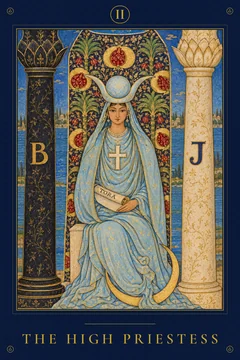
Justice + The High Priestess

Justice with the High Priestess: two pairs of pillars. One guards what is hidden, the other what follows; the decision depends on something not yet spoken. Ask for it before you weigh.

न्याय के साथ उच्च पुजारिन: स्तंभों के दो जोड़े। एक गुप्त की रक्षा करता है, दूसरा परिणाम की। निर्णय किसी ऐसी बात पर निर्भर है जो अभी कही नहीं गई, इसलिए तौलने से पहले उसे पूछिए।

Justice + The Emperor

Justice with the Emperor: law and its enforcement. A verdict will be carried out by someone with authority; make sure the record is right before it reaches him.

न्याय के साथ सम्राट: विधि और उसका प्रवर्तन। निर्णय को कोई अधिकार-संपन्न व्यक्ति लागू करेगा। उस तक पहुँचने से पहले अभिलेख सही कर लीजिए।

Justice + The Lovers

Justice with the Lovers: a choice weighed on its merits as well as on its feeling. Both belong in the pans; the spread asks which one has been left off.

न्याय के साथ प्रेमी: ऐसा चुनाव जो भावना के साथ गुण-दोष पर भी तौला गया। दोनों पलड़ों में होने चाहिए, और पाठ पूछता है कि कौन-सा छूट गया।

Justice + Seven of Swords

Justice with the Seven of Swords: the quiet theft comes to light. What was carried out of the camp is counted; return it before it is weighed.

न्याय के साथ तलवारों का सात: चुपचाप की गई चोरी प्रकाश में आती है। शिविर से जो ले जाया गया वह गिना जाता है। तौले जाने से पहले उसे लौटा दीजिए।

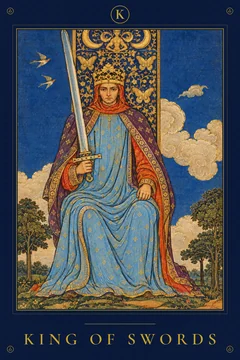
Justice + King of Swords

Justice with the King of Swords: the verdict and the judge. A clear ruling by a clear mind. Argue the facts and leave sympathy out of the brief.

न्याय के साथ तलवारों का राजा: निर्णय और न्यायाधीश। स्पष्ट मन का स्पष्ट फ़ैसला। तथ्यों पर तर्क कीजिए और सहानुभूति को अलग रखिए।

FAQ

Questions about Justice

What does the Justice tarot card mean?

A decision made by weighing, and a result that answers what was done. Waite gives equity, rightness, probity and the triumph of the deserving side in law. The crowned figure holds an upright sword in her right hand and level scales in her left, seated between two pillars: first weigh, then decide.

तौलकर लिया गया निर्णय, और ऐसा परिणाम जो किए गए कर्म का उत्तर देता है। वेट इसका अर्थ समता, औचित्य, सत्यनिष्ठा और विधि में योग्य पक्ष की विजय बताते हैं। मुकुटधारी आकृति दाहिने हाथ में सीधी तलवार और बाएँ में समतल तराज़ू थामे दो स्तंभों के बीच बैठी है: पहले तौलिए, फिर निर्णय लीजिए।

Is Justice a yes or no?

Upright, yes, provided your side of the account is fair; the card rewards the deserving side. Reversed, not as things stand: correct the imbalance, then ask again.

सीधा आने पर हाँ, बशर्ते आपका पक्ष न्यायसंगत हो, क्योंकि कार्ड योग्य पक्ष को पुरस्कृत करता है। उलटा आने पर इस रूप में नहीं: असंतुलन सुधारिए, फिर पूछिए।

What does Justice reversed mean?

The scales tilted or the verdict postponed. Waite's reversed meanings are law in all its departments, legal complications, bigotry, bias and excessive severity. In a reading it is a decision made by preference, or one avoided because it is uncomfortable. Write both sides down and decide this week.

झुका हुआ तराज़ू या टाला गया निर्णय। वेट के उलटे अर्थ हैं विधि अपने सभी विभागों में, विधिक उलझनें, कट्टरता, पक्षपात और अतिशय कठोरता। पाठ में यह पसंद से लिया गया निर्णय है, या असुविधाजनक होने के कारण टाला गया। दोनों पक्ष लिखिए और इसी सप्ताह निर्णय लीजिए।

What does Justice mean in love and as feelings?

As feelings, someone who is weighing the relationship honestly, measured and clear-headed, serious about terms and about keeping them. In an established relationship it is the account put right, duties shared and grievances heard to the end. Reversed, a private score being kept, or blame weighed unequally.

भावना के रूप में, कोई जो संबंध को ईमानदारी से तौल रहा है: बहा हुआ नहीं, मापा हुआ, शर्तों और उन्हें निभाने के विषय में गंभीर। स्थापित संबंध में यह ठीक किया हुआ लेखा है, बाँटे हुए कर्तव्य और अंत तक सुनी गई शिकायतें। उलटा, छिपकर रखा जा रहा हिसाब, या असमान रूप से तौला गया दोष।

Why is Justice numbered XI and not VIII?

Because Waite exchanged Justice and Strength when the 1909 deck was designed. In the Pictorial Key he writes that the change was made for reasons which satisfy him and that it carries nothing the reader needs explained. Later commentators point to the Golden Dawn's zodiacal order, Leo for Strength before Libra for Justice.

क्योंकि 1909 के डेक की रचना के समय वेट ने न्याय और शक्ति की अदल-बदल की। पिक्टोरियल की में वे लिखते हैं कि यह परिवर्तन उन कारणों से किया गया जो उन्हें संतुष्ट करते हैं और इसमें पाठक के लिए कुछ समझाने योग्य नहीं। बाद के टीकाकार गोल्डन डॉन के राशि-क्रम की ओर संकेत करते हैं: शक्ति के लिए सिंह, उसके बाद न्याय के लिए तुला।

Draw this card
See where Justice falls in your own spread

Free, bilingual, three readings a day.

Draw your cards
Related cards

Sources: A. E. Waite, The Pictorial Key to the Tarot (1910); Golden Dawn attributions (Lamed, Libra); The 1909 Smith-Waite plate, Pamela Colman Smith