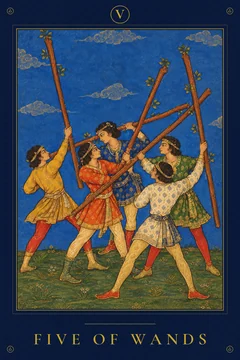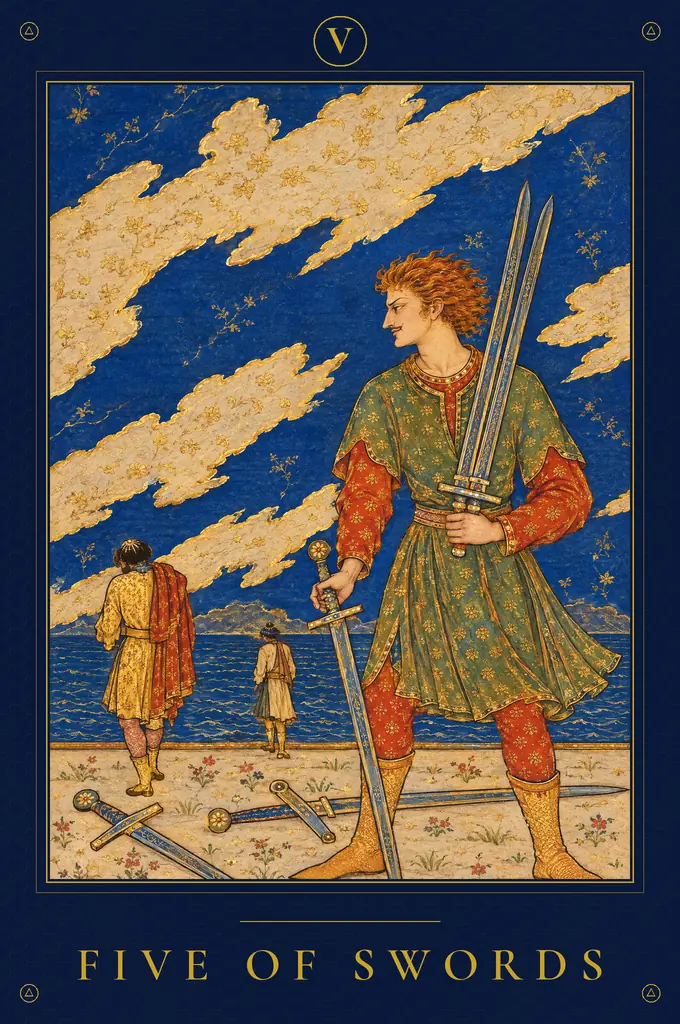
A young man with a mass of red-gold hair and a thin moustache stands in the foreground, filling the right half of the card. He turns his head to watch the two figures leave, the corner of his mouth lifted.
घने लाल-सुनहरे बालों और पतली मूँछ वाला एक युवक अग्रभाग में खड़ा है, कार्ड के दाहिने आधे भाग को भरता हुआ। वह दोनों आकृतियों को जाते देखने के लिए सिर मोड़ता है, होंठ का कोना उठा हुआ।
Waite calls him disdainful, the master in possession of the field. He has won. The card is interested in what that victory means once the opponents have gone and he is alone with what he gathered.
वेट उसे तिरस्कारपूर्ण कहते हैं, मैदान पर अधिकार जमाए स्वामी। वह जीत गया है। कार्ड की रुचि इसमें है कि विरोधियों के चले जाने और उसके अपने बटोरे हुए के साथ अकेले रह जाने पर उस विजय का अर्थ क्या है।
A green tunic patterned in gold over red sleeves and red hose, with yellow boots. Green is growth, red is desire; here desire shows through at every opening.
लाल आस्तीनों और लाल पाजामे के ऊपर सुनहरे बूटों वाला हरा अंगरखा, और पीले जूते। हरा वृद्धि है और लाल इच्छा, और यहाँ हर खुली जगह से इच्छा झाँकती है।
Pictorial Key, 1910, plate and divinatory meaning. Golden Dawn: Venus in Aquarius, Lord of Defeat.
पिक्टोरियल की, 1910, कार्ड का विवरण और फलादेश। गोल्डन डॉन: कुंभ में शुक्र, पराजय का स्वामी।
Upright: if the querent is the victor, ask whether the win was worth the relationship. Reversed: the smile is fading; offer the first word of reconciliation while it can still be received.
सीधा: यदि प्रश्नकर्ता विजेता है, तो पूछिए कि क्या यह जीत उस संबंध की कीमत के लायक थी। उलटा: मुस्कान फीकी पड़ रही है। मेल-मिलाप का पहला शब्द अभी कहिए, जब वह स्वीकार हो सकता है।