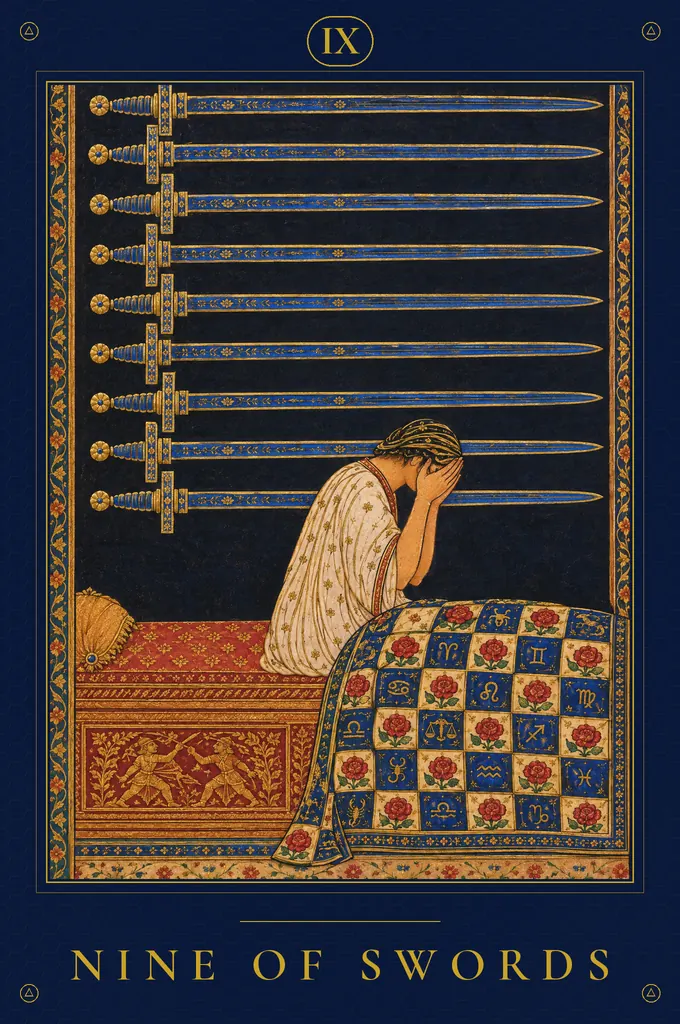
A figure in a cream nightgown sprigged with gold, a patterned cloth over the hair, has risen from the pillow and sits on the edge of a red bed, bent forward with the quilt over the knees. Waite describes a woman seated on her couch in lamentation.
सोने के छोटे बूटों वाला क्रीम रंग का रात्रि-वस्त्र पहने, केशों पर छापेदार कपड़ा, एक आकृति तकिये से उठकर लाल बिस्तर के किनारे बैठी है, आगे झुकी, घुटनों पर रज़ाई। वेट शोक में अपनी शय्या पर बैठी एक स्त्री का वर्णन करते हैं।
The mind that will not let the body rest. The posture is the hour after waking from a bad dream, or the hour when a worry arrives and sleep leaves. Waite calls it a card of desolation. Teachers today add anxiety, guilt and the fear of what tomorrow will bring.
वह मन जो शरीर को विश्राम नहीं करने देता। यह मुद्रा बुरे स्वप्न से जागने के बाद की घड़ी है, या वह घड़ी जब कोई चिंता आती है और नींद चली जाती है। वेट इसे विषाद का कार्ड कहते हैं। आज के शिक्षक इसमें चिंता, अपराध-बोध और कल क्या लाएगा इसका भय भी जोड़ते हैं।
The figure is not lying helpless. To sit up is already a movement out of sleep and toward the day. The same body that cannot rest can also stand, light a lamp, and speak to someone.
आकृति असहाय पड़ी नहीं है। उठ बैठना पहले से ही नींद से बाहर और दिन की ओर एक गति है। जो शरीर विश्राम नहीं कर पा रहा, वही खड़ा भी हो सकता है, दीपक जला सकता है, किसी से बात कर सकता है।
A. E. Waite, The Pictorial Key to the Tarot, 1910. Golden Dawn: Lord of Despair and Cruelty, Mars in Gemini.
ए. ई. वेट, द पिक्टोरियल की टु द टैरो, 1910। गोल्डन डॉन: निराशा और क्रूरता का स्वामी, मिथुन में मंगल।
Upright: the querent is carrying a worry that is costing them sleep. Reversed: the worry is easing or has been shared. In both, read the posture: they have already sat up, and the next movement is toward the light.
सीधा: प्रश्नकर्ता ऐसी चिंता ढो रहा है जो उसकी नींद छीन रही है। उलटा: चिंता घट रही है या बाँटी जा चुकी है। दोनों में मुद्रा पढ़िए: वह पहले ही उठ बैठा है, और अगली गति प्रकाश की ओर है।