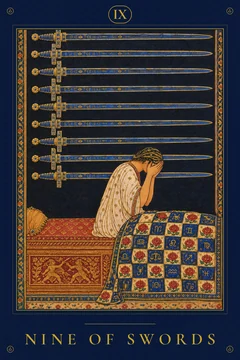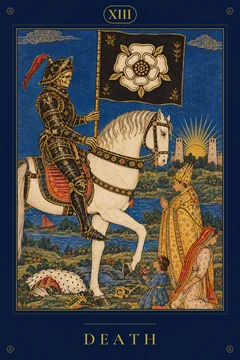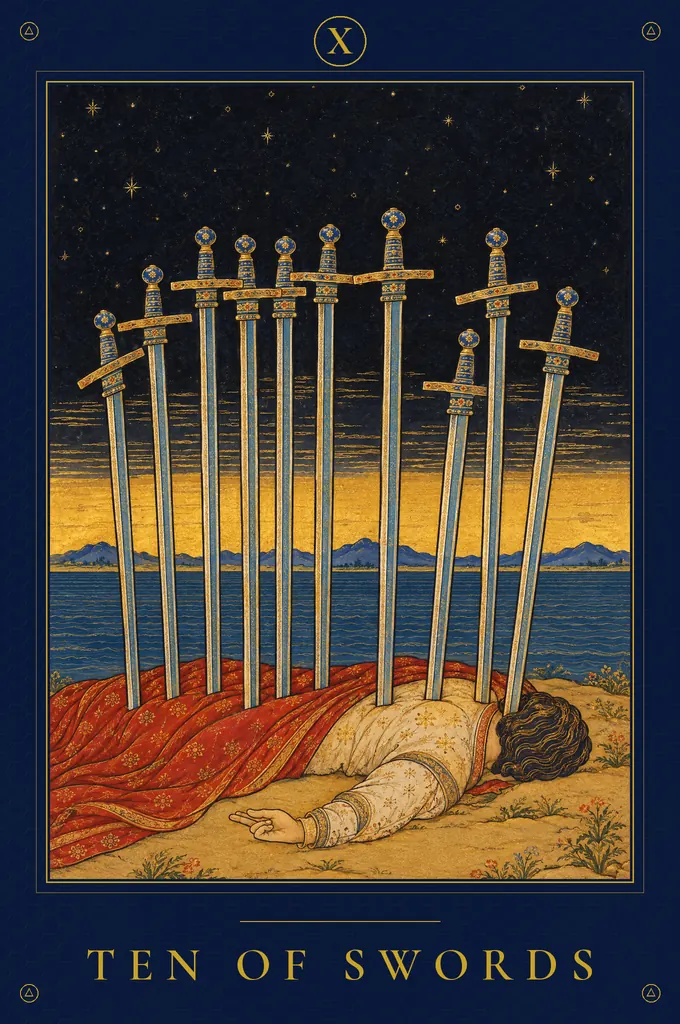
A man in a cream tunic sprigged with gold lies face down on the sandy shore, head of dark curls turned toward the right edge, one arm stretched out along the ground toward the left. Waite describes a prostrate figure, pierced by all the swords belonging to the card.
सोने के बूटों वाला क्रीम अंगरखा पहने एक पुरुष रेतीले तट पर औंधा पड़ा है, घुँघराले काले केशों वाला सिर दाहिने किनारे की ओर, एक बाँह भूमि पर बाईं ओर फैली। वेट एक साष्टांग पड़ी आकृति का वर्णन करते हैं, जिसे कार्ड की सारी तलवारों ने भेदा है।
The end of a situation: a project, a role, a hope, a way of being. The figure is completely still, and that stillness matters. The struggle and the defending are over. Whatever was being held has been let go because it could not be held any longer.
किसी स्थिति का अंत: एक परियोजना, एक भूमिका, एक आशा, जीने का एक ढंग। आकृति पूरी तरह निश्चल है, और यही निश्चलता असली बात है। संघर्ष और बचाव, दोनों समाप्त हो चुके हैं। जो कुछ थामा जा रहा था वह छूट गया, क्योंकि उसे अब और थामा नहीं जा सकता था।
His face is pressed to the earth. He cannot yet see the dawn behind him. The card shows the moment before a person lifts the head and notices that the light has changed.
उसका मुख धरती से सटा है। पीछे उगती भोर उसे अभी दिखाई नहीं देती। कार्ड वह क्षण दिखाता है जब व्यक्ति सिर उठाकर यह देखने ही वाला है कि प्रकाश बदल गया है।
A. E. Waite, The Pictorial Key to the Tarot, 1910. Golden Dawn: Lord of Ruin, Sun in Gemini.
ए. ई. वेट, द पिक्टोरियल की टु द टैरो, 1910। गोल्डन डॉन: विनाश का स्वामी, मिथुन में सूर्य।
Upright: something has ended and the querent is still lying where it fell. Reversed: they are beginning to rise. Read the figure as a chapter that has closed, never as anyone's fate, and turn the querent's eyes toward the horizon.
सीधा: कुछ समाप्त हुआ है और प्रश्नकर्ता अब भी वहीं पड़ा है जहाँ वह गिरा था। उलटा: वह उठने लगा है। आकृति को एक बंद हुआ अध्याय समझिए, किसी व्यक्ति का भाग्य कभी नहीं, और प्रश्नकर्ता की दृष्टि क्षितिज की ओर मोड़िए।