Reversed tarot cards: what they mean and how to read them
A reversed card keeps its meaning; what changes is how that meaning moves. This guide explains the main schools of reversal, how the hardest cards read reversed, whether to use reversals at all, and a three-step method for any upside-down card.
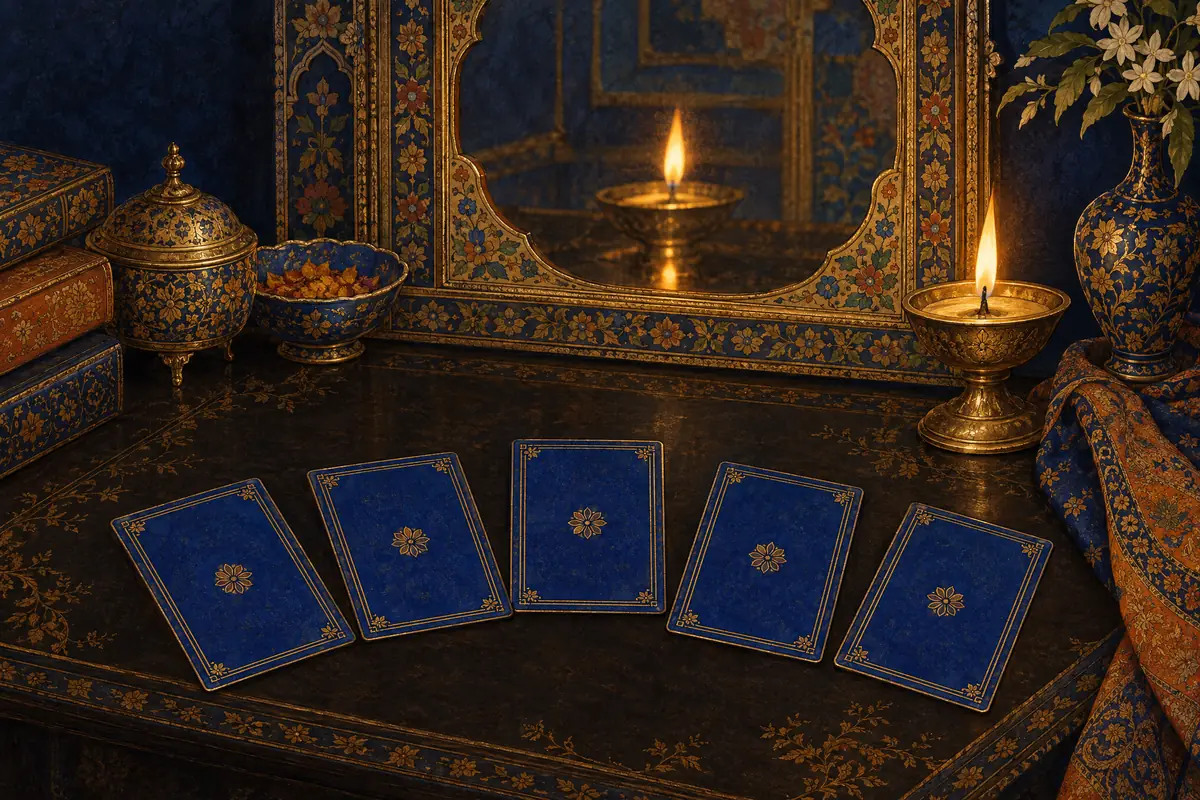
उलटा टैरो कार्ड वह है जो पाठक की दृष्टि से उलटा निकलता है। उसका अर्थ वही रहता है; बदलती है उस अर्थ की गति। TarotPandit में उलटे कार्ड को भीतर की ओर मुड़ी, विलंबित, या अधिक अथवा न्यून ऊर्जा के रूप में पढ़ा जाता है, कभी बंद द्वार के रूप में नहीं। ए. ई. वेट की 1910 की पुस्तक हर कार्ड का उलटा अर्थ देती है, और कई कठिन कार्ड उलटे होकर कोमल हो जाते हैं, जैसे तलवारों का तीन उलटा होने पर उपचार का आरंभ दिखाता है। उलटे कार्ड पढ़ने हैं या नहीं, यह फेंटने से पहले तय कीजिए और कम से कम तीस दिन उसी पद्धति पर टिके रहिए। हर उलटे कार्ड के लिए तीन बातें लिखिए: सीधी ऊर्जा क्या है, वह कैसे चल रही है, और कौन-सा कदम उसे फिर प्रवाह में लाएगा।
Reversed tarot cards are cards that land upside down from the reader's point of view. A reversed card keeps its meaning; what changes is how that meaning moves. At TarotPandit a reversal is read as the card's energy turned inward, delayed, or present in excess or too little, and never as a closed door. Each reversal names a step the querent can take.
That one sentence settles most of the worry beginners carry about reversed tarot cards. The rest of this guide explains where reversals come from, the main ways readers interpret them, whether you should use them at all, and a three-step method that turns any reversed card into practical guidance.
Where reversed meanings come from
The earliest tarot decks, the trionfi of fifteenth-century northern Italy, were made for a card game, and the hand-painted Visconti-Sforza cards that survive from that world carry no reading instructions at all. The occult reading of the tarot begins much later, with Antoine Court de Gébelin's Le Monde primitif in 1781, and grows through the nineteenth century until the Hermetic Order of the Golden Dawn, founded in 1888, builds its system of correspondences.
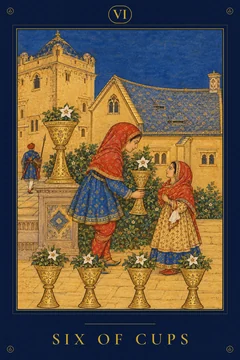
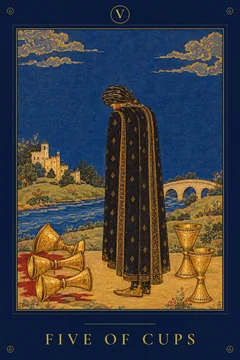
A. E. Waite's The Pictorial Key to the Tarot (1910), written to accompany the 1909 deck drawn by Pamela Colman Smith, gives a reversed meaning for every one of the seventy-eight cards. Some of Waite's reversed meanings are softened forms of the upright card. Others are a different idea altogether: for the Six of Cups upright he gives memories and the past, and reversed he points to the future, to what is soon to come. For the Five of Cups, upright loss, reversed he points to return and reconnection with kin. The TarotPandit card library keeps these traditional reversals where they help and reads them in its own register, explained below.
Tarot reversals meaning: the main schools
Readers group reversals in several ways. The names below are a modern way of describing what readers actually do. Each treats the reversed card as the same energy, moving differently.
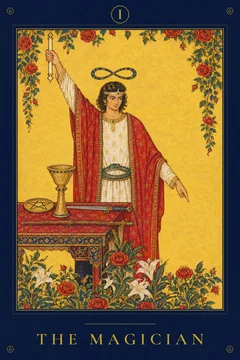
- Inward. The energy is working in private before it shows. The Magician reversed can be a skill being practised quietly, not yet ready to be shown.
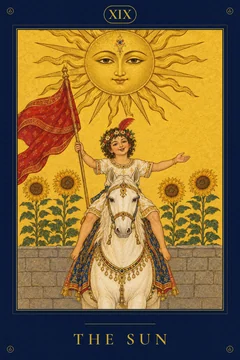
- Delayed. The energy will come, but not yet. The Sun reversed is success in a smaller or slower measure: the warmth is real and arrives later than hoped.
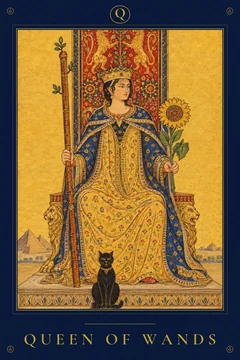
- Excess or lack. The energy is too strong or too weak. The Queen of Wands reversed is warmth turned into control, or confidence slipping into self-doubt.
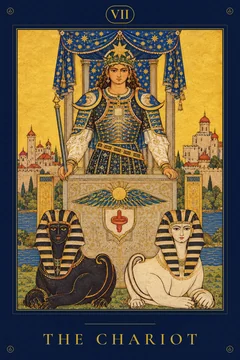
- Blocked. The energy is present but something stands in its way. The Chariot reversed is a stalled journey, forces pulling in different directions.
- Opposite. The reversed card means the contrary of the upright one. This is the bluntest school, and the one most likely to frighten a querent when used carelessly.
TarotPandit reads mainly in the first three schools, uses the fourth where the card's picture supports it, and treats the fifth with caution. When a traditional opposite meaning is kept, as with the Six of Cups, it is read as a direction to face, not as a verdict.
Reversals of the hard cards
The clearest way to see the register at work is with the cards people fear most. Many of them become gentler when reversed, because the turn shows the difficult energy already passing or held off.
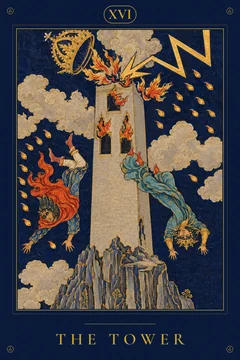
- The Tower reversed is the collapse resisted, delayed by denial, or already survived. The step is to name the structure plainly and stop holding it up by hand.
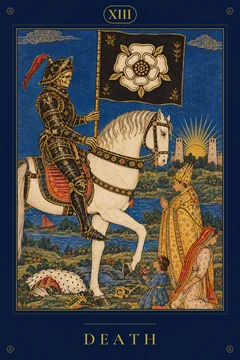
- Death reversed is an ending delayed, the old form clung to. The step is to let the ending finish, so that what follows can begin.
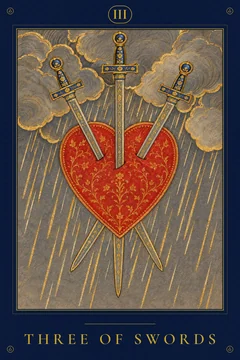
- The Three of Swords reversed is healing beginning, sorrow lingering but the storm passing. The step is patience and, when it is ready, forgiveness.
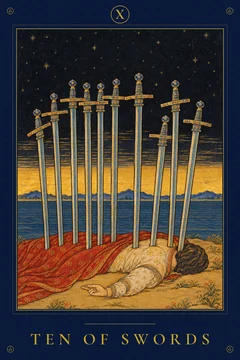
- The Ten of Swords reversed is recovery beginning, rising from the ground. The step is to gather the lessons and hold any new gain lightly.
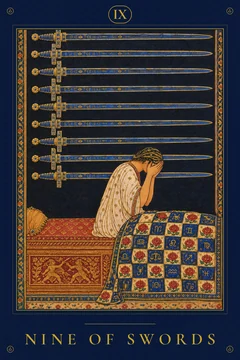
- The Nine of Swords reversed is worry easing, fear tested against fact. The step is to ask for help and check each fear against what is known.
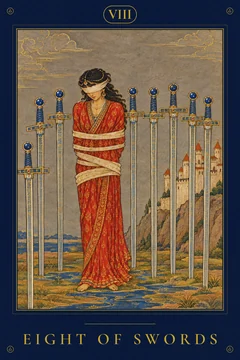
- The Eight of Swords reversed is the blindfold loosening. The step is to take the first step out of the circle of swords.
Notice that none of these says "you will fail" or "this is bad". Each describes what the energy is doing and what would help it move.
Should you read reversed cards?
Both practices are legitimate, and serious readers work each way. The question is which suits you, and the answer should be settled before you shuffle, not after you see a card you dislike.
Reasons to use reversals. They give each card two registers, which adds nuance in short spreads where there are few neighbours to qualify a card. They also show at a glance where energy is held in: a spread with several reversals often describes a situation that is waiting, private or stuck, and that is useful to know.
Reasons to read without them. The deck already holds a full range of experience, from the Ten of Cups to the Ten of Swords, and the card's neighbours can supply the shade a reversal would. Readers who work this way pay close attention to elemental dignities, the way cards of friendly or hostile elements strengthen or weaken one another, a method taught in the Intermediate course.
A sound beginner's path. Use reversals, read them in the inward, delayed and excess register, and keep that choice for at least thirty days of practice. If you prefer to begin without them, that is a serious choice too; write it down and study the cards on either side of each card more closely. Avoid switching approach from one reading to the next. Choose once, and review your choice after a month instead.
How to shuffle so that reversals occur
If you decide to use reversals, they have to be able to happen. Overhand and riffle shuffles keep every card facing the same way. To introduce reversals, cut the deck into two or three piles, turn one pile round, and shuffle them together. Some readers do this before every reading; others spread the deck face down on a cloth and mix it with both hands, which turns cards naturally. Our online spreads, such as the daily card and the past, present and future spread, draw reversals at random.
Decide too how you will read a card that falls out of the deck while shuffling. Many readers note it as a card that wanted attention; others simply return it. Either is fine, provided you are consistent.
A three-step method for any reversed card
Apply this to every reversal until it becomes habit.
- State the upright energy in one sentence. The Two of Wands upright: planning, and the decision to go further.
- State how it is moving. Inward, delayed, too much or too little. Reversed: a plan kept in the head, restlessness at home, aims divided.
- State the step that would restore it. Write the plan down and test it with one small step this month.
Then read the card in its position. A reversal in the recent past is something already easing. A reversal in the near future is a delay to prepare for. A reversal in the "you" position of a Celtic Cross is often the most useful card in the spread, because it shows the attitude the querent can change today. Our guide to the Celtic Cross spread explains how positions and pairs work together.
Cards that already show inversion
Some cards already picture a turn. The Hanged Man hangs upside down by choice and is calm. Upright he is surrender and a new perspective. Reversed, the library reads him as stalling, a pause that has gone on longer than it serves; the step is to end the waiting and decide. The principle is the same as for any other card: name the movement, then name the step.
Reversals in yes or no readings
In a yes or no reading, a reversal most often turns a clear answer into a conditional one. Each card page in the library carries a reversed quick answer. The Tower reversed gives: not yet; let the old structure finish falling before you decide. The Two of Wands reversed gives: maybe; test it with one small step first. Read these as conditions to meet, not as refusals. Our yes or no tarot guide explains when a yes-or-no question serves you and when to ask something wider.
Common mistakes, and what to do instead
- Reading a reversal as the bad version of the card. Say instead what the energy is doing and what would help it move.
- Deciding after the card appears. Choose your approach before the shuffle and write it in your notebook.
- Saying "this card is reversed, so the answer is no". Say "not yet" or "on this condition", and name the condition.
- Ignoring the position. A reversal in the past is easing; a reversal in the future is a delay to prepare for.
- Using fear language with the querent. Pair every caution with an action: avoid rushing the decision, and spend this week gathering the missing facts instead.
Next steps
Draw a daily card each morning for a week and, whenever a card comes reversed, write the three lines of the method above. Study the full lesson on upright and reversed cards in the Foundation course, and read the reversed section on any card page, such as The Tower or its Hindi page, मीनार. For the wider method, return to how to read tarot cards.
Questions
What does a reversed tarot card mean?
A reversed card carries the same meaning as the upright card, moving differently. At TarotPandit it is read as energy turned inward, delayed, or present in excess or too little. It is never a closed door; it names a step the querent can take to bring that energy back into flow.
Are reversed tarot cards bad?
No. Many difficult cards read more gently reversed: the Three of Swords reversed is healing beginning and the Ten of Swords reversed is recovery beginning. A reversal describes how energy is moving and what would help it, not a bad outcome.
Should beginners read reversed cards?
Either choice is sound. A good path is to use reversals, read them as inward, delayed or excessive energy, and keep that approach for at least thirty days. If you start without them, read each card's neighbours more closely. Decide before shuffling and avoid switching between readings.
What does a reversed card mean in a yes or no reading?
A reversal usually turns a clear answer into a conditional one: not yet, or yes on a condition. Each TarotPandit card page gives a reversed quick answer, such as the Two of Wands reversed: maybe; test it with one small step first.
How do you get reversed cards when shuffling?
Cut the deck into two or three piles, turn one pile round, and shuffle them together, or spread the cards face down and mix them with both hands. Ordinary overhand and riffle shuffles keep every card facing the same way, so reversals will not appear unless you introduce them.