The Celtic Cross tarot spread explained, position by position
The Celtic Cross is the most widely taught ten-card spread in the tarot. This guide explains each position, how Waite's numbering differs, and how to read the cards in pairs so that ten cards give one answer.
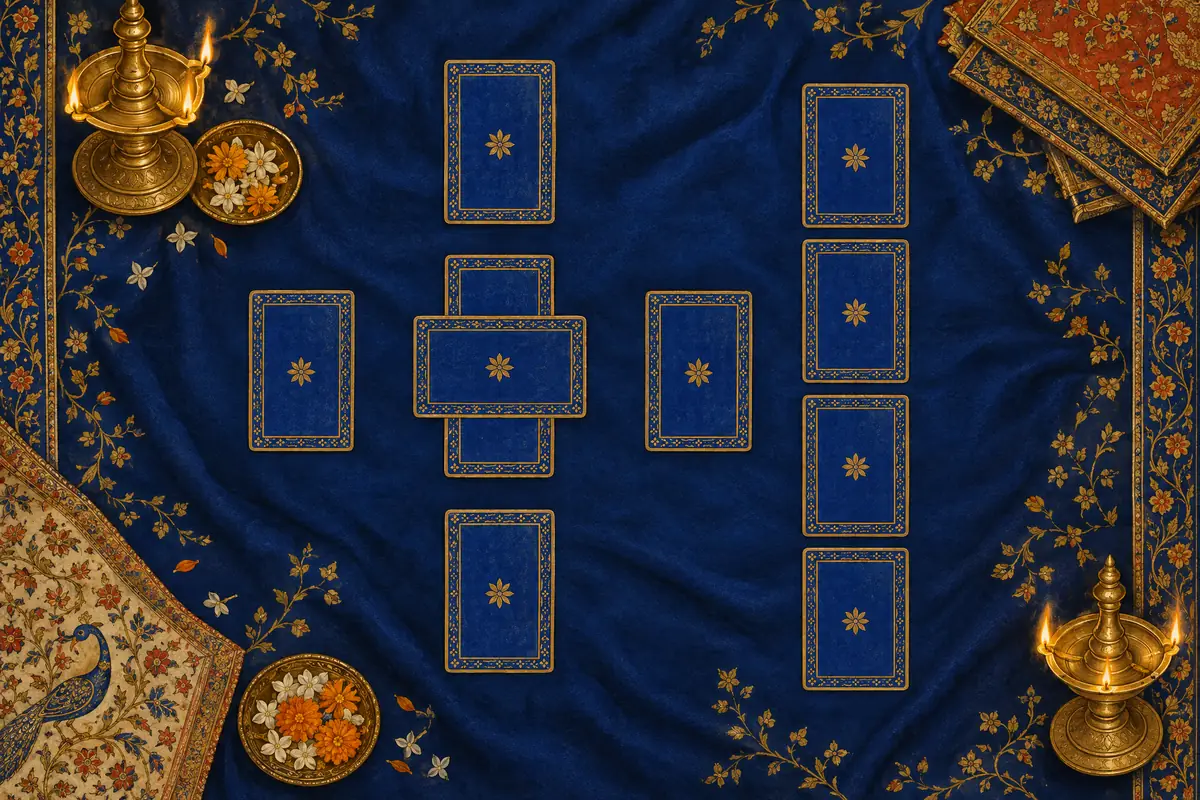
केल्टिक क्रॉस दस कार्डों का एक विन्यास है जो किसी एक प्रश्न को गहराई से पढ़ता है: छह कार्ड प्रश्न के चारों ओर एक क्रॉस बनाते हैं और चार कार्ड उसके बगल में एक स्तंभ में खड़े होते हैं। TarotPandit में स्थानों का क्रम इस प्रकार है: विषय का हृदय, जो उसके आड़े आता है, नींव, निकट अतीत, मुकुट, निकट भविष्य, आप, आपका परिवेश, आशाएँ और आशंकाएँ, और परिणाम। ए. ई. वेट की पुस्तक तीसरे से छठे स्थान का क्रम कुछ भिन्न रखती है, पर अर्थ वही रहते हैं। इस फैलाव को दस अलग उत्तरों की तरह नहीं, पाँच जोड़ों में पढ़िए: स्थिति और घर्षण, जड़ और फूल, अतीत से भविष्य, प्रश्नकर्ता और परिणाम, तथा कामना और फल। परिणाम एक प्रवृत्ति है, निश्चित फ़ैसला नहीं, और उसे बदलने की कुंजी प्रायः सातवें स्थान, अर्थात आपके अपने दृष्टिकोण, में होती है।
The Celtic Cross tarot spread is a ten-card layout that reads one question in depth. Six cards form a cross around the matter and four cards stand in a column beside it, called the staff. The cross shows the situation, what works across it, its root, its past, its possible best and its near future. The staff shows you, your surroundings, your hopes and fears, and the outcome.
It is the most widely taught ten-card spread in the tarot, and much of its modern currency comes from A. E. Waite, who printed a ten-card method under the heading "An Ancient Celtic Method of Divination" in The Pictorial Key to the Tarot (1910), the companion book to the 1909 deck drawn by Pamela Colman Smith. Whether the method is truly ancient or truly Celtic is not something the book proves, and this article does not claim it. What matters is that the layout works, and that it rewards a reader who understands why each card sits where it does.
You can lay it now in our free Celtic Cross reading, and follow along below.
The shape: a cross and a staff
Picture the cross first. One card sits at the centre, and a second card lies across it sideways. Around that centre pair, four cards make the arms: one below, one to the left, one above and one to the right. To the right of the whole cross, four cards stand in a column from bottom to top.
The geometry carries meaning. The vertical line of the cross runs from root to crown, from what the matter grows out of to what it could become. The horizontal line runs from past to future, from what is leaving to what is arriving. The centre pair is the present moment and its friction. The staff, standing apart, moves the reading from the situation to the person living it and on to where the whole thing is tending.
Celtic Cross positions, one by one
TarotPandit numbers the ten positions as follows. Each description says what to look for when a card lands there.
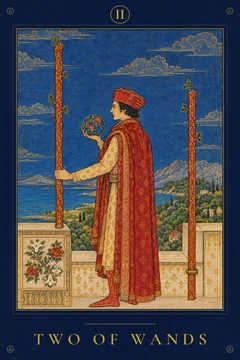
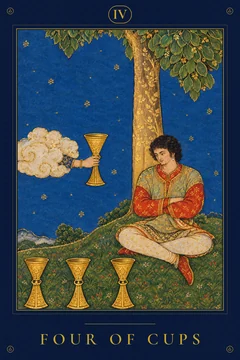
- The heart of the matter. The present situation and the atmosphere around the question. A Two of Wands here says the question is really about a decision to go further; a Four of Cups says it is about weariness and something not yet noticed.
- What crosses it. The force working across the situation. Often it is an obstacle; sometimes it is a resource that complicates. Read it as friction, not as an enemy.
- The foundation. The root beneath the matter: what has already become part of the querent and the situation. This is often older than the question itself.
- The recent past. An influence that is passing away. It has shaped the present and is losing its hold.
- The crown: what may be. The best that can be reached in the circumstances, or the aim the querent holds. It is a possibility, not a promise.
- The near future. The influence now coming into action, usually within weeks rather than years.
- You. The querent's attitude and position in the matter. This is the card the querent has most power over.
- Your environment. Other people, the household, the workplace and the conditions around the querent.
- Hopes and fears. What the querent wants and what they dread. These are often the same thing seen from two sides, which is why one card serves both.
- The outcome. Where the matter is tending if the present forces continue. Because position 7 is one of those forces, the outcome can move.
Waite's numbering, and the significator
If you learn from Waite's book or from an older guide, you will meet a different order for the middle of the cross. Waite numbers the crown third, the foundation fourth, the past fifth and the future sixth. Set side by side:
- Waite 3, what crowns the querent = TarotPandit 5, the crown
- Waite 4, what is beneath = TarotPandit 3, the foundation
- Waite 5, what is behind = TarotPandit 4, the recent past
- Waite 6, what is before = TarotPandit 6, the near future
The meanings are the same; only the numbering differs. Positions 1, 2 and 7 to 10 match. Translate before you compare a reading from one source with a reading from another.
Waite also begins by choosing a significator, a card chosen to represent the querent and laid down before the ten, with the first card placed over it. Many modern readers, our online spread included, leave the significator out and let position 7 describe the querent instead. Both practices are sound. If you use a significator, choose it before you shuffle and keep it out of the deck, so that it cannot also appear as a reading card.
How to read the Celtic Cross: in pairs
Most beginners read the ten positions as ten separate answers and end with a list. The spread was built as lines, and its meaning lives in how the cards along each line relate. Read these five pairs.
1 and 2: the situation and its friction. Say them as one sentence: "The matter is this, and that is working across it." If the crossing card is friendly to the heart in element and meaning, the opposition is mild, perhaps even useful.
3 and 5: the vertical axis. The foundation is the root and the crown is the flower. Ask whether this crown can grow from this root. A modest foundation under a high crown says the aim is reachable only if the root is fed first.
4 and 6: the horizontal axis. Past moving into future. Read the change: what is leaving, what is arriving, and whether the arrival is a reaction to the departure.
7 and 10: the querent and the outcome. When these two conflict, position 7 is usually where the room for change lies, because attitude is the one force the querent can alter today.
9 and 10: the wish and the result. When hope and outcome agree, the reading confirms. When they differ, the gap between them is often the most useful thing you can name.
Position 8 stands alone. Read it last among the staff, as the help or the pressure that surrounds everything else.
Count before you read
Before you interpret a single card, count. How many Major Arcana are there? Which suit leads, and which is missing? How many cards are reversed?
Several Major Arcana say the matter touches something larger than the day's arrangements. A leading suit names the field: Wands for action and ambition, Cups for feeling and relationship, Swords for thought and conflict, Pentacles for work, body and money. A missing suit names what the querent has not yet brought to the matter. Many reversals suggest energy held inward or delayed; our guide to reversed tarot cards explains how to read them without fear.
A worked example
A man in his forties asks: "What do I need to understand about the offer to move to another city for a promotion?" The cards:
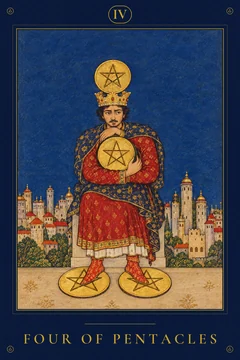
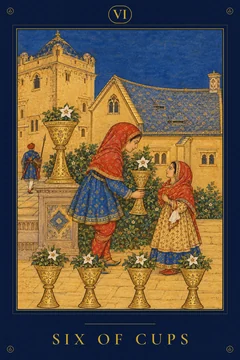
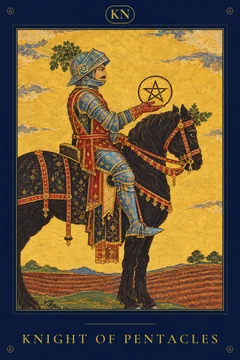
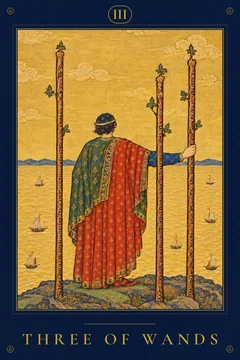
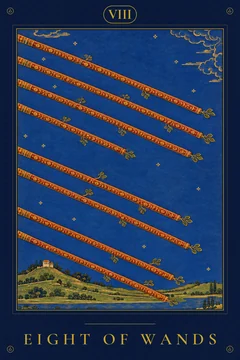
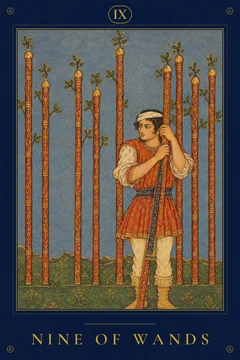
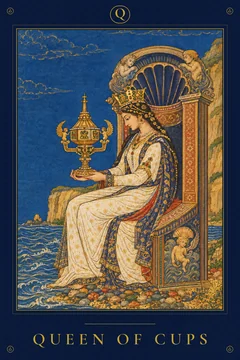
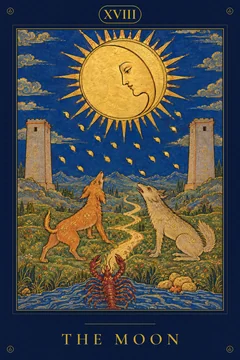
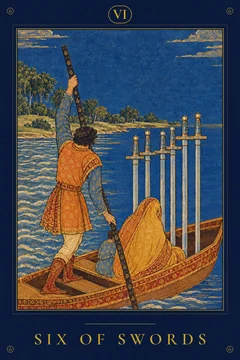
- Two of Wands 2. Four of Pentacles 3. Six of Cups 4. Knight of Pentacles, reversed 5. Three of Wands 6. Eight of Wands 7. Nine of Wands 8. Queen of Cups 9. The Moon 10. Six of Swords
The count. Four Wands, two Pentacles, two Cups, one Sword, one Major, one reversal. Fire leads: this is a question of ambition and the will to go. Only one Sword, and it sits at the outcome, so the clear thinking arrives late; it would help to bring it forward.
1 and 2. The decision to go, crossed by the wish to hold on to security. He wants the wider horizon and fears losing the ground he stands on.
3 and 5. Memory and home at the root, enterprise and foresight at the crown. The man on the hill in the Three of Wands watches his ships from a distance; the crown can grow from this root if he takes the home with him in the form of visits, rituals and kept ties, rather than cutting it off.
4 and 6. A routine that had lost its purpose is passing, and swift movement is arriving. Expect news soon, and expect it to move faster than he is used to.
7 and 10. He meets the matter guarded, braced for one more fight. The outcome is a calmer crossing, made with help. The tension is the lesson: the Six of Swords shows a passenger who lets someone else steer, and his vigilance is the main thing that could make the move harder than it needs to be.
9 and 10. The Moon carries both the hope and the dread of the unknown city. The outcome answers it with calmer water ahead.
Position 8. The Queen of Cups: someone at home feels this deeply and sees more than she says.
What the reader tells him. "The cards support the move. Avoid deciding from the grip of the Four of Pentacles; write down instead what security you need, in plain figures and conditions, and ask for it before the news arrives, because it will come quickly. Speak with the person at home this week and let her feelings shape how you go, not only whether. Let others help you across."
Common mistakes, and what to do instead
- Reading ten cards as ten answers. Read the five pairs and give one answer.
- Treating the outcome as fixed. Read it as a tendency and show the querent where position 7 can change it.
- Treating the crossing card as an enemy. Ask what it adds; friction often supplies what the heart lacks.
- Asking a yes-or-no question. The spread is built for "what do I need to understand". For a single yes or no, use the yes or no reading and read our yes or no tarot guide.
- Mixing numbering systems. Decide on one order and keep it in your notebook.
When to choose a smaller spread
The Celtic Cross suits a matter with several moving parts: a move, a change of work, a relationship at a turning point. For a quick check on the day, the daily card is enough. For a matter you want to see in time, the past, present and future spread gives three clear cards. For a choice between two paths, the decision spread is more direct. Choose the spread to fit the question, not the other way round.
Next steps
Lay a Celtic Cross reading for a real question of your own and write one sentence for each of the five pairs before you write your answer. To study the spread with a full case study, exercises and a quiz, take lesson six of the Intermediate course. If you are still learning the cards themselves, start with how to read tarot cards and the guide to tarot card meanings.
Questions
What are the 10 positions of the Celtic Cross?
On TarotPandit the positions are: 1 the heart of the matter, 2 what crosses it, 3 the foundation, 4 the recent past, 5 the crown or what may be, 6 the near future, 7 you, 8 your environment, 9 hopes and fears, and 10 the outcome. The first six form the cross and the last four form the staff beside it.
Why do Celtic Cross position numbers differ between books?
Waite's Pictorial Key to the Tarot (1910) numbers the crown third, the foundation fourth, the past fifth and the future sixth, and many later books follow him. Others, TarotPandit included, number the foundation before the crown. The meanings of the positions are the same; translate the numbers before comparing readings.
How do you read the Celtic Cross as a beginner?
Count the cards first: Major Arcana, leading suit, missing suit and reversals. Then read the positions in five pairs (1 and 2, 3 and 5, 4 and 6, 7 and 10, 9 and 10) and finish with position 8. Write one sentence per pair and combine them into a single answer of a few sentences.
Is the Celtic Cross outcome card final?
No. The tenth card shows where the matter is tending if present forces continue. The querent's own attitude, shown in position 7, is one of those forces and the one most open to change, so the outcome can shift when the querent acts differently.
Do you need a significator for the Celtic Cross?
It is optional. Waite chooses a significator card to represent the querent and lays the first card over it; many modern readers omit it and let position 7 describe the querent. If you use one, choose it before shuffling and keep it out of the deck.