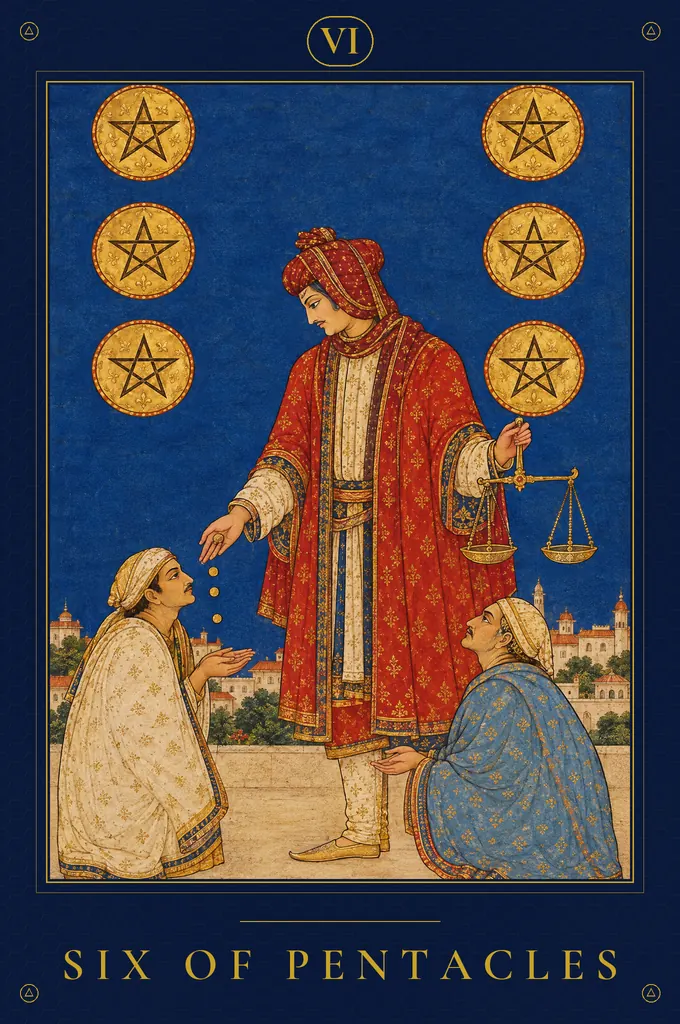
A tall man in a long red robe patterned with gold, worn over a striped blue and gold tunic, a red turban wound with a patterned scarf, and yellow boots. He stands upright and looks down at the figure on the left. Waite describes a person in the guise of a merchant.
सुनहरे बूटों वाले लंबे लाल चोगे में एक ऊँचा पुरुष, जो नीली-सुनहरी धारियों वाले अंगरखे के ऊपर पहना है, बूटेदार दुपट्टे से लिपटी लाल पगड़ी, और पीले जूते। वह सीधा खड़ा है और बाईं ओर की आकृति को नीचे देखता है। वेट व्यापारी के वेश में एक व्यक्ति का वर्णन करते हैं।
Success that has become able to share. He has more than he needs and has chosen to distribute it. Waite sees in the image a testimony to his success and to his goodness of heart together, so the card honours wealth that serves others.
ऐसी सफलता जो बाँटने योग्य हो गई है। उसके पास आवश्यकता से अधिक है और उसने उसे वितरित करना चुना है। वेट इस चित्र में उसकी सफलता और उसके हृदय की भलाई, दोनों का एक साथ साक्ष्य देखते हैं, इसलिए कार्ड उस धन का सम्मान करता है जो दूसरों की सेवा करता है।
He stands while the others kneel. The arrangement is honest about the inequality of the moment: one has, the others need. Dignity on both sides is what makes that difference bearable.
वह खड़ा है जबकि अन्य घुटनों के बल हैं। यह व्यवस्था उस क्षण की असमानता के विषय में ईमानदार है: एक के पास है, दूसरों को आवश्यकता है। दोनों ओर की गरिमा ही इस अंतर को सहने योग्य बनाती है।
Pictorial Key, 1910, description of the plate. Golden Dawn: Lord of Material Success, Moon in Taurus.
पिक्टोरियल की, 1910, कार्ड का विवरण। गोल्डन डॉन: भौतिक सफलता का स्वामी, वृषभ में चंद्र।
The merchant may be the querent or a benefactor in a position to help. Reversed, the giver enjoys standing over others; give without needing anyone to kneel.
व्यापारी प्रश्नकर्ता हो सकता है, या कोई संरक्षक जो सहायता करने की स्थिति में है। उलटा आने पर दाता दूसरों के ऊपर खड़े होने का आनंद लेता है। किसी से घुटने टिकवाए बिना दीजिए।