Tarot and astrology: Jyotish parallels, differences and how to use both
The astrology inside the tarot is Western and tropical, from the Golden Dawn; Jyotish is sidereal and reads a birth chart. This guide gives the interpretive parallels worth knowing, states the differences plainly, and shows when a question belongs to a Jyotishi.
टैरो में जो ज्योतिष दिखाई देता है वह गोल्डन डॉन (1888) की पश्चिमी, सायन पद्धति से आया है, जिसने प्रत्येक प्रमुख कार्ड को एक ग्रह, राशि या तत्व से जोड़ा। भारतीय ज्योतिष निरयण राशिचक्र का उपयोग करता है और जन्म के समय, तिथि और स्थान से बनी कुंडली पढ़ता है, इसलिए दोनों का संबंध केवल व्याख्यात्मक समानांतर का है, साझा उद्गम का नहीं। सात ग्रह-कार्ड, जैसे मीनार और मंगल या सूर्य और सूर्य, एक उपयोगी सेतु देते हैं, पर राहु-केतु, नक्षत्र, भाव और दशा का टैरो में कोई प्रतिरूप नहीं है। वर्षों की समय-गणना, विवाह के लिए कुंडली मिलान, मुहूर्त और उपाय ज्योतिषी का विषय हैं; वर्तमान स्थिति और सामने के निर्णय टैरो का। स्वास्थ्य के लिए चिकित्सक और निवेश के लिए योग्य सलाहकार से परामर्श कीजिए।
Tarot and astrology meet through the Hermetic Order of the Golden Dawn, which gave each Major Arcana card a planet, a sign or an element, and each numbered card a ten-degree decan of the zodiac. That astrology is Western and tropical. Jyotish, the Vedic astrology of India, is sidereal and reads a birth chart. The two connect by interpretive parallel, not by shared origin.
This guide sets out where the astrology in the tarot comes from, which parallels with Jyotish are worth knowing, where the two systems plainly differ, and how to decide whether a question belongs to a tarot reading or to a Jyotishi. Every parallel below is labelled as interpretive: a bridge a reader may walk across, not a claim that one tradition describes the other.
Where the astrology in tarot comes from
Tarot cards appear in fifteenth-century northern Italy as trionfi, cards for a game; the Visconti-Sforza cards survive from that world. There is no astrological reading system attached to them. The occult interpretation of the tarot begins in 1781 with Antoine Court de Gébelin's Le Monde primitif. The full astrological structure arrives with the Golden Dawn, founded in 1888, which linked the twenty-two trumps to the twenty-two Hebrew letters and, through them, to three elements, seven planets and twelve signs. The Golden Dawn also matched the thirty-six decans to the thirty-six pips from Two to Ten.
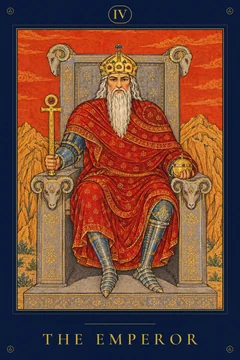
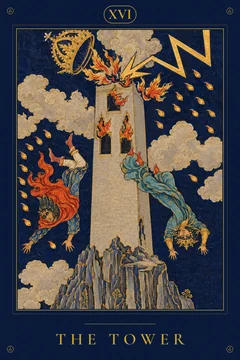
The deck drawn by Pamela Colman Smith and published by William Rider & Son in December 1909 was made inside that system, which is why A. E. Waite placed Strength at VIII and Justice at XI: with that swap, the sign trumps run through the zodiac in order from Aries to Pisces. Every card page on TarotPandit carries this attribution, for example Aries for The Emperor and Mars for The Tower.
So the astrology inside the tarot is Western astrology of the late nineteenth century. It did not come from India, and Jyotish did not come from it.
Tarot vs Jyotish: the plain differences
Before any parallel, the differences. They are large, and a reader who blurs them misleads the querent.
- What is read. Jyotish reads a birth chart calculated from the exact date, time and place of birth. Tarot reads cards drawn for a question at the moment of asking. No calculation is involved.
- The zodiac. The Golden Dawn attributions use the tropical zodiac, fixed to the seasons. Jyotish uses the sidereal zodiac, fixed to the stars. The two now differ by about twenty-four degrees on the widely used Lahiri reckoning, nearly a whole sign, so the sign dates printed on tarot card pages do not match a Jyotish calendar.
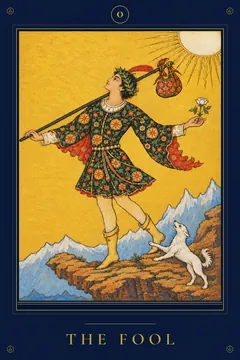
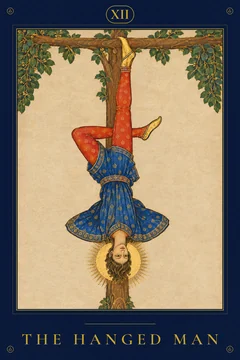
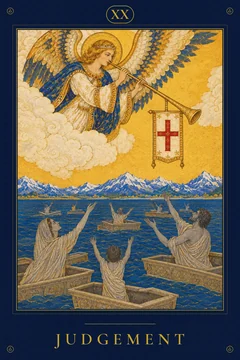
- The planets. Jyotish counts nine grahas: the seven visible planets with Rahu and Ketu, the lunar nodes. The Golden Dawn scheme has no trump for Rahu or Ketu. The outer planets that some modern card pages mention, Uranus for The Fool, Neptune for The Hanged Man and Pluto for Judgement, are modern Western additions and have no place in classical Jyotish.
- What Jyotish has that tarot lacks. The twenty-seven nakshatras, the twelve bhavas or houses of the chart, divisional charts, the dasha periods that time events across a whole life, and a body of classical Sanskrit texts. Tarot has spread positions, which resemble houses only loosely.
- Timing. Jyotish times events through dashas and transits over months and years. Tarot speaks well about the present and the coming weeks and is honest only in that range.
- Remedies. Jyotish has a tradition of upayas, remedial measures given after studying a chart. A tarot reading names a step the querent can take; it does not prescribe remedies.
Seven planets, seven trumps: interpretive parallels
The seven planetary trumps give the most natural bridge, because both traditions know the same seven visible planets. Read each line as an interpretive parallel, and note where the meanings part ways.
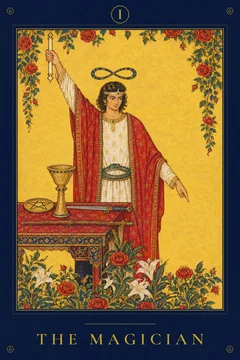
- The Magician, Mercury. In Jyotish, Budha signifies intellect, speech and commerce. The Magician's table of tools and his raised wand read naturally as Budha's skill of hand and word. Budha's habit of taking on the nature of the planets it joins has no counterpart in the card.
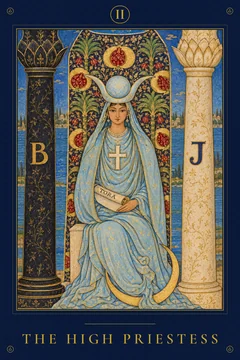
- The High Priestess, the Moon. In Jyotish, Chandra is the mind itself, reflecting the light of the Sun. Her silence and half-hidden scroll sit well beside that. Chandra also signifies the mother, which the card does not.
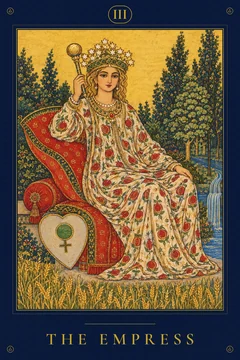
- The Empress, Venus. Shukra signifies love, beauty, comfort and marriage. The Empress's wheat field and cushions show the abundance side of Shukra; Shukra's role as guru of the asuras has no echo in the card.
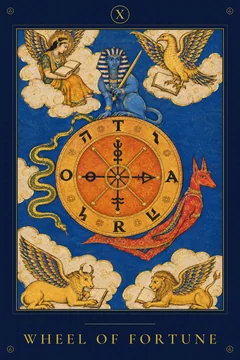
- Wheel of Fortune, Jupiter. Guru is the planet of expansion, wisdom and grace. The turning wheel reads as fortune increasing; in Jyotish Guru is also the teacher and the significator of children, which the card does not carry.
- The Tower, Mars. Mangala is force, courage and sudden action. The lightning fits. Mangala also signifies land and siblings, which the Tower does not touch.
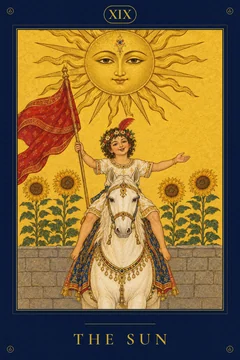
- The Sun, the Sun. Surya signifies the soul, vitality, the father and authority. The child on the white horse reads as vitality without strain. This is the closest of the seven parallels.
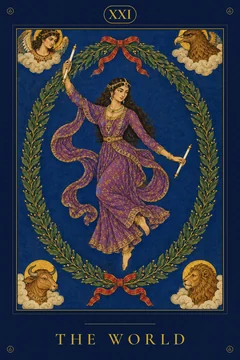
- The World, Saturn. Shani is the slow teacher of time, discipline and delay. The parallel is partial: the World is completion, and it fits only Shani's other face, the reward for a task carried to its end. A reader who brings Shani's heaviness into the World misreads the card.
Twelve signs, twelve rashis
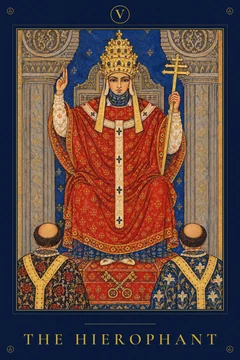
The twelve sign trumps can be set beside the twelve rashis by name: The Emperor and Mesha, The Hierophant and Vrishabha, The Lovers and Mithuna, The Chariot and Karka, Strength and Simha, The Hermit and Kanya, Justice and Tula, Death and Vrishchika, Temperance and Dhanu, The Devil and Makara, The Star and Kumbha, The Moon and Meena.
The names correspond; the sky does not. Because of the zodiac difference, a person who is Leo in the tropical system is often Karka in the sidereal one. Never tell a querent that the Strength card "is" their rashi. The card describes a quality in the reading, not a placement in their chart.
Decans and drekkanas
Both traditions divide each sign into three parts of ten degrees. In the Golden Dawn these are the decans, ruled by the planets in the old Chaldean order beginning with Mars in the first decan of Aries, so the Two of Wands is Mars in Aries and the Three of Swords is Saturn in Libra. In Parashari Jyotish they are the drekkanas, and the three parts of a sign are ruled by the lord of the sign, the lord of the fifth sign from it and the lord of the ninth. The shape is shared; the rulers differ. A student of both will recognise the structure, and should keep the two sets of rulers apart.
Tarot and vedic astrology: which question belongs where
The useful question is which tool fits the matter in front of you.
Take it to a Jyotishi when:
- The question needs a birth chart: the long pattern of a life area such as career, marriage or children.
- You want timing over years, which is the work of the dashas.
- You want compatibility for marriage through kundli milan.
- You need a muhurta, an auspicious date and time for an event.
- You are asking about remedies.
Use a tarot reading when:
- The question is about the present situation and the choices open to you now.
- You want to see a decision from more than one side; the decision spread is built for this.
- You want to understand your own feelings, or the shape of a relationship this season, through the love or relationship cup spread.
- You want a frame for the coming weeks, as in the month ahead spread.
For health and money, neither is enough on its own. A card or a chart can point attention to rest, routine or a budget. Diagnosis belongs to a doctor, and investment decisions belong to a qualified adviser.
How to use both
The two systems work well in sequence, each in its own range.
- Let the chart describe the season. If a Jyotishi has told you that you are in a period of Shani, read that as the long climate: discipline, slow results, responsibility.
- Let the cards speak to the question inside it. Draw for a present matter, such as a job offer this month. A career reading that shows the Eight of Pentacles fits that climate as an interpretive parallel: patient work, skill built piece by piece.
- Keep the layers apart. The attribution on a card describes the card, not your chart. Saturn in Libra on the Three of Swords says nothing about where Saturn sits in your horoscope.
- Do not use one to overrule the other. When the cards and the chart seem to disagree, ask whether they are answering the same question. Usually they are not: one describes years, the other weeks.
Common mistakes, and what to do instead
- Calling tarot "Vedic". The tarot is European in origin. Say instead that it can be read alongside Jyotish, with interpretive parallels.
- Reading a card's sign as the querent's sign. Read the attribution as a quality of the card.
- Using tarot for long-range timing. Use it for the coming weeks, and take timing over years to a Jyotishi.
- Mixing tropical and sidereal dates. Name which zodiac you mean whenever a date is given.
- Quoting a shastra to prove a card's meaning. The texts of Jyotish do not mention the tarot. Present any parallel as a bridge, as the vedic notes on our card pages do, for example on The Tower and its Hindi page मीनार.
Next steps
Try a month ahead reading for a question that sits inside the season your chart describes. To study the Golden Dawn planets, signs and decans properly, take the lesson on astrology in the tarot in the Intermediate course. For the basic method, read how to read tarot cards, and for all seventy-eight cards and their attributions, see tarot card meanings.
Questions
Is tarot connected to astrology?
Yes, through the Hermetic Order of the Golden Dawn, founded in 1888, which linked each Major Arcana card to a planet, a sign or an element and each pip from Two to Ten to a decan of the zodiac. The 1909 deck was drawn inside that system. This is Western, tropical astrology.
Is tarot part of Vedic astrology?
No. Tarot began in fifteenth-century Italy and its astrology comes from the Western Golden Dawn tradition. Jyotish is a separate Indian system that reads a calculated birth chart. Readers can draw interpretive parallels between them, but they do not share an origin.
What is the difference between tarot and Jyotish?
Jyotish calculates a birth chart from the date, time and place of birth and times events over years through dashas and transits. Tarot reads cards drawn for a present question and speaks best about the coming weeks. Jyotish uses the sidereal zodiac and nine grahas including Rahu and Ketu; the tarot attributions are tropical and have no Rahu or Ketu.
Which tarot card is linked to Saturn or Shani?
In the Golden Dawn scheme Saturn is attributed to The World. As an interpretive parallel it fits Shani's reward for a task carried to its end, but not Shani's heaviness or delay, because the World is a card of completion.
Should I ask a tarot reader or a Jyotishi?
Ask a Jyotishi for anything that needs a birth chart: timing over years, marriage compatibility through kundli milan, a muhurta, or remedies. Use tarot for a present situation, a decision in front of you, or the coming weeks. For health see a doctor, and for investments a qualified adviser.