हर कार्ड TarotPandit पुस्तकालय से अपने स्थान के अनुसार पढ़ा जाता है: कार्ड का कथन, स्थान, कार्डों का संयोग और व्यावहारिक मार्गदर्शन, अंग्रेज़ी और हिंदी में, अंत में सार सहित।
मार्गदर्शिका
यह विन्यास कब चुनें
जब आपके सामने दो वास्तविक विकल्प हों और मन बार-बार दोनों के बीच झूलता हो, जैसे दो नौकरियों के प्रस्ताव, या नए शहर जाना और यहीं रहना, तब यह विन्यास बिछाइए। यह सबसे अच्छा तब काम करता है जब फेंटने से पहले हर मार्ग को एक वाक्य में कहा जा सके। विकल्प एक ही हो और प्रश्न केवल इतना कि उसे लें या नहीं, तो हाँ या ना कार्ड शीघ्र उत्तर देता है। मार्ग तीन या अधिक हों तो पहले उन्हें दो तक सीमित कीजिए। निर्णय किसी बड़ी उलझन के भीतर हो तो पहले केल्टिक क्रॉस से पूरी स्थिति देखिए।
संख्याएँ नीचे दिए स्थानों से मेल खाती हैं
हाथ से
इसे कैसे बिछाएँ
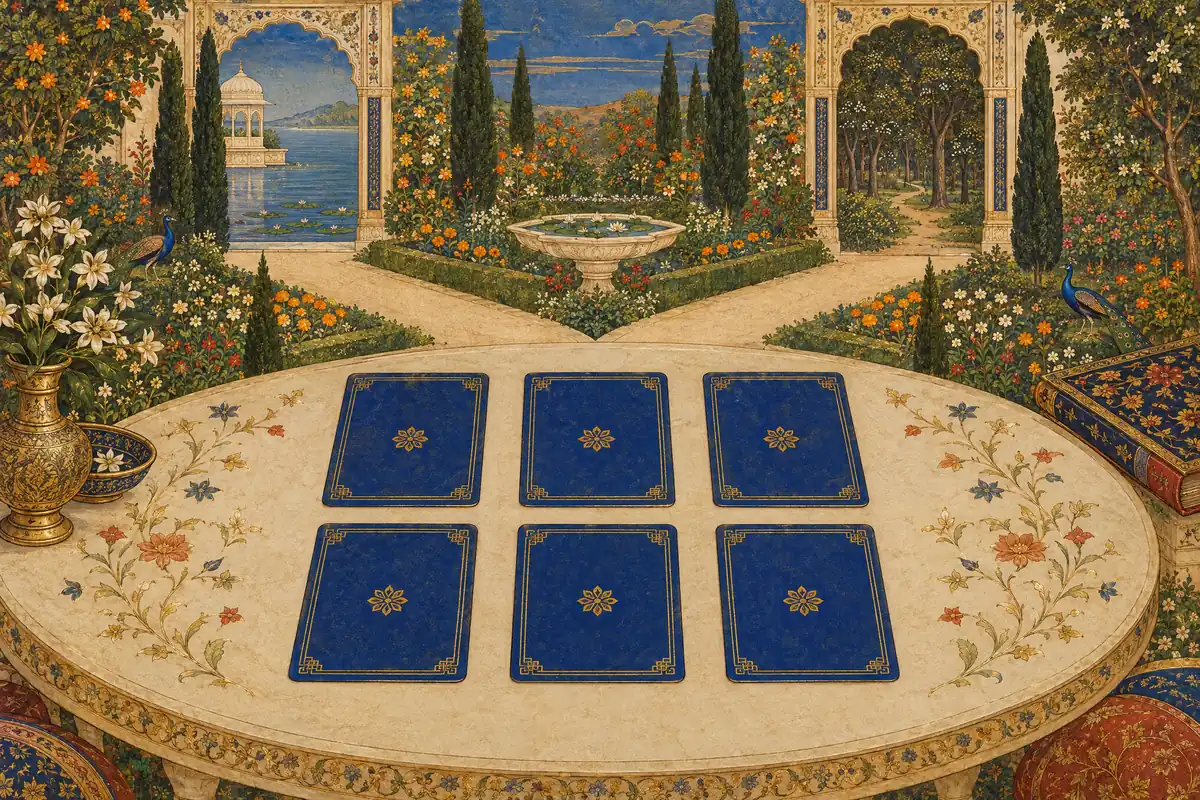
Before you shuffle, write down which option is Path A and which is Path B, and do not swap them afterwards. Lay the first three cards in a column on your left for Path A: now nearest you, later above it, outcome furthest away. Lay the next three in a column on your right for Path B, in the same order. You now have a grid of three rows, the two nows side by side, then the two laters, then the two outcomes. Read down each column, then across each row.
हर स्थान क्या पूछता है
1
मार्ग क: अभी Path A: now
चुनाव के इस क्षण में पहला मार्ग कैसा लगता है और कहाँ खड़ा है, उसके आकर्षण और उसके भय सहित। इसे सबसे पहले ठीक सामने के कार्ड, मार्ग ख: अभी, से मिलाइए।
2
मार्ग क: आगे Path A: later
नयापन उतरने के बाद पहला मार्ग आपसे क्या माँगता है, मोटे तौर पर बीच के महीने। अधिकतर निर्णय इसी दौर में सफल या विफल होते हैं, इसलिए इसे परिणाम जितना ही महत्व दीजिए।
3
मार्ग क: परिणाम Path A: outcome
यदि पहला मार्ग ईमानदारी से निभाया जाए तो वह कहाँ जाकर ठहरता है। इसे नीचे वाले कार्ड के साथ पढ़िए, क्योंकि कठिन मध्य से निकला परिणाम कमाया हुआ परिणाम है।
4
मार्ग ख: अभी Path B: now
यही प्रश्न दूसरे मार्ग से। यदि एक विकल्प वहीं बने रहना है, तो यह कार्ड दिखाता है कि ठहरना सच में कैसा लगता है जब आप उसे सीधे देखते हैं।
5
मार्ग ख: आगे Path B: later
दूसरे मार्ग का बीच का दौर। इसे मार्ग क: आगे के पास रखिए और पूछिए कि आप कौन-सी कठिनाई उठाना अधिक पसंद करेंगे, क्योंकि हर मार्ग में एक होती है।
6
मार्ग ख: परिणाम Path B: outcome
दूसरा मार्ग कहाँ जाकर ठहरता है। दोनों परिणामों की तुलना सबसे अंत में कीजिए, जब देख लें कि हर स्तंभ किस दिशा में चलता है।
एक पाठ, आरंभ से अंत तक
एक उदाहरण पाठ
A 41-year-old schoolteacher in Lucknow, fourteen years at a government-aided school, offered the post of vice-principal at a new private school in Noida.
"Should I take the vice-principal post in Noida or stay at my school in Lucknow?"
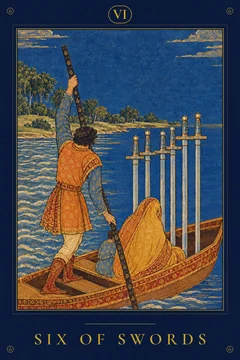
Path A is taking the post. A ferryman poles a narrow boat toward a wooded shore, a hooded woman and a child seated among six upright swords. Reversed, the crossing waits at the jetty. Waite reads the reversal as declaration, something carried in silence that must now be spoken aloud, and modern readers add a departure held up by unfinished business. Both fit her. Before she steps into the boat she has to tell her principal and her colleagues of fourteen years, and that conversation, more than the move itself, is what makes the post feel heavy today.
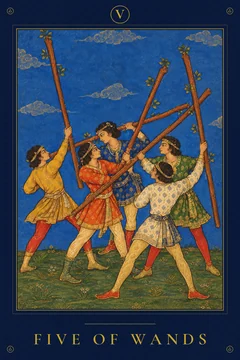
Five young men in tunics of five colours swing their staves in a skirmish nobody has won yet. In the middle months of the new post this is a staff room of strong opinions in a young school still deciding how things are done, with a vice-principal expected to hold the field. Waite allows the card a sham fight as well as real competition, and upright it is the useful kind of friction. She will be tested, and the test will make her better at the work.
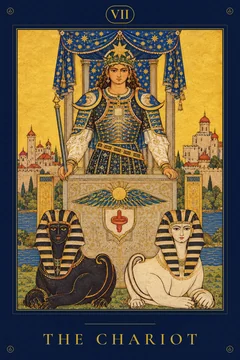
A crowned driver stands in a stone chariot with no reins in his hands, a black sphinx and a white one at rest before him. Card VII is victory through direction, opposed forces held under a single will. After the skirmish of the Five, this is the vice-principal whose quarrelling staff now pull the same way. It is the only Major Arcana card in either column, and it lands at the end of Path A, which gives this road a weight the other lacks.
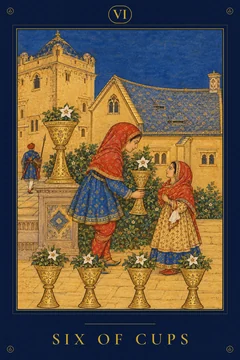
Path B is staying. In an old courtyard a boy offers a smaller girl a cup filled with white flowers. Staying feels warm and familiar, full of fourteen years of goodwill, of colleagues who were once her teachers and former pupils who now bring their own children to the gate. Waite reads the card as memories and a happiness that comes from the past. That warmth is real and deserves honour. Notice, though, which way the card looks: its gifts come from what was.
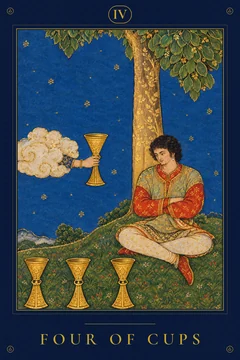
A young man sits under a tree with folded arms, staring at three cups on the grass, while a hand from a cloud holds out a fourth he does not see. In the middle stretch of staying, the comfort goes flat. The lessons repeat, and a restlessness sets in that she cannot name. The card's real warning is the overlooked offer, and in this reading the offer is plain to see: the Noida post, held out from the cloud while she looks at the cups she already has.
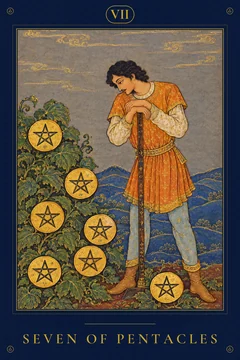
A young man leans on his hoe and looks at the coins growing on his vine. Upright he is patient. Reversed, the Golden Dawn's Lord of Success Unfulfilled becomes impatience: effort that feels unrewarded, or work kept up after it has stopped growing. At the end of this road stands a good teacher still tending a vine that has given what it can. A reversal names a delay and asks for a correction. If she stays, she will need a new field inside the old school, a department to lead or a programme of her own to build.
सार
पहले पंक्तियाँ पढ़िए। दोनों मार्ग छह से आरंभ होते हैं, तलवारों का छह और प्यालों का छह, और दोनों में कोई किसी की सहायता कर रहा है। अंतर दिशा का है: नाव नए तट की ओर है, आँगन स्मृतियों की ओर। बीच की पंक्ति में दंडों के पाँच की मुखर प्रतिस्पर्धा के सामने प्यालों के चार का फीका संतोष है, और शांत कठिनाई प्रायः अधिक दिन टिकती है। अब स्तंभ पढ़िए। मार्ग क वायु और अग्नि से होता हुआ रथ तक चढ़ता है। हर स्तंभ में एक उलटा कार्ड है, पर विपरीत सिरों पर: मार्ग क की कठिनाई आरंभ में है और पखवाड़े भर में सुलझ सकती है, मार्ग ख की कठिनाई वर्षों बाद अंत में आती है। उत्तर नोएडा की ओर झुकता है। स्वीकार करने से पहले वे एक पूरा कार्य-दिवस नए विद्यालय में बिताएँ और उप-प्रधानाचार्य के दायित्व लिखित में माँगें।
बिछाने से पहले
सामान्य भूलें
छहों कार्डों को आरंभ से अंत तक एक ही कथा की तरह पढ़ना। हर स्तंभ को ऊपर-नीचे और फिर हर पंक्ति को आमने-सामने पढ़िए, और तुलना को निर्णय करने दीजिए।
कार्ड खुलने के बाद तय करना कि कौन-सा मार्ग क है और कौन-सा ख। फेंटने से पहले दोनों विकल्प लिख लीजिए और फिर उन्हें मत बदलिए।
किसी मार्ग को केवल उसके परिणाम-कार्ड से आँकना। आगे वाले कार्ड को बराबर महत्व दीजिए, क्योंकि वही दौर सबसे लंबा जिया जाता है।
तीन या अधिक विकल्पों के लिए यह विन्यास बिछाना। पहले विकल्प दो तक सीमित कीजिए, या हर जोड़े के लिए अलग विन्यास बिछाइए।
What if both paths look good in a decision tarot spread?
Then the choice is freer than you feared, and either road can work. Look at the later row and choose the difficulty you would rather carry. If they still tie, take the path you can begin sooner.
Can I use the decision spread for a yes or no question?
Yes. Make Path A doing the thing and Path B leaving it undone. This often works better than a single card, because it shows the cost of saying no as clearly as the cost of saying yes.
निर्णय विन्यास कैसे काम करता है?
आप अपना प्रश्न पूछते हैं, डेक फेंटते हैं और 6 कार्ड चुनते हैं। हर कार्ड अपने स्थान के अनुसार पढ़ा जाता है, और अंत में एक सार उन्हें जोड़ता है।
क्या पाठ निःशुल्क हैं?
आज का कार्ड, हाँ या ना, अतीत-वर्तमान-भविष्य और केल्टिक क्रॉस निःशुल्क हैं, बिना खाते के प्रतिदिन तीन पाठ। शेष विन्यास प्रीमियम का भाग हैं।
उलटे कार्ड का क्या अर्थ है?
उलटा कार्ड वही ऊर्जा है जो भीतर की ओर मुड़ी, विलंबित या अलग ढंग से माँगी गई है। TarotPandit इसे कभी बंद द्वार के रूप में नहीं पढ़ता: हर उलटा कार्ड एक कदम बताता है।
क्या पाठ हिंदी में हैं?
हर पाठ अंग्रेज़ी और हिंदी दोनों में आता है। कौन-सी भाषा पहले हो, यह भाषा-बटन से चुनिए।