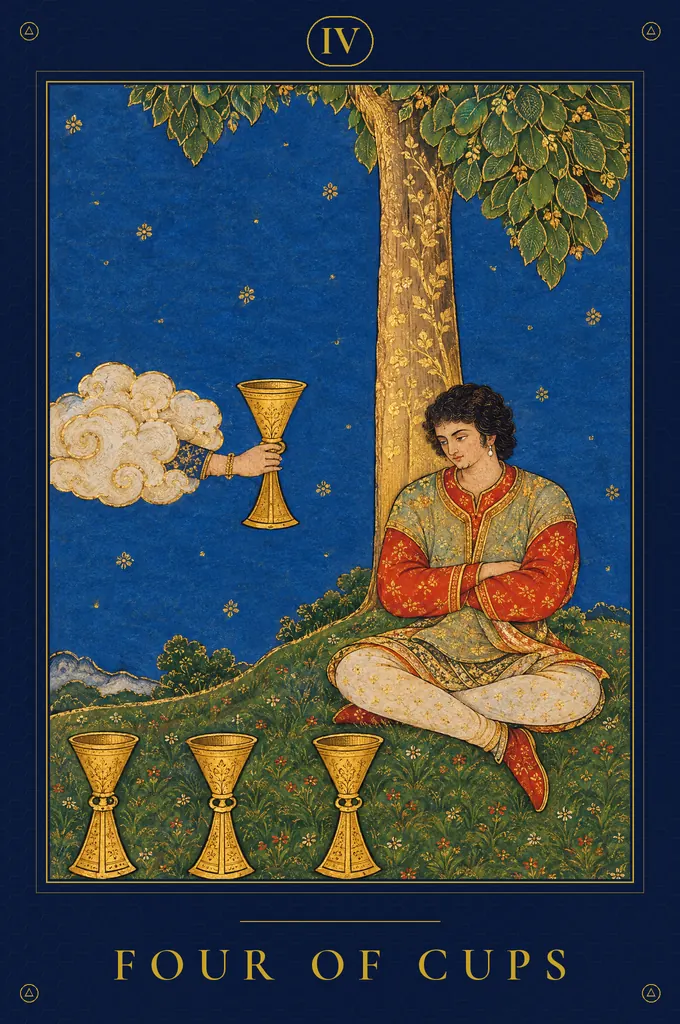
प्यालों का चार (Four of Cups) टैरो कार्ड का अर्थ है जो पहले से हाथ में है उससे क्लांति, और ऐसा प्रस्ताव जो अभी देखा नहीं गया। एक युवक पेड़ के नीचे बैठा है, भुजाएँ बँधी हैं और पैर मुड़े हैं। वह घास पर रखे तीन प्यालों को देख रहा है, जबकि बादल से निकला एक हाथ चौथा प्याला बढ़ा रहा है। सीधा आने पर यह असंतोष और विमुखता है। उलटा आने पर, वेट के अनुसार, जब वह अंततः ऊपर देखता है तो यही नवीनता और नए संबंधों में बदल जाता है।
The Four of Cups tarot card means weariness with what is already at hand, and an offer not yet seen. A young man sits under a tree, arms folded and legs crossed, gazing at three cups on the grass, while a hand from a cloud holds out a fourth. Upright it is discontent and withdrawal; reversed, in Waite's reading, it turns to novelty and new relations as he finally looks up.
अंक IVतत्व जलज्योतिष कर्क में चंद्र (गोल्डन डॉन द्रेष्काण); सूट का तत्व जलहिब्रू अक्षर हे (सूट का अक्षर)हाँ या ना नहीं, जब तक आप दृष्टि फेरे हैं
कार्ड पर कोई अंक छुइए, या किसी प्रतीक की व्याख्या खोलिए। TarotPandit डेक 1909 की रचना को ज्यों का त्यों रखता है, भारतीय लघुचित्र शैली में।
कार्ड, प्रतीक-दर-प्रतीक
यह क्या हैWhat it is
लाल आस्तीनों के ऊपर हरी-सुनहरी फतूही पहने काले बालों वाला एक युवक, पीठ पेड़ से टिकी। उसका सिर नीचे और बाईं ओर झुका है, आँखें तीन प्यालों पर, चेहरे पर हल्की त्योरी।
A dark-haired young man in a green and gold vest over red sleeves, back against the tree. His head tilts down and to the left, eyes on the three cups, a faint frown on his face.
यह क्या दर्शाता हैWhat it denotes
वेट उसके भाव को अपने परिवेश से असंतोष बताते हैं। वह उसे देखता है जो पहले से उसके पास है और उसमें कोई स्वाद नहीं पाता, और इसलिए जो आ रहा है उसे नहीं देखता।
Waite describes his expression as discontent with his surroundings. He looks at what he already has and finds no taste in it, and so he does not see what is arriving.
लाल आस्तीनेंThe red sleeves
लाल, जीवन-शक्ति का रंग, छाती पर मोड़कर बंद। ऊर्जा उपस्थित है पर ताले में।
Red, the colour of life-force, folded away across his chest. The energy is present but locked.
स्रोतSource
पिक्टोरियल की, 1910: पेड़ के नीचे बैठा एक युवक, जिसके भाव में अपने परिवेश से असंतोष है।
Pictorial Key, 1910: a young man seated under a tree, his expression one of discontent with his environment.
पाठ-संकेतReading tip
प्रश्नकर्ता से पूछिए कि वे क्या देखना छोड़ चुके हैं। सीधा हो तो दृष्टि परिचित पर अटकी है, उलटा हो तो वह उठ रही है। दोनों स्थितियों में दिन में एक बार सिर उस ओर मोड़िए जो अभी आज़माया नहीं गया।
Ask the querent what they have stopped noticing. Upright, the gaze is stuck on the familiar; reversed, it is lifting. In either case the path is to turn the head once a day toward something not yet tried.
यह क्या हैWhat it is
उसकी भुजाएँ छाती पर कसकर बँधी हैं और पैर घास पर मोड़े हुए, लाल जूते भीतर दबे। उसकी मुद्रा में कुछ भी बाहर की ओर नहीं बढ़ता।
His arms are folded tight across his chest and his legs crossed on the grass, red shoes tucked in. Nothing in his posture reaches outward.
यह क्या दर्शाता हैWhat it denotes
बंदी। मन के प्रश्न पर विचार करने से पहले ही शरीर ना कह देता है। वेट क्लांति, अरुचि, विमुखता और काल्पनिक खीज गिनाते हैं।
Closure. The body says no before the mind has considered the question. Waite lists weariness, disgust, aversion and imaginary vexations.
बैठा ध्यानSeated meditation
मुड़े पैर ध्यान के आसन जैसे भी हैं, और कई शिक्षक इसमें ऐसा आत्मनिरीक्षण देखते हैं जो भीतर मुड़कर हितकारी हो सकता है। वेट का अपना स्वर क्लांति का है।
The crossed legs also resemble a meditation seat, and many teachers see introspection here that can turn inward to good effect. Waite's own tone is weariness.
स्रोतSource
पिक्टोरियल की, 1910, अर्थों की सूची के लिए। ध्यान वाला अर्थ बाद के शिक्षकों से आया है।
Pictorial Key, 1910, for the list of meanings. The meditative reading comes from later teachers.
पाठ-संकेतReading tip
यदि प्रश्न किसी निर्णय का है, तो यह मुद्रा आदतवश इनकार से सावधान करती है। उलटा हो तो भुजाएँ ढीली हो रही हैं। उन्हें सचमुच खोलिए, उठिए, और जाकर विकल्प को अपनी आँखों से देखिए।
If the question is about a decision, the posture warns against refusing out of habit. Reversed, the arms are loosening; unfold them literally, stand up, and go and look at the option in person.
यह क्या हैWhat it is
निचले बाएँ भाग में फूलों भरी घास पर ठीक तीन सुनहरे प्याले एक पंक्ति में सीधे खड़े हैं, समान दूरी पर और अक्षत।
Exactly three golden cups stand upright in a row on the flowered grass at the lower left, evenly spaced and undamaged.
यह क्या दर्शाता हैWhat it denotes
पहले से प्राप्त आशीर्वाद। वेट ऐसे लिखते हैं मानो इस संसार की मदिरा ने केवल तृप्ति-जनित ऊब दी हो: ऐसी समृद्धि जो अब प्रसन्न नहीं करती।
The blessings already received. Waite writes as if the wine of this world had brought only satiety: plenty that no longer pleases.
पंक्तिThe row
एक पंक्ति में तीन, व्यवस्थित और अपरिवर्तित, किसी दिनचर्या की तरह। व्यवस्था सच्ची है, और नीरसता भी।
Three in a line, neat and unchanging, like a routine. The order is real; so is the dullness.
स्रोतSource
पिक्टोरियल की, 1910: उसके सामने घास पर रखे तीन प्याले।
Pictorial Key, 1910: three cups set on the grass before him.
पाठ-संकेतReading tip
सीधा हो तो प्रश्नकर्ता से उनके जीवन में पहले से मौजूद तीन अच्छी बातें नाम लेकर कहलवाइए। यह अभ्यास असंतोष का जादू तोड़ता है। उलटा हो तो पुरानी दिनचर्या पर फिर से विचार हो रहा है। जो अब भी पोषण देता है उसे रखिए और एक तत्व बदलिए।
In the upright position, ask the querent to name three good things already in their life; the exercise breaks the spell of discontent. Reversed, the old routine is being re-examined; keep what still nourishes and change one element.
यह क्या हैWhat it is
चौथा सुनहरा प्याला, डंडी से थामा हुआ, उसके सिर की ऊँचाई पर खुले आकाश के पार उसकी ओर बढ़ाया गया।
A fourth golden cup, held by its stem, floats at the height of his head, offered toward him across the open sky.
यह क्या दर्शाता हैWhat it denotes
एक नई संभावना। वेट इसे दूसरी मदिरा कहते हैं, मानो परी का उपहार हो, जो पथिक को अर्पित है, और वह फिर भी उसमें कोई सांत्वना नहीं देखता।
A new possibility. Waite calls it another wine, as if a fairy gift, offered to the wanderer, who again sees no consolation in it.
इसका साम्यIts likeness
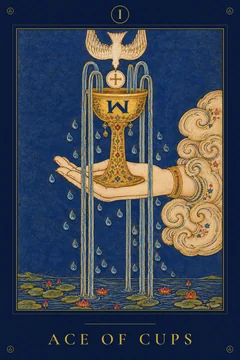
अर्पण करता हाथ और बादल प्यालों के इक्के को दोहराते हैं। कई शिक्षक इसमें इक्के जैसा उपहार देखते हैं जो चूका जा रहा है। यह संबंध उनका जोड़ा हुआ है, पर चित्र में साम्य स्पष्ट है।
The offering hand and the cloud repeat the Ace of Cups. Many teachers see an ace-like gift being missed; the link is theirs, and the resemblance on the plate is plain.
स्रोतSource
पिक्टोरियल की, 1910: बादल से निकली एक भुजा उसे दूसरा प्याला अर्पित करती है।
Pictorial Key, 1910: an arm issuing from a cloud offers him another cup.
पाठ-संकेतReading tip
जब भी यह कार्ड आए, अनदेखे प्रस्ताव को खोजिए: कोई निमंत्रण, कोई व्यक्ति, कोई विचार जो पहले से निकट है। उलटा हो तो वह देख लिया गया है। उसे परखने के लिए एक तय अवधि तक आज़माकर देखिए।
Whenever this card appears, look for the overlooked offer: an invitation, a person, an idea already near. Reversed, it has been noticed; accept it on trial for a fixed period before judging it.
यह क्या हैWhat it is
बाईं ओर सुनहरी किनारी वाले घुमावों का एक छोटा क्रीम बादल तैरता है। उससे अलंकृत आस्तीन वाली एक भुजा निकलती है, कलाई पर सोने का कंगन है, और वह चौथा प्याला बढ़ा रही है।
A small cream cloud with gold-edged curls floats at the left; from it an arm in a patterned sleeve, a gold bracelet at the wrist, extends the fourth cup.
यह क्या दर्शाता हैWhat it denotes
स्थिति के पार से सहायता। प्रस्ताव तीन प्यालों के परिचित संसार के बाहर से, उसकी अपेक्षाओं से परे से आता है।
Help from beyond the situation. The offer does not come from the familiar world of the three cups; it comes from outside his expectations.
स्थितिPosition
बादल उसकी दृष्टि-रेखा के पीछे है। उसे देखने के लिए उसे मुड़ना होगा, और यही कार्ड की पूरी शिक्षा है।
The cloud is behind his line of sight. To see it he would have to turn, which is the whole lesson of the card.
स्रोतSource
पिक्टोरियल की, 1910, बादल से निकली भुजा के लिए। स्थान चित्र के अनुसार है।
Pictorial Key, 1910, for the arm from the cloud; placement as painted.
पाठ-संकेतReading tip
यदि प्रश्नकर्ता कहे कि कुछ नया कभी नहीं आता, तो बादल कहता है कि आता है, पर उस दिशा से जिधर उनका मुख नहीं है। उलटा हो तो सहायता देख ली गई है। जिसने अर्पित की उसे धन्यवाद दीजिए और सप्ताह भर के भीतर उत्तर दीजिए।
If the querent says nothing new ever comes, the cloud says it does, from a direction they are not facing. Reversed, the help has been seen; thank whoever offered it and respond within the week.
यह क्या हैWhat it is
चढ़ती बेल से अंकित सुनहरे तने वाला एक ऊँचा वृक्ष उसके पीछे उठता है, जिसकी चौड़ी हरी पत्तियाँ चित्र के ऊपरी भाग में फैली हैं।
A tall tree with a golden trunk patterned with climbing vine rises behind him, its broad green leaves spreading across the top of the painting.
यह क्या दर्शाता हैWhat it denotes
आश्रय, और जड़ता की स्थिरता भी। वह संकट में नहीं, छाया में विश्राम कर रहा है। प्रश्न यह है कि विश्राम उसे फिर से सशक्त कर रहा है या छिपने का स्थान बन रहा है।
Shelter and rootedness. He is not in danger; he is resting in shade. The question is whether the rest is restoring him or becoming a hiding place.
आकाशThe sky
छोटे सुनहरे तारों वाला गहरा नीला आकाश, जो इसी चित्र का विवरण है। उसके चारों ओर का संसार विस्तृत और खुला है, जबकि वह केवल नीचे देखता है।
Deep blue with small gold stars, a detail of this painting; the day around him is wide and open while he looks only down.
स्रोतSource
पिक्टोरियल की, 1910, वृक्ष के लिए। उसे आश्रय मानना बाद के शिक्षकों की समझ है।
Pictorial Key, 1910, for the tree. Seeing it as shelter is a later teachers' reading.
पाठ-संकेतReading tip
जब विश्राम ही वास्तविक आवश्यकता हो, तो वृक्ष ठहरने की अनुमति देता है। उलटा हो तो छाया अपना काम कर चुकी है। उसे छोड़ने की तिथि तय कीजिए और खुले मैदान में लौटिए।
When rest is the real need, the tree gives permission to pause. Reversed, the shade has served its purpose; set a date to leave it and return to the open field.
यह क्या हैWhat it is
वह छोटे लाल और श्वेत फूलों से भरी हरी ढलान पर बैठा है। उसके पार, दूर बाईं ओर, नीचे नीले-धूसर पर्वत और कुछ गोल वृक्ष क्षितिज बनाते हैं।
He sits on a green slope scattered with small red and white flowers; beyond it, at the far left, low blue-grey mountains and a few round trees mark the horizon.
यह क्या दर्शाता हैWhat it denotes
उसकी छोटी पहाड़ी के पार एक विस्तृत संसार है। दूरी हमें दिखती है और उसे नहीं, क्योंकि वह भूमि की ओर देख रहा है।
A wider world exists beyond his small hill. The distance is visible to us and invisible to him, because he is looking at the ground.
पुष्पThe flowers
उसके चारों ओर छोटे फूल: जहाँ वह बैठा है, वहाँ भी जीवन रंग अर्पित कर रहा है।
Small blossoms all around him: even where he sits, life is still offering colour.
स्रोतSource
भूदृश्य 1909 की रचना के अनुसार है। उसका अर्थ बाद के पाठकों ने दिया है।
The landscape follows the 1909 composition; its reading is interpretation.
पाठ-संकेतReading tip
जीवन-पथ के प्रश्न में पर्वत कहते हैं कि क्षितिज वर्तमान मनोदशा की सीमा से कहीं बड़ा है। उलटा हो तो आँखें उसकी ओर उठ रही हैं। कोई यात्रा, पाठ्यक्रम या भेंट तय कीजिए जो आपको पहाड़ी के पार ले जाए।
In a life-path question, the mountains say the horizon is larger than the present mood allows. Reversed, the eyes are lifting toward it; plan one journey, course or meeting that takes you past the hill.
मुख्य बातें
घास पर रखे तीन प्याले साबुत और भरे हुए हैं। कठिनाई युवक की दृष्टि में है।The three cups on the grass are whole and full. The trouble lies in the young man's gaze.
वेट इसे मिश्रित सुख का कार्ड कहते हैं, वही उपाधि जो गोल्डन डॉन इस दशांश को देता है: असंतोष में मिला संतोष।Waite calls it a card of blended pleasure, the same title the Golden Dawn gives this decan: satisfaction mixed with dissatisfaction.
सीधा: क्लांति, अरुचि, अनदेखा प्रस्ताव। उलटा: वेट नवीनता, पूर्वाभास, नई शिक्षा और नए संबंध देते हैं।Upright: weariness, aversion, an offer overlooked. Reversed: Waite gives novelty, presage, new instruction and new relations.
विमुखता बुद्धिमान विश्राम भी हो सकती है और हठी इनकार भी। कौन-सी है, यह पाठक प्रश्न और आसपास के कार्डों से तय करता है।Withdrawal can be wise rest or stubborn refusal; the reader decides which from the question and the cards around it.
उलटा: नवीनता, नया प्रस्ताव दिखता हुआ, नई शिक्षा, फिर से जुड़ना, नए संबंध
भरा हुआ जीवन जिसका अब कोई स्वाद नहीं रहा। उपहार उसके कंधे के पास आता है, और वह सिर नहीं मोड़ता।
A full life that has stopped tasting of anything. The gift arrives at his shoulder, and he does not turn his head.
जीवन के पाँच क्षेत्रों में
आपके जीवन में प्यालों का चार
जब प्रश्न धन, विवाह, काम, शरीर या स्वयं जीवन-पथ का हो, तब यह कार्ड क्या कहता है। धन सबके लिए खुला है; शेष चार प्रीमियम के लिए हैं।
What this card says when the question is about money, marriage, work, the body, or the road itself. Finance is open to everyone; the other four belong to Premium.
त्वरित उत्तरQuick answer
नहीं, जब तक आप दृष्टि फेरे हैंउलटा: हाँ, अब जबकि प्रस्ताव दिख गया है
अंकThe number
4 · चतुर्चार वर्ग है: स्थिरता, घेरा, व्यवस्थित वस्तुएँ। प्यालों में यह वर्ग दीवार बन सकता है, ऐसी भावना जो इतनी स्थिर हो जाए कि बहना बंद कर दे।
जन्म-तिथि
Is this your birth card?">
जाँच निःशुल्क है। प्रीमियम आपका जन्म-कार्ड और वर्ष-कार्ड प्रोफ़ाइल सहेजता है।
₹धनFinanceनिःशुल्क नमूना
सीधाUpright
आपकी आवश्यकताएँ पूरी हैं, फिर भी धन नीरस या असंतोषजनक लगता है, और कोई अवसर बिना देखे निकल रहा हो सकता है। कार्ड चेताता है कि किसी प्रस्ताव को केवल इसलिए न ठुकराएँ कि आप वित्त के विषय में सोचते-सोचते थक गए हैं। जो है उसके प्रति कृतज्ञता के साथ अपने खातों की समीक्षा कीजिए, और फिर हाल में आपके सामने रखे गए प्रस्तावों को ईमानदार ध्यान से देखिए।
Your needs are met, yet money feels dull or unsatisfying, and an opportunity may be slipping past unnoticed. The card warns against dismissing an offer simply because you are tired of thinking about finances. Review your accounts with gratitude for what is there, and then look at what has been proposed to you lately with honest attention.
उलटाReversed
आय का नया स्रोत या बेहतर व्यवस्था दृष्टि में आती है, और आपकी रुचि लौटती है। उसे शीघ्र और सावधानी से परखिए, और अवसर खुला रहते ही उत्तर दीजिए।
A new source of income or a better arrangement comes into view, and your interest revives. Examine it promptly and carefully, and respond while the moment is open.
बचिएAvoid
किसी प्रस्ताव को इसलिए अनदेखा करना कि विषय ऊबाऊ लगता है।
Ignoring a proposal because the topic bores you.
इसके स्थान परTry instead
हाल में मिले तीन वित्तीय प्रस्ताव फिर से पढ़िए और उनमें से एक का उत्तर दीजिए।
Reread the last three financial offers you received and answer one of them.
❖वैवाहिक जीवन और संबंधMarried life and relationshipsप्रीमियम
सीधाUpright
ऐसा संबंध जो शांत हो गया है। ठीक-ठीक कुछ गलत नहीं, पर प्यालों का स्वाद चला गया है, और एक या दोनों साथी अपने भीतर सिमट गए हैं।
पेड़ के नीचे एक युवक भुजाएँ बाँधे बैठा है और घास पर रखे तीन प्यालों को घूर रहा है, जबकि बादल से निकला एक हाथ उसे चौथा प्याला दे रहा है। सीधा आने पर प्यालों का चार समृद्धि के बीच क्लांति है। जीवन ने अपने प्याले दे दिए हैं, और वे अब संतोष नहीं देते। वेट इसके अर्थ क्लांति, अरुचि, विमुखता और काल्पनिक खीज बताते हैं, मानो इस संसार की मदिरा ने केवल तृप्ति से उपजी ऊब दी हो, और लिखते हैं कि एक नया उपहार अर्पित होता है और फिर ठुकरा दिया जाता है। यह कार्ड प्रायः परिश्रम या भोग के एक दौर के बाद आता है, जब हृदय नीरस हो जाता है। कभी-कभी विमुखता ही आवश्यकता होती है, और वृक्ष सच्ची छाया देता है। कार्ड की असली चेतावनी अनदेखा प्रस्ताव है। आवश्यक हो तो विश्राम कीजिए, फिर ऊपर देखिए: कुछ नया पहले से पहुँच में है।
A young man sits under a tree with his arms folded, staring at three cups on the grass, while a hand from a cloud offers him a fourth. The Four of Cups upright is weariness in the middle of plenty. Life has supplied its cups, and they have stopped satisfying. Waite gives weariness, disgust, aversion and imaginary vexations, as if the wine of this world had brought only satiety, and he notes that a new gift is offered and again refused. The card often appears after a period of effort or indulgence, when the heart goes flat. Sometimes withdrawal is what is needed, and the tree gives honest shade. The card's real warning is the overlooked offer. Rest if you must, then look up: something new is already within reach.
उलटा
प्यालों का चार: उलटा अर्थ
उलटा आने पर प्यालों का चार वेट के बहुत निकट रहता है: नवीनता, पूर्वाभास, नई शिक्षा, नए संबंध। युवक ने ऊपर देखा है। रुचि लौटती है, एक नया प्रस्ताव दिखता है, कोई गुरु या नई मंडली प्रकट होती है, और लंबी उदासी टूटती है। आज के कुछ पाठक उलटे कार्ड में गहराती उदासीनता देखते हैं। इस अर्थ को तभी महत्त्व दीजिए जब प्रश्न और आसपास के कार्ड उसी ओर इशारा करें। दोनों स्थितियों में गति बाहर की ओर है। नई रुचि पर तभी कर्म कीजिए जब वह ताज़ा है: निमंत्रण का उत्तर दीजिए, पाठ्यक्रम में प्रवेश लीजिए, संपर्क कीजिए, और बँधी भुजाओं को खुलने दीजिए।
Upside down, the Four of Cups follows Waite closely: novelty, presage, new instruction, new relations. The young man has looked up. Interest returns, a fresh offer is noticed, a teacher or a new circle appears, and the long sulk breaks. Some present-day readers take the reversal as apathy deepening; weigh that only if the question and the surrounding cards point there. Either way the movement is outward. Act on the new interest while it is warm: answer the invitation, enrol in the course, make the call, and let the folded arms open.
स्थान के अनुसार
प्रश्न के अनुसार प्यालों का चार
प्रेमLove
संबंध में ऊब या भावनात्मक दूरी, या कोई प्रशंसक जिस पर ध्यान नहीं गया। भावनाओं के प्रश्न में, कोई विमुख और अनिश्चित। उलटा: नई जागी रुचि, या कोई नया व्यक्ति जो ध्यान खींचे।
Boredom or emotional distance in a relationship, or an admirer not noticed; as feelings, someone withdrawn and unsure. Reversed: renewed interest, or a new person who catches the eye.
करियरCareer
ऐसी भूमिका में ठहराव जो कभी संतोष देती थी, और सामने रखा पर अनदेखा अवसर। उलटा: नया प्रशिक्षण, नई परियोजना या टीम जो प्रेरणा लौटा दे।
Stagnation in a role that once satisfied; an opportunity offered and ignored. Reversed: new training, a new project or team that restores motivation.
धनMoney
पर्याप्त, पर उसकी कद्र नहीं। उदासीनता के कारण आय का कोई प्रस्ताव अनदेखा रह गया है। उलटा: नया स्रोत दिखाई देता है। उसे नई दृष्टि से परखिए।
Enough, but not appreciated; an offer of income overlooked through apathy. Reversed: a new source noticed; review it with fresh eyes.
स्वास्थ्यHealth
कम ऊर्जा, नीरस मनोदशा, बहुत अधिक बैठना। शरीर कोमल गति और ताज़ी हवा माँगता है। उलटा: नई दिनचर्या के साथ लौटती जीवन-शक्ति।
Low energy, flat mood, too much sitting; the body asks for gentle movement and fresh air. Reversed: vitality returning with a new routine.
टैरो ध्यान दिलाता है, निदान नहीं करता। किसी भी लक्षण के लिए योग्य चिकित्सक से मिलिए।
आध्यात्मिकSpiritual
ऐसा चिंतन जो गहरा भी हो सकता है और उदासीनता में कठोर भी। उलटा: एक नई शिक्षा आती है। उसे ग्रहण कीजिए।
Contemplation that may deepen or may harden into indifference. Reversed: a new teaching arrives; receive it.
तत्वजल
ज्योतिषकर्क में चंद्र (गोल्डन डॉन द्रेष्काण)
हिब्रू अक्षरहे (सूट का अक्षर)
अंक-विद्या4 · चतुर्
हाँ या नानहीं
वैदिक सेतु
दो परंपराओं के बीच एक व्याख्यात्मक समानांतर, जो शिक्षण के लिए दिया गया है। यह शास्त्रीय उद्धरण नहीं है, और कोई परंपरा दूसरी का वर्णन करने का दावा नहीं करती।
कठोपनिषद नचिकेता की कथा कहता है, जिसने मृत्यु के पार क्या है यह पूछने के लिए यम द्वारा अर्पित धन और सुख ठुकरा दिए। उसका इनकार विवेक से आया था। वृक्ष के नीचे बैठा युवक भी ठुकराता है, पर क्लांति से, ऐसी मनोदशा जो वैराग्य से अधिक तमस के निकट है। पाठक को दोनों में भेद करना आना चाहिए: सच्चा वैराग्य ऊपर देखता है और गहरा प्रश्न पूछता है, जबकि जड़ता केवल नीचे देखती है।
The Katha Upanishad tells of Nachiketa, who refused the riches and pleasures Yama offered him in order to ask about what lies beyond death. His refusal came from viveka, discernment. The young man under the tree also refuses, but from weariness, a mood closer to tamas than to vairagya. A reader learns to tell the two apart: true detachment looks up and asks a deeper question, while dullness only looks down.
प्यालों का चार (Four of Cups) टैरो कार्ड का क्या अर्थ है?
जो पहले से हाथ में है उससे क्लांति और असंतोष, और अनदेखा प्रस्ताव। वेट इसके अर्थ क्लांति, अरुचि और काल्पनिक खीज बताते हैं, जिसमें एक नया उपहार अर्पित होता है और ठुकरा दिया जाता है। ऊपर देखिए।
Weariness and discontent with what is already at hand, and an offer overlooked. Waite lists weariness, aversion and imaginary vexations, with a new gift offered and refused. Look up.
क्या प्यालों का चार हाँ है या ना?
सीधा, ना: मनोदशा बंद है और प्रस्ताव अनदेखा। उलटा, हाँ: रुचि लौट आई है और नई संभावना दिख गई है।
Upright, no: the mood is closed and the offer unseen. Reversed, yes: interest has returned and the new possibility is noticed.
उलटा आने पर प्यालों का चार क्या दर्शाता है?
वेट नवीनता, पूर्वाभास, नई शिक्षा और नए संबंध देते हैं: युवक ऊपर देखता है और फिर से जुड़ता है। आज के कुछ पाठक इसे गहरी उदासीनता मानते हैं। नई रुचि पर तभी कर्म कीजिए जब वह ताज़ा है।
Waite gives novelty, presage, new instruction and new relations: the young man looks up and engages again. Some present-day readers take it as deeper apathy. Act on new interest while it is warm.
भावना के रूप में प्यालों के चार का क्या अर्थ है?
कोई विमुख, अनिश्चित या भावनात्मक रूप से थका हुआ व्यक्ति, जो शायद उसे दिया जा रहा स्नेह न देख पाए। इसका कारण प्रायः सुन्नता होती है, अस्वीकार कम ही। उलटा होने पर उनकी रुचि जाग रही है।
Someone withdrawn, uncertain or emotionally tired, who may not notice the affection being offered. Numbness is the usual cause, and rejection is rarer. Reversed, their interest is waking up.
प्यालों के चार पर चौथा प्याला कौन अर्पित कर रहा है?
बादल से निकली एक भुजा, जैसा वेट वर्णन करते हैं, बहुत कुछ प्यालों के इक्के के हाथ जैसी। स्रोत युवक की स्थिति के पार और उसकी दृष्टि-रेखा के पीछे है, इसीलिए वह उसे नहीं देख पाता।
An arm issuing from a cloud, as Waite describes, much like the hand of the Ace of Cups. The source is beyond the young man's situation and behind his line of sight, which is why he misses it.
स्रोत: A. E. Waite, The Pictorial Key to the Tarot (1910); Golden Dawn attributions (Moon in Cancer, Lord of Blended Pleasure; Heh as suit letter); The 1909 Smith-Waite plate, Pamela Colman Smith