TarotPanditby Pandit Rahul Kaushl
प्याले · V
कार्ड › प्याले › प्यालों का पाँच

प्यालों का पाँच Five of Cups

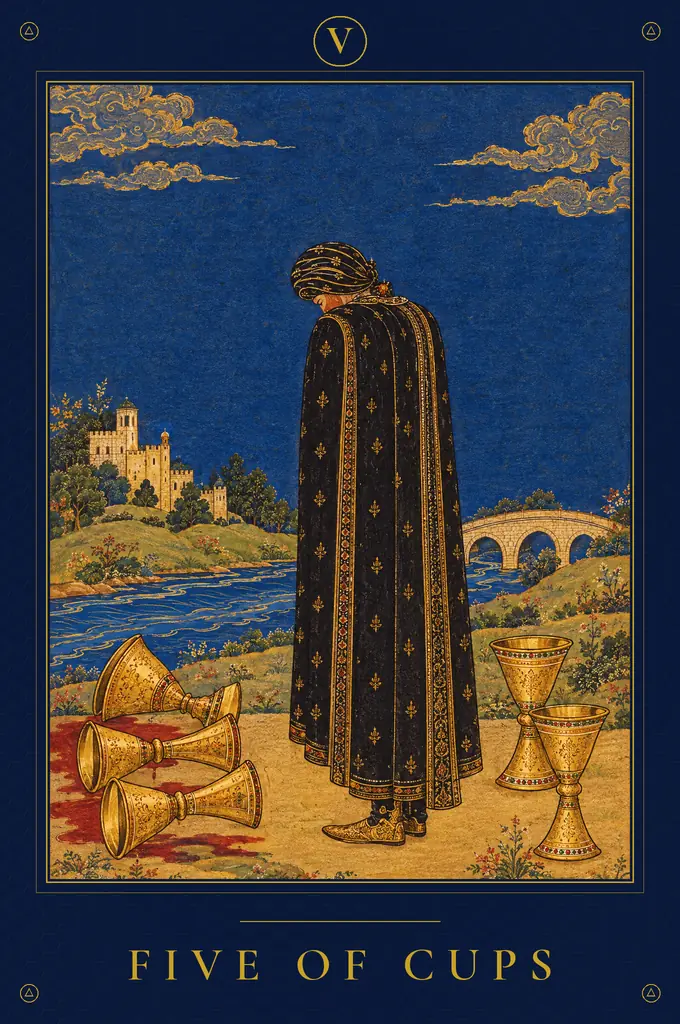
प्यालों का पाँच (Five of Cups) टैरो कार्ड का अर्थ है ऐसी हानि जिसके बाद भी कुछ शेष है। लंबे काले लबादे में एक आकृति सिर झुकाए तीन उलटे प्यालों के ऊपर खड़ी है, जिनकी सामग्री भूमि पर लाल फैली है, जबकि उसके पीछे दो प्याले सीधे खड़े हैं। पास से एक नदी बहती है, और एक सेतु एक दुर्ग की ओर जाता है। सीधा आने पर यह शोक और पश्चाताप है। उलटा आने पर यह वापसी, स्वजनों और उस ओर मुड़ना है जो अभी बचाया जा सकता है।

The Five of Cups tarot card means loss with something still remaining. A figure in a long black cloak stands with head bowed over three overturned cups, their contents spilled red on the ground, while two cups stand upright behind him; a river runs past, and a bridge leads toward a castle. Upright it is grief and regret. Reversed, it turns toward return, kin and what can still be saved.

अंक Vतत्व जलज्योतिष वृश्चिक में मंगल (गोल्डन डॉन द्रेष्काण); सूट का तत्व जलहिब्रू अक्षर हे (सूट का अक्षर)हाँ या ना नहीं, जैसी आशा थी वैसा नहीं
Five of Cups, TarotPandit deck
7 में से 1 · लबादा ओढ़े आकृति

कार्ड पर कोई अंक छुइए, या किसी प्रतीक की व्याख्या खोलिए। TarotPandit डेक 1909 की रचना को ज्यों का त्यों रखता है, भारतीय लघुचित्र शैली में।

कार्ड, प्रतीक-दर-प्रतीक
यह क्या हैWhat it is

मध्य में एक लंबी आकृति खड़ी है, छोटे सुनहरे बूटों और सुनहरी किनारी वाले लंबे काले लबादे में, जो भूमि तक पहुँचता है। उसके नीचे केवल सुनहरी कढ़ाई वाले जूते दिखते हैं।

A tall figure stands at the centre in a long black cloak worked with small gold sprigs and bordered in gold, reaching to the ground; only gold-embroidered shoes show beneath it.

यह क्या दर्शाता हैWhat it denotes

शोक। लबादा पूरे व्यक्ति को ढक लेता है, जैसे शोक ढकता है: कुछ समय के लिए वह बाकी सब कुछ ढाँप देता है। वेट उसे एक अँधेरी, लबादा ओढ़े आकृति कहते हैं।

Mourning. The cloak wraps the whole person, as grief does: for a time it covers everything else. Waite calls him a dark, cloaked figure.

काला और सुनहराBlack and gold

दुःख के लिए काला, पर सोने से गुँथा हुआ। शोक में भी मूल्य और गरिमा वस्त्र में बुने रहते हैं।

Black for sorrow, but threaded with gold. Even in mourning, worth and dignity remain woven into the cloth.

स्रोतSource

पिक्टोरियल की, 1910: एक अँधेरी, लबादा ओढ़े आकृति। सुनहरे अलंकरण इस चित्र का विवरण हैं।

Pictorial Key, 1910: a dark, cloaked figure. The gold motifs are a detail of this painting.

पाठ-संकेतReading tip

जब आकृति प्रश्नकर्ता का प्रतिनिधित्व करे, तो कोई भी सलाह देने से पहले हानि को स्वीकार कीजिए। उलटा आने पर लबादा ढीला हो रहा है। किसी एक व्यक्ति को भार उठाने में हाथ बँटाने दीजिए।

When the figure stands for the querent, acknowledge the loss before offering any advice. Reversed, the cloak is loosening; let one person help carry the weight.
यह क्या हैWhat it is

धारीदार गहरी पगड़ी में लिपटा उसका सिर आगे झुका और बाईं ओर मुड़ा है, जिससे उसका चेहरा छिपा है और दृष्टि उलटे प्यालों पर पड़ती है।

His head, wrapped in a dark striped turban, is bent forward and turned to the left, so that his face is hidden and his gaze falls on the overturned cups.

यह क्या दर्शाता हैWhat it denotes

शोक का ध्यान। वेट उसे तीन लुढ़के प्यालों की ओर तिरछा देखते हुए बताते हैं। दुःख दृष्टि को उस तक सीमित कर देता है जो खो गया।

The attention of grief. Waite describes him looking sideways at the three prone cups. Sorrow narrows the view to what has been lost.

छिपा चेहराThe hidden face

हम उसका भाव कभी नहीं देखते। शोक निजी है, और कार्ड उसमें हस्तक्षेप नहीं करता।

We never see his expression. Grief is private, and the card does not intrude on it.

स्रोतSource

पिक्टोरियल की, 1910: तीन लुढ़के प्यालों की ओर तिरछा देखता हुआ।

Pictorial Key, 1910: looking sideways at three prone cups.

पाठ-संकेतReading tip

सीधा आने पर आँखें बिखराव पर टिकी हैं, और कुछ समय के लिए यह स्वाभाविक है। उलटा आने पर सिर उठ रहा है। एक छोटा-सा कार्य सुझाइए जो आगे की ओर मुख करे, जैसे एक पत्र, एक भेंट, या अगले महीने की योजना।

On a straight draw the eyes are fixed on the spill, and that is natural for a time. Reversed, the head is lifting; suggest one small act that faces forward, such as a letter, a visit or a plan for next month.

यह क्या हैWhat it is

निचले बाएँ भाग में ठीक तीन सुनहरे प्याले एक के ऊपर एक करवट लिए पड़े हैं, और उनके मुखों से लाल रंग की एक धारा रेत पर फैलती है।

Exactly three golden cups lie on their sides at the lower left, one above another, and a pool of red spreads from their mouths across the sand.

यह क्या दर्शाता हैWhat it denotes

जो खो गया और फिर से भरा नहीं जा सकता। वेट तीन प्यालों को ले लिए गए मानते हैं: एक आशा, एक संबंध, एक अपेक्षा, एक विरासत जो योजना के अनुसार नहीं आई।

What has been lost and cannot be poured back. Waite counts three as taken: a hope, a relationship, an expectation, an inheritance that did not come as planned.

लाल रंगThe red

भूमि पर बिखरा लाल: बह गई जीवन-शक्ति और भावना। कई शिक्षक इसमें मदिरा या रक्त देखते हैं। दोनों रूपों में यह कुछ बहुमूल्य है, जो अब नहीं रहा।

Red spilled on the ground: life-force and feeling poured out. Many teachers read it as wine or blood; either way it is something precious, now gone.

स्रोतSource

पिक्टोरियल की, 1910: तीन लुढ़के प्याले, तीन ले लिए गए। बिखराव का रंग चित्र के अनुसार।

Pictorial Key, 1910: three prone cups, three taken. The colour of the spill follows the painting.

पाठ-संकेतReading tip

प्रश्नकर्ता के साथ तीनों प्यालों के नाम लीजिए: ठीक-ठीक क्या खोया। नाम लेने से शोक सहनीय होता है। उलटा आने पर बिखराव सूख रहा है। उसे हटाइए, संभवतः समापन के किसी छोटे संस्कार के साथ।

Name the three cups with the querent: what exactly was lost. Naming makes grief bearable. Reversed, the spill is drying; clear it away, perhaps with a small ritual of closure.

यह क्या हैWhat it is

दाहिनी ओर भूमि पर दो सुनहरे प्याले सीधे खड़े हैं, एक दूसरे से थोड़ा पीछे, आधारों पर रत्नजड़ित पट्टियाँ, उस घटना से अछूते जिसने बाकियों को उलट दिया।

Two golden cups stand upright on the ground at the right, one slightly behind the other, jewelled bands at their bases, untouched by whatever overturned the rest.

यह क्या दर्शाता हैWhat it denotes

जो शेष है। वेट की पंक्ति सीधी है: तीन ले लिए गए, पर दो बचे हैं। भविष्य इन्हीं से बनता है, जब वह मुड़ता है।

What remains. Waite's line is plain: three are taken, but two are left. The future is built from these, once he turns around.

पीठ के पीछेBehind his back

वे वहाँ खड़े हैं जहाँ वह उन्हें देख नहीं सकता। सांत्वना उपस्थित है, उसकी पीठ के पीछे, जबकि शोक दूसरी ओर देख रहा है।

They stand where he cannot see them. Consolation is present, behind his back, while grief looks the other way.

स्रोतSource

पिक्टोरियल की, 1910: दो अन्य उसके पीछे सीधे खड़े हैं। हानि, पर कुछ शेष रहता है।

Pictorial Key, 1910: two others stand upright behind him; a loss, but something remains over.

पाठ-संकेतReading tip

पूछिए कि अब भी क्या खड़ा है: स्वास्थ्य, कोई मित्र, कोई कौशल, कोई घर। सीधा आने पर ये अनदेखे हैं, उलटा आने पर ये दृष्टि में आ रहे हैं। दोनों स्थितियों में एक शेष प्याला उठाइए और उसका उपयोग कीजिए।

Ask what is still standing: health, a friend, a skill, a home. Upright, these are unseen; reversed, they are coming into view. Either way, pick up one remaining cup and use it.

यह क्या हैWhat it is

श्वेत लहरों वाली एक चौड़ी नीली नदी दृश्य के मध्य से बहती है, जो रेतीली भूमि को, जहाँ वह खड़ा है, हरे तट और उसके पार के दुर्ग से अलग करती है।

A broad blue river with white ripples runs across the middle of the scene, separating the sandy ground where he stands from the green bank and the castle beyond.

यह क्या दर्शाता हैWhat it denotes

भावना और समय का प्रवाह। दुःख एक धारा है जिसे पार करना है। वह स्थिर खड़ा है, फिर भी जल बहता रहता है।

The flow of feeling and of time. Sorrow is a current to be crossed; the water keeps moving even while he stands still.

इसकी दिशाIts course

नदी दाहिनी ओर सेतु के नीचे से जाती है। जो अलग करता है, वही पार जाने का स्थान भी देता है।

The river passes under the bridge at the right. What separates also provides the crossing.

स्रोतSource

नदी 1909 की रचना के अनुसार है। वेट सेतु का उल्लेख करते हैं, और जल का अर्थ बाद के पाठकों ने दिया है।

The river follows the 1909 composition. Waite names the bridge, and the meaning of the water comes from later readers.

पाठ-संकेतReading tip

समय के प्रश्न में नदी कहती है कि उपचार जल की गति से चलता है, स्थिर और धीरे-धीरे। उलटा आने पर धारा शोक को आगे ले जा रही है। उसे जाने दीजिए, और पश्चाताप को उस पर बाँध मत बनने दीजिए।

In a timing question, the river says healing moves at the pace of water, steady and gradual. Reversed, the current is carrying the grief onward; let it go, and keep regret from damming it.

यह क्या हैWhat it is

दाहिनी ओर, खड़े प्यालों के पार, तीन मेहराबों वाला एक हल्के रंग का पत्थर का सेतु नदी को पार करता है और दूर के तट की ओर लौटता है।

A pale stone bridge of three arches spans the river at the right, beyond the standing cups, leading back toward the far bank.

यह क्या दर्शाता हैWhat it denotes

पार जाने का मार्ग। सेतु इसलिए बनाया जाता है कि हानि स्थायी अलगाव न बने। वह उसी ओर खड़ा है जिस ओर दो शेष प्याले हैं।

The way through. A bridge is built so that loss need not be permanent separation. It stands on the same side as the two remaining cups.

पत्थरStone

ठोस, पुराना, और दूसरों द्वारा बनाया हुआ। इस पार-मार्ग पर पहले भी लोग चल चुके हैं, और शोक करने वाला वह पहला नहीं।

Solid, old and made by others. The crossing has been walked before; he is not the first to grieve.

स्रोतSource

पिक्टोरियल की, 1910: पृष्ठभूमि में एक सेतु, जो एक छोटे गढ़ या आवास की ओर जाता है।

Pictorial Key, 1910: a bridge in the background, leading to a small keep or holding.

पाठ-संकेतReading tip

जब सेतु प्रमुख दिखे, तो पाठ वापसी के मार्ग की ओर संकेत करता है: मेल-मिलाप, घर लौटना, ऐसा मार्ग जिस पर दूसरे चल चुके हैं। उलटा आने पर वह पार जाने को तैयार है। उस पर पहला कदम रखिए, भले ही दूसरा तट अभी स्पष्ट न हो।

When the bridge stands out, the reading points to a way back: reconciliation, a return home, a path others have used. Reversed, he is ready to cross; take the first step onto it, even if the far side is not yet clear.

यह क्या हैWhat it is

बाईं ओर नदी के पार एक हरी ऊँचाई पर, वृक्षों के बीच, बुर्जों वाला एक सुनहरे पत्थर का दुर्ग खड़ा है, गहरे नीले आकाश के नीचे जिसमें सुनहरी किनारी वाले बादल तैरते हैं।

A golden stone castle with towers stands on a green rise across the river at the left, among trees, under a deep blue sky with drifting gold-edged clouds.

यह क्या दर्शाता हैWhat it denotes

घर, सुरक्षा, वह जीवन जो दूसरी ओर अब भी प्रतीक्षा कर रहा है। वेट इसे एक छोटा गढ़ या आवास कहते हैं, एक साधारण आश्रय, जिसमें महल जैसा कुछ नहीं।

Home, security, the life still waiting on the other side. Waite calls it a small keep or holding, a modest shelter with no palace about it.

विरासतInheritance

वेट इसे ऐसी विरासत और पैतृक संपत्ति का कार्ड भी कहते हैं जो अपेक्षाओं से कम पड़ती है। जल के पार का आवास वही विरासत हो सकता है, आशा से छोटा पर फिर भी सच्चा।

Waite also calls this a card of inheritance and patrimony that falls short of expectations; the holding across the water may be that legacy, smaller than hoped and still real.

स्रोतSource

पिक्टोरियल की, 1910, गढ़ और विरासत के अर्थ के लिए। दोनों को जोड़ना व्याख्या है।

Pictorial Key, 1910, for the keep and the meaning of inheritance; linking the two is interpretation.

पाठ-संकेतReading tip

परिवार या संपत्ति के प्रश्नों में दुर्ग कहता है कि कुछ मूल्यवान शेष है, भले ही अपेक्षा से कम। उलटा आने पर वेट वंश और वापसी बताते हैं। स्वजनों से फिर जुड़िए और देखिए कि उनके पास आपके लिए क्या है।

In questions of family or property, the castle says something of value remains, even if less than expected. Reversed, Waite gives ancestry and return; reconnect with kin and see what they hold for you.

मुख्य बातें
  • वेट का अपना सार: हानि का कार्ड, पर कुछ शेष रहता है। तीन ले लिए गए और दो बचे हैं।Waite's own summary: a card of loss, but something remains; three are taken and two are left.
  • शोक करने वाला बिखरे प्यालों की ओर मुख किए है और खड़े प्यालों की ओर पीठ: कार्ड इस विषय में है कि शोक आँखों को कहाँ ले जाता है।The mourner faces the spilled cups and turns his back on the standing ones: the card is about where grief directs the eyes.
  • सीधा: हानि, पश्चाताप, अपेक्षा से कम विरासत। उलटा: वेट समाचार, गठबंधन, संबंध, वंश और वापसी देते हैं, और झूठी योजनाएँ भी।Upright: loss, regret, an inheritance that falls short. Reversed: Waite gives news, alliances, kinship, ancestry and return, and also false projects.
  • इस कार्ड पर शोक का सम्मान है, और उसे पूरा समय दिया जाता है। दो प्यालों की ओर मुड़ना अपने समय पर होता है, और सेतु प्रतीक्षा करता है।The card honours grief and gives it time. The turn toward the two cups comes when it comes, and the bridge waits.
मुख्य शब्द

सीधा: हानि, शोक, पश्चाताप, जो शेष है, अपेक्षा से कम विरासत

उलटा: वापसी, समाचार, स्वजनों से पुनः जुड़ाव, स्वीकृति, त्यागी गई झूठी योजनाएँ

ऐसा शोक जो केवल उसे देखता है जो बिखर गया। शोक करने वाले के पीछे दो प्याले भरे हुए प्रतीक्षा करते हैं, और एक सेतु घर की ओर जाता है।

Grief that looks only at what has spilled. Behind the mourner two cups wait, still full, and a bridge leads home.

जीवन के पाँच क्षेत्रों में

आपके जीवन में प्यालों का पाँच

जब प्रश्न धन, विवाह, काम, शरीर या स्वयं जीवन-पथ का हो, तब यह कार्ड क्या कहता है। धन सबके लिए खुला है; शेष चार प्रीमियम के लिए हैं।

What this card says when the question is about money, marriage, work, the body, or the road itself. Finance is open to everyone; the other four belong to Premium.

त्वरित उत्तरQuick answer
नहीं, जैसी आशा थी वैसा नहींउलटा: शायद, कुछ अब भी पुनः प्राप्त किया जा सकता है
अंकThe number
5 · पंचपाँच चार के स्थिर वर्ग को तोड़ता है: विघ्न, परीक्षा, परिवर्तन। प्यालों में यह भावना का विक्षोभ है, ऐसी हानि जो उसे हिला देती है जो सुरक्षित लगता था।
जन्म-तिथि
Is this your birth card?">
जाँच निःशुल्क है। प्रीमियम आपका जन्म-कार्ड और वर्ष-कार्ड प्रोफ़ाइल सहेजता है।
₹धनFinanceनिःशुल्क नमूना
सीधाUpright

हानि हुई है या उसका भय है: असफल निवेश, ऐसा धन जो उधार गया और लौटा नहीं, या ऐसी विरासत जो अपेक्षा से छोटी निकली। हानि पर थोड़ी देर शोक कीजिए, फिर सावधानी से गिनिए कि क्या शेष है, क्योंकि दो प्याले अब भी खड़े हैं। जो बिखरा उसे वापस पाने का प्रयास करने से पहले इन्हें सुरक्षित कीजिए।

A loss has occurred or is feared: an investment that failed, money owed and not returned, or an inheritance that proved smaller than expected. Grieve the loss briefly, then count carefully what remains, because two cups are still standing. Secure them before trying to recover what spilled.

उलटाReversed

पुनर्प्राप्ति आरंभ होती है: परिवार का सहारा, आंशिक वापसी, या संदिग्ध परियोजना जिसे और हानि से पहले छोड़ दिया गया। जहाँ सहायता अर्पित हो, उसे स्वीकार कीजिए और शेष से फिर निर्माण कीजिए।

Recovery begins: family support, partial repayment, or a doubtful project abandoned before it cost more. Accept help where it is offered and rebuild from what remains.

बचिएAvoid

खोए धन के पीछे और जोखिम भरे दाँव लगाना।

Chasing the lost money with riskier bets.

इसके स्थान परTry instead

जो भी संपदा शेष है, चाहे कितनी भी छोटी, एक पृष्ठ पर सूचीबद्ध कीजिए।

List every asset that remains, however small, on one page.

❖वैवाहिक जीवन और संबंधMarried life and relationshipsप्रीमियम
सीधाUpright

संबंध में उदासी, अलगाव, या शब्दों और चुनावों पर पश्चाताप।

Sadness in a relationship, a separation, or regret over words and choices.

प्रीमियम से खोलिए
◈व्यवसाय और करियरBusiness and careerप्रीमियम
सीधाUpright

काम में झटका: रद्द हुई परियोजना, खोई भूमिका, अस्वीकृत आवेदन।

A setback at work: a project cancelled, a role lost, an application refused.

प्रीमियम से खोलिए
✚स्वास्थ्यHealthप्रीमियम
सीधाUpright

दुःख और पश्चाताप नींद, भूख और ऊर्जा पर भार डाल सकते हैं।

Sorrow and regret can weigh on sleep, appetite and energy.

टैरो ध्यान दिलाता है, निदान नहीं करता। किसी भी लक्षण के लिए योग्य चिकित्सक से मिलिए।

प्रीमियम से खोलिए
☉जीवन-पथThe life pathप्रीमियम
सीधाUpright

ऐसी हानि जो मार्ग का आकार बदल देती है।

A loss that changes the shape of the path.

प्रीमियम से खोलिए
प्रीमियम
सभी 78 कार्डों पर पाँचों क्षेत्र

असीमित पाठ, हर कार्ड के नीचे पाँचों क्षेत्र, आपका जन्म-कार्ड और वर्ष-कार्ड प्रोफ़ाइल, पाठ-इतिहास, हर पाठ की सीलबंद PDF और व्हाट्सऐप पर दैनिक कार्ड।

₹299
प्रति माह, या ₹1,999 प्रति वर्षप्रीमियम खोलिए
सीधा

प्यालों का पाँच: सीधा अर्थ

लबादा ओढ़े एक आकृति तीन बिखरे प्यालों पर सिर झुकाए खड़ी है और पीछे खड़े दो प्यालों को नहीं देखती। यह ईमानदारी से अनुभव किया गया शोक है। कुछ खो गया है: कोई संबंध, कोई योजना, कोई आशा, धन, या कोई व्यक्ति। वेट इसे हानि का ऐसा कार्ड बताते हैं जिसमें कुछ शेष रहता है: तीन प्याले ले लिए गए, दो बचे हैं। वे ऐसी विरासत और पैतृक संपत्ति जोड़ते हैं जो अपेक्षाओं से मेल नहीं खाती, और कुछ व्याख्याकारों के लिए कटुता से छुआ हुआ विवाह। यहाँ शोक की अनुमति है, जितना समय लगे। समय आने पर प्रश्नकर्ता मुड़ेगा। दो प्याले अब भी खड़े हैं, नदी अब भी बह रही है, और एक सेतु घर की ओर जाता है। दुःख को शब्द मिलने दीजिए, फिर उसे खोजिए जो शेष है।

A cloaked figure bows his head over three spilled cups and does not see the two still standing behind him. This is grief honestly felt. Something has been lost: a relationship, a plan, a hope, money, or a person. Waite describes it as a card of loss in which something remains over: three cups are taken, two are left. He adds inheritance and patrimony that do not match expectations, and, for some interpreters, a marriage touched with bitterness. Mourning is allowed here, for as long as it takes. In time the querent will turn around. Two cups are still standing, the river is still moving, and a bridge leads toward home. Let the sorrow be spoken, then look for what remains.

उलटा

प्यालों का पाँच: उलटा अर्थ

उलटा आने पर शोक करने वाला पुनर्स्थापना की ओर मुड़ने लगता है। वेट समाचार, गठबंधन, आत्मीयता, संबंध, वंश और वापसी देते हैं, साथ में झूठी योजनाएँ भी। सिर उठता है: कोई पत्र आता है, परिवार निकट आता है, कोई पुराना मित्र लौटता है, या ऐसी योजना जो कभी ठोस नहीं थी, अंततः अलग रख दी जाती है। स्वीकृति आरंभ होती है, और दो खड़े प्याले दृष्टि में आते हैं। कभी-कभी उलटा कार्ड ऐसा शोक दिखाता है जिससे बचा गया और जिसे कभी अनुभव नहीं किया गया। तब हानि को स्वीकार किए बिना यह मोड़ टिक नहीं पाता। जो खोया उसका नाम लीजिए, उसका सम्मान कीजिए, और शेष प्यालों के साथ सेतु की ओर चलिए।

In reverse the mourner begins to turn toward recovery. Waite gives news, alliances, affinity, kinship, ancestry and return, along with false projects. The head lifts: a letter arrives, family draws close, an old friend returns, or a scheme that was never sound is finally set aside. Acceptance begins, and the two standing cups come into view. Sometimes the reversal shows grief that has been avoided and never felt, and then the turn will not hold until the loss is acknowledged. Name what was lost, honour it, and walk toward the bridge with the cups that remain.

स्थान के अनुसार

प्रश्न के अनुसार प्यालों का पाँच

प्रेमLove

हृदय-भंग, अलगाव या किसी संबंध पर पश्चाताप। भावनाओं की दृष्टि से, कोई दुखी व्यक्ति जो इसी विचार में डूबा है कि क्या गलत हुआ। उलटा: मेल-मिलाप, वापसी, या अतीत से की गई शांति।

Heartbreak, separation or regret over a relationship; as feelings, someone sad and preoccupied with what went wrong. Reversed: reconciliation, a return, or peace made with the past.

करियरCareer

एक झटका, खोया अवसर, या असफल परियोजना। जो शेष है वह अनुभव और कुछ ठोस संपदाएँ हैं। उलटा: पुनर्स्थापना, पुराने नियोक्ता के पास वापसी, या ऐसा समाचार जो कोई द्वार फिर खोल दे।

A setback, a lost opportunity, or a project that failed; what remains is experience and a few strong assets. Reversed: recovery, a return to a former employer, or news that reopens a door.

धनMoney

आर्थिक हानि या अपेक्षा से छोटी विरासत। जो शेष है उसे गिनिए। उलटा: आंशिक पुनर्प्राप्ति, परिवार से सहायता, या समय पर त्यागी गई संदिग्ध योजना।

A financial loss or an inheritance smaller than expected; count what remains. Reversed: partial recovery, help from family, or a doubtful scheme abandoned in time.

स्वास्थ्यHealth

शोक शरीर पर भार डालता है, और विश्राम, कोमल दिनचर्या और दूसरों का संग सहायक हैं। बना रहने वाला भारीपन किसी योग्य श्रोता के पास ले जाइए। उलटा: धीरे-धीरे लौटती ऊर्जा।

Grief weighs on the body; rest, gentle routine and the company of others help. Persistent heaviness deserves a qualified listener. Reversed: energy slowly returning.

टैरो ध्यान दिलाता है, निदान नहीं करता। किसी भी लक्षण के लिए योग्य चिकित्सक से मिलिए।

आध्यात्मिकSpiritual

दुःख एक गुरु बनकर आता है: ऐसी हानि जो मन को उसकी ओर मोड़ती है जो टिकता है। उलटा: स्वीकृति, और साधना पर वापसी।

Sorrow as a teacher; the loss that turns the mind toward what endures. Reversed: acceptance, and a return to practice.

तत्वजल
ज्योतिषवृश्चिक में मंगल (गोल्डन डॉन द्रेष्काण)
हिब्रू अक्षरहे (सूट का अक्षर)
अंक-विद्या5 · पंच
हाँ या नानहीं
वैदिक सेतु

दो परंपराओं के बीच एक व्याख्यात्मक समानांतर, जो शिक्षण के लिए दिया गया है। यह शास्त्रीय उद्धरण नहीं है, और कोई परंपरा दूसरी का वर्णन करने का दावा नहीं करती।

भगवद्गीता अर्जुन के शोक से अभिभूत होने से आरंभ होती है, और उसका पहला अध्याय उसी विषाद के नाम पर है। शिक्षा तभी आरंभ होती है जब वह अपने शोक से मुड़कर सुनता है। इस कार्ड के सेतु को तीर्थ समझकर पढ़ा जा सकता है, जिसका शाब्दिक अर्थ घाट या पार जाने का स्थान है। भारतीय परंपरा यही शब्द उन पवित्र स्थलों के लिए प्रयोग करती है जहाँ एक तट से दूसरे तट तक जाया जाता है। दो खड़े प्याले वह हैं जिन्हें पार ले जाना है।

The Bhagavad Gita opens with Arjuna overcome by sorrow, and its first chapter is named for that despondency, vishada. The teaching begins only when he turns from his grief to listen. The bridge on this card can be read as a tirtha, literally a ford or crossing place, the word Indian tradition uses for sacred sites where one passes from one shore to another. The two standing cups are what remains to carry across.

संयोजन

अन्य कार्डों के साथ प्यालों का पाँच

प्यालों का पाँच + मृत्यु

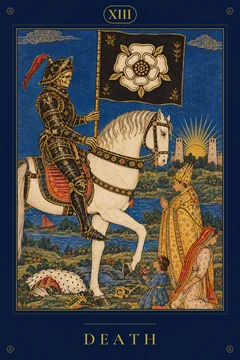
प्यालों का पाँच मृत्यु के साथ: पूरी तरह अनुभव किया गया अंत। जो बंद हुआ उस पर शोक कीजिए, और विश्वास रखिए कि नवीनीकरण का श्वेत गुलाब उसके बाद भी बचा रहता है।

The Five of Cups with Death: an ending fully felt. Mourn what has closed, and trust that the white rose of renewal survives it.

प्यालों का पाँच + तारा

तारे के साथ: शोक के बाद आशा। उपचार का जल तब आता है जब शोक करने वाला मुड़ता है।

With the Star: hope after grief. The healing waters arrive once the mourner turns around.

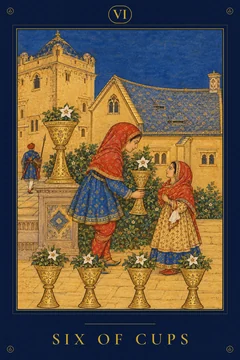
प्यालों का पाँच + प्यालों का छह

प्यालों के छह के साथ: स्मृति और पुराने बंधनों में मिली सांत्वना। वेट का वापसी और संबंध वाला उलटा अर्थ साकार।

With the Six of Cups: comfort found in memory and in old bonds. Waite's reversed meaning of return and kinship made concrete.

प्यालों का पाँच + मुद्राओं का पाँच

मुद्राओं के पाँच के साथ: हृदय और थैली दोनों में अनुभव की गई हानि। सहायता माँगिए। उस कार्ड की प्रकाशित खिड़की और इस कार्ड का सेतु एक ही दिशा दिखाते हैं।

With the Five of Pentacles: loss felt in both heart and purse. Ask for help; the lit window in that card and the bridge in this one point the same way.

प्रश्नोत्तर

प्रश्न और उत्तर: प्यालों का पाँच

प्यालों का पाँच (Five of Cups) टैरो कार्ड का क्या अर्थ है?

ऐसी हानि जिसके बाद कुछ शेष है। वेट इसे हानि का कार्ड कहते हैं जिसमें तीन प्याले ले लिए गए और दो बचे हैं, और अपेक्षा से कम विरासत जोड़ते हैं। यह शोक का सम्मान करता है, और समय आने पर आपको उसकी ओर ले जाता है जो अब भी खड़ा है।

Loss with something remaining. Waite calls it a card of loss in which three cups are taken and two are left, and adds inheritance that falls short of expectation. It honours grief, and in time it points you toward what still stands.

क्या प्यालों का पाँच हाँ है या ना?

सीधा आने पर नहीं: परिणाम आशा के अनुसार नहीं होगा। उलटा आने पर शायद: जो खोया उसका कुछ भाग वापस मिल सकता है, या निराशा के बाद बेहतर मार्ग दिखता है।

Upright, no: the outcome will not be as hoped. Reversed, maybe: part of what was lost can be recovered, or a better path appears after the disappointment.

उलटा प्यालों का पाँच क्या दर्शाता है?

पुनर्स्थापना और वापसी। वेट समाचार, गठबंधन, संबंध, वंश और वापसी देते हैं, और झूठी योजनाएँ भी। शोक करने वाला सिर उठाता है और दो खड़े प्याले देखता है। स्वीकृति आरंभ होती है।

Recovery and return. Waite gives news, alliances, kinship, ancestry and return, and also false projects. The mourner lifts his head and sees the two standing cups; acceptance begins.

भावना के रूप में प्यालों के पाँच का क्या अर्थ है?

उदासी, पश्चाताप और इस विचार में डूबे रहना कि क्या गलत हुआ। व्यक्ति अब भी परवाह कर सकता है पर निराशा में फँसा है। उलटा आने पर वह क्षमा करने लगा है और फिर संपर्क कर सकता है।

Sadness, regret and preoccupation with what went wrong. The person may still care but is caught in disappointment. Reversed, they are beginning to forgive and may reach out again.

प्यालों के पाँच पर दो खड़े प्यालों का क्या अर्थ है?

हानि के बाद जो शेष है। वेट कहते हैं, तीन ले लिए गए, पर दो बचे हैं। वे शोक करने वाले के पीछे, उसकी दृष्टि-रेखा के बाहर खड़े हैं: सांत्वना उपस्थित है, पर शोक दूसरी ओर देख रहा है।

What remains after the loss. Waite says three are taken, but two are left. They stand behind the mourner, outside his line of sight: consolation is present, but grief is looking the other way.

यह कार्ड निकालिए
देखिए, आपके अपने पाठ में यह कार्ड कहाँ आता है

निःशुल्क, द्विभाषी, प्रतिदिन तीन पाठ।

अपने कार्ड निकालिए
संबंधित कार्ड

स्रोत: A. E. Waite, The Pictorial Key to the Tarot (1910); Golden Dawn attributions (Mars in Scorpio, Lord of Loss in Pleasure; Heh as suit letter); The 1909 Smith-Waite plate, Pamela Colman Smith