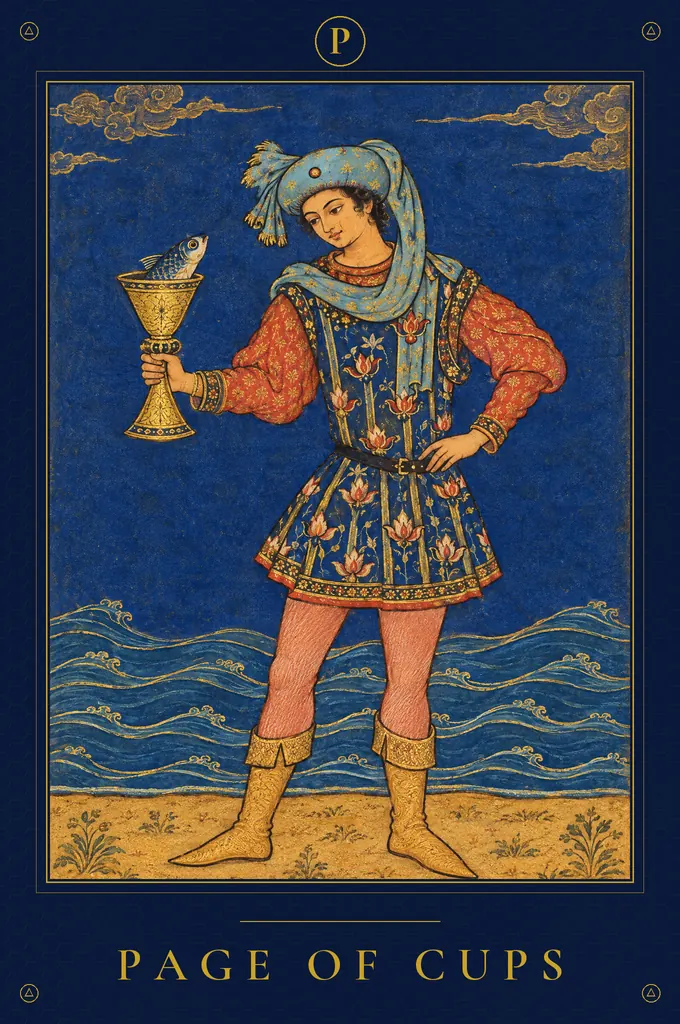
काले घुँघराले बालों और कोमल, विचारशील चेहरे वाला एक दुबला युवक, तट पर सहज खड़ा। उसका सिर आगे बढ़े हाथ के प्याले की ओर मुड़ा और झुका है, और उसका भाव शांत तथा सजग है।
A slender young man with dark curls and a soft, thoughtful face, standing at ease on the shore. His head is turned and lowered toward the cup in his outstretched hand, and his expression is mild and attentive.
भावना का विद्यार्थी। वेट एक सुंदर, मनोहर प्यादे का वर्णन करते हैं जिसकी मुद्रा अध्ययनशील और एकाग्र है। मछली से वह चौंकता नहीं, बल्कि ध्यान से उसे परखता है। किसी नई भावना या अंतर्दृष्टि के साथ ठीक यही बरताव होना चाहिए: जिज्ञासा, बिना घबराहट के।
The student of feeling. Waite describes a fair, pleasing page of studious and intent aspect. The fish does not startle him, and he studies it closely. A new emotion or intuition deserves exactly that: curiosity, with no alarm.
उसका बायाँ हाथ कमर की पेटी पर टिका है, भार दोनों पाँवों पर सहज। वह इतना निश्चिंत है कि संतुलन खोए बिना चकित हो सके।
His left hand rests on his hip at the belt, his weight easy on both feet. He is relaxed enough to be surprised without losing his balance.
ए. ई. वेट, द पिक्टोरियल की टु द टैरो, 1910, कार्ड का विवरण और भविष्य-सूचक अर्थ।
A. E. Waite, The Pictorial Key to the Tarot, 1910, description of the plate and divinatory meanings.
सीधा: प्रश्नकर्ता, या कोई निकट व्यक्ति, किसी नई भावना के प्रति सहजता से खुल रहा है। उलटा: दृष्टि बहुत भीतर मुड़कर कल्पना में चली जाती है। पूछिए कि कौन-सा एक वास्तविक कदम उस भावना का सम्मान करेगा।
Upright: the querent, or someone near them, is opening to a new feeling with good grace. Reversed: the gaze turns inward too far, into fantasy. Ask what one real step would honour the feeling.