Before you learn a single card, settle what the cards are for. A student who believes tarot pronounces fate will read fearfully and will frighten the people who come to them. A student who understands tarot as a mirror and a guide to action reads calmly, asks better questions and gives advice a person can use the same day. This lesson gives you the history in brief, the working definition TarotPandit uses, and the ethics that follow from it.
Where the cards come from
Tarot cards appear in northern Italy in the fifteenth century. They were called trionfi, triumphs, after the extra series of picture cards added to an ordinary pack, and the deck was used to play a trick-taking game. The most famous survivors are the hand-painted Visconti-Sforza cards made for the ruling families of Milan. The early record shows the cards as a game, and in parts of Europe that game is still played.
The occult reading of the trumps begins in Paris. In 1781 Antoine Court de Gébelin, in his many-volumed work Le Monde primitif, argued that the trumps preserved the wisdom of ancient Egypt. No evidence supports that origin, but the idea changed how people looked at the pictures: they became symbols to be decoded rather than pieces in a game. In the same period the cartomancer known as Etteilla published a deck designed for divination, with a meaning assigned to each card.
The next step came in England. The Hermetic Order of the Golden Dawn, founded in 1888, built a system that linked each card to an element, an astrological sign or planet, and a Hebrew letter. Two people connected with that order made the deck you will study. Arthur Edward Waite designed a new set of images and Pamela Colman Smith drew them; William Rider & Son published the deck in December 1909, and Waite's companion book, The Pictorial Key to the Tarot, followed in 1910. Smith gave every one of the 78 cards a full scene, including the numbered suit cards, which most earlier decks showed as plain arrangements of cups, swords or coins. That decision is why a beginner can read the 1909 images by looking: the meaning is painted into the scene.
TarotPandit teaches from these three sources: Waite's book, the Golden Dawn correspondences and the 1909 images. When a card page on this site tells you what a symbol means, it draws on them and names them.
A mirror and a guide to action
A reading does not announce what must happen. It shows the pattern present in a situation: the forces at work, the attitude the person brings, and the direction things are taking if nothing changes. That last phrase matters. A reading describes a current, and a person standing in a current can swim.
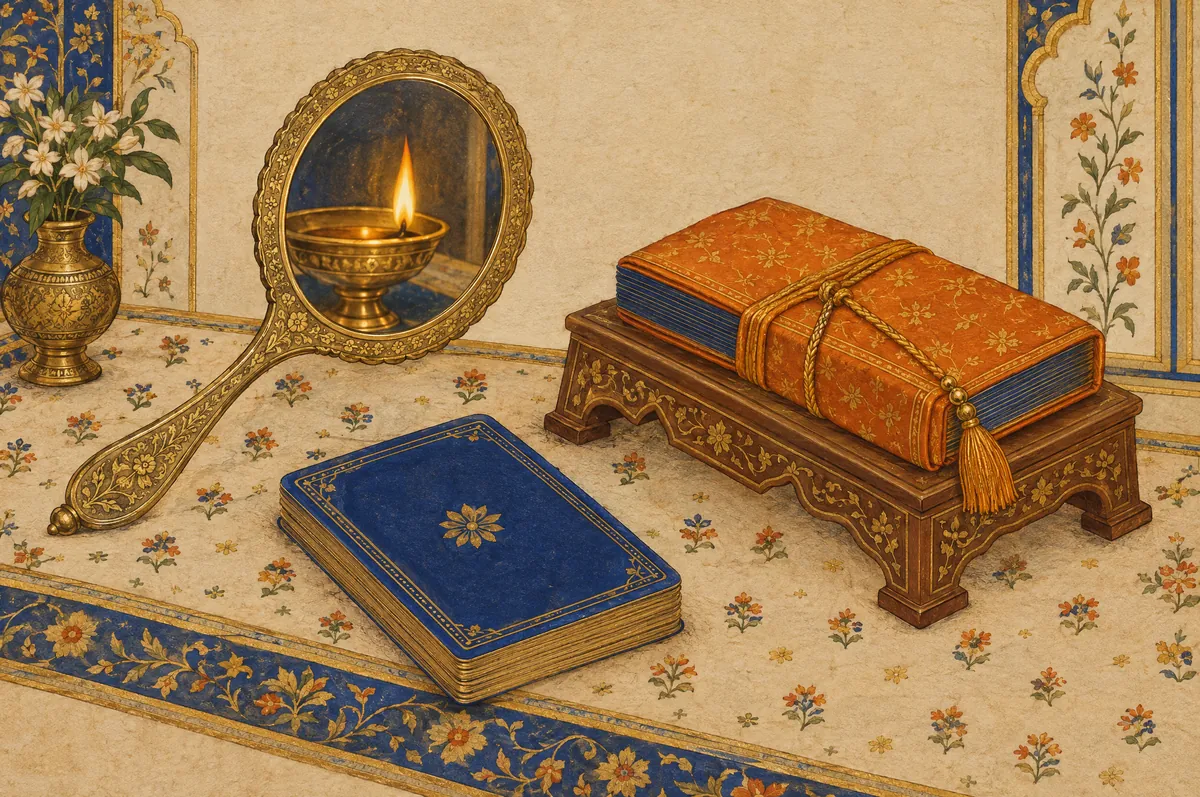
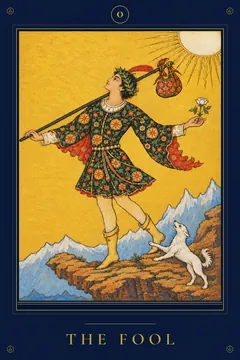
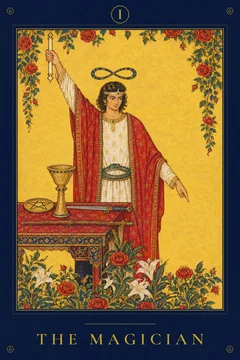
Think of the cards as a mirror held up to a question. A mirror does not decide your face; it shows it, so that you can straighten your collar. In the same way, The Fool does not tell you that you will make a reckless leap. It asks whether you are beginning in good faith and whether you have looked at the ground. The Magician does not promise success; it shows every tool laid out on the table and asks whether you will pick one up. The answer belongs to the person who drew the card.
So every reading in this academy ends with an action: one thing the querent can do, think or stop doing. If you finish a reading and cannot name a next step, the reading is not finished.
What tarot is not
Tarot is not a replacement for a doctor, a lawyer or a qualified financial adviser. It can direct attention, for example by suggesting that a person look after their rest, but it never diagnoses, never predicts a verdict and never recommends an investment. When a question falls in those areas, say plainly that the professional comes first, then offer what the cards can give: reflection on how the person is meeting the situation.
Tarot is also not a way to watch other people. Reading at length on whether a colleague is plotting, or whether a former partner is thinking of you, treats another person's private mind as public property. Redirect those questions to the querent's own side of the relationship; Lesson 8 shows you how.
The ethics that follow
If tarot is a mirror and a guide, five duties follow.
- Leave the choice with the querent. Present what the cards show and the options they suggest. Do not decide for anyone.
- Speak without fear. Difficult cards name difficulties; they do not curse. Avoid phrases such as "something terrible is coming"; say instead what the card asks the person to prepare, change or protect.
- Know your boundaries. Health, legal and financial questions go to professionals first. Questions about the timing of a death are not read.
- Keep confidence. What a querent tells you, and what you draw for them, stays with you.
- Read for the person in front of you. Avoid stock speeches; tie every statement to a card they can see and a situation they described.
These duties are what make a reading useful, and they are the reason people return to a reader they trust.
Exercise
Allow fifteen minutes and use a notebook you will keep for the whole course.
- Write three sentences that begin "I want tarot to..." Do not edit them.
- Mark each sentence P if it asks for a prediction (what will happen) or R if it asks for reflection or action (what is happening, what can I do).
- Rewrite every P sentence as an R sentence. "I want tarot to tell me whether I will get married" becomes "I want tarot to show me what I bring to a relationship and what I could work on."
- Open The Fool and read the lead paragraph. Write one line on how the card asks a question rather than giving a verdict.
Keep this page. You will return to it at the end of Lesson 8.
Take the quiz and keep your place
Sign in or create a free account to answer this lesson's quiz, record your progress and earn the Foundation certificate.