
A reading can be no better than the question behind it. A vague question produces a vague reading; a question that hands the outcome to fate leaves the querent with nothing to do; a question about someone else's private mind invites guesswork. Learning to shape a question, your own or a querent's, is one of the most practical skills a reader has, and it is where the ethics of Lesson 1 become daily practice.
Open and closed questions
A closed question can be answered with yes or no: "Will I get the job?" An open question asks for understanding: "What do I need to know about this job application?"
Closed questions have their place; TarotPandit offers a yes or no reading for moments when a direct steer is useful. But they give the cards very little to work with and the querent very little to act on. If the answer is no, what then? If it is yes, what should they prepare?
Open questions let the full picture speak. The most useful begin with what or how:
- "What do I need to understand about...?"
- "How can I best approach...?"
- "What is mine to do in...?"
- "What is helping, and what is getting in the way of...?"
Avoid questions that begin "Will..." or "When will..." as your default. Use "What..." and "How..." instead, and keep "Will..." for the occasional quick steer.
Questions about other people
"Does he love me?" "What is my manager thinking?" "Is my friend jealous of me?" These are among the most common questions a reader hears, and they share a problem: they ask about another person's inner life, which that person has not offered to the reading.
Do not refuse such querents; their concern is real. Redirect the question to their own side of the relationship, where they have both knowledge and power to act.
- "Does he love me?" becomes "What is the present state of my relationship with him, and what can I bring to it?"
- "What is my manager thinking?" becomes "How can I improve my working relationship with my manager?"
- "Is my friend jealous?" becomes "What is happening in this friendship, and how do I want to respond?"
The reframed question respects the other person's privacy and gives the querent something to do.
Health, legal and death questions
Some questions should not be read as asked. In each case, say clearly what the reading cannot do, then offer what it can.
Health. "Is this illness serious?" or "Will the operation go well?" cannot be answered by cards, and a reader who tries may delay someone's proper care. The doctor comes first. Then reframe: "How can I look after myself through this?" or "What will help me stay steady while I wait for results?" The cards then speak to attention, rest and support.
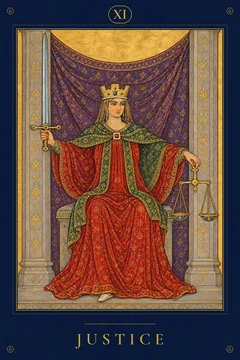
Legal. "Will I win my case?" is for a lawyer to assess, not a reader. Reframe: "How can I approach this case with a clear mind?" or "What should I keep in view as I work with my lawyer?" Justice, if it appears, then speaks of fairness, honest records and balanced decisions on the querent's side, not of a verdict.
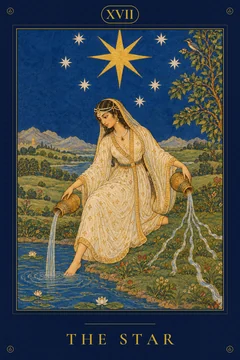
Death. "When will my father die?" or "How long do I have?" are not read at TarotPandit, by anyone, at any level. No card gives that answer, and a reader who pretends otherwise can cause lasting harm. Respond with care: acknowledge the fear behind the question, then offer a reading on what the querent can do now. "How can I be present for my father during his illness?" is a question the cards can serve well. The Star, for example, would speak of steady care, hope renewed in small acts, and attention to what can still be given.
The querent's agency
Every reframe in this lesson does the same thing: it moves the question from what will happen to the querent towards what the querent can understand and do. That is not a trick of wording. It follows directly from what tarot is, a mirror and a guide to action, and from the first ethical duty, which leaves the choice with the querent.
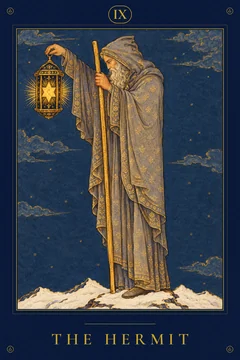
A good test before any reading: could the querent act on the answer? If not, reshape the question until they could. Take time over it. Like the Hermit with his lantern, a reader who pauses to light the question properly sees much further along the path than one who rushes ahead in the dark.
Exercise
Allow twenty-five minutes.
- Write ten questions you or people you know have wanted to ask the cards. Include at least one about another person, one about health, one about money or a legal matter, and one closed yes-or-no question.
- Beside each, mark it: Open, Closed, Other person, or Boundary (health, legal, death).
- Rewrite every question that is not already open and within the querent's agency. Use the stems from this lesson.
- For each Boundary question, write the one sentence you would say first, naming the professional who comes first, before offering the reframed reading.
- Return to the page you wrote in Lesson 1. Compare your first sentences about what you wanted from tarot with the questions you can now write, and note in two lines what has changed.
Take the quiz and keep your place
Sign in or create a free account to answer this lesson's quiz, record your progress and earn the Foundation certificate.